Yes, the bad news on the RAM crisis has been relentless lately — but Asus and SK Hynix just gave us glimmers of hope that some relief could be on the horizon
The RAM crisis gloom has been thick and heavy lately — so are you ready for some better news?

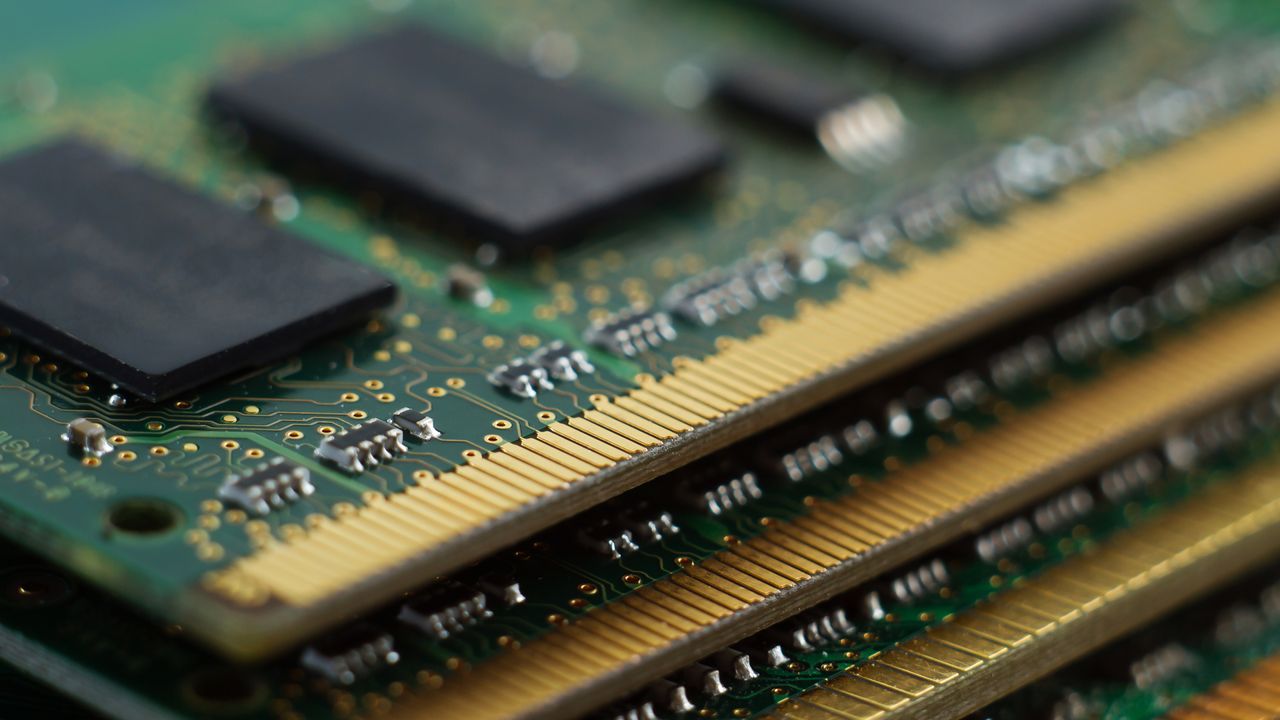
- Price hikes on Asus products will be much reduced in the second half of 2026
- This is over in Taiwan, but should be reflected to an extent globally
- There's also a report that SK Hynix, a big memory chip maker, is set to slow AI memory production in favor of conventional RAM
There's been a pretty relentless string of bad news with the RAM crisis of late, but we're now hearing some more positive nuggets for a change (though temper your optimism, as this is all relative).
Firstly, VideoCardz spotted that the Economic Daily News in Taiwan published a report in which the general manager of Asus, Liao Yi-hsiang, noted that as of May 2026, the price hikes on some Asus products in that country amounted to nearly 30% (compared to Q4 of 2025).
The executive then confirmed that Asus would be raising prices further in the second half of 2026 due to the component crisis, but that the increase should only be a single-digit affair. Under 10% is quite a drop compared to knocking on the door of 30%, of course.
Liao said that price rises would be milder because the cost of memory and storage had recently decreased, and also that consumers are increasingly unlikely to buy if more large hikes are heaped onto Asus products. Especially given that there was quite a lot of buying activity early in 2026, as consumers in Taiwan acted earlier than they would have otherwise, with a view to securing purchases before heftier price increases made themselves felt.
The other nugget of positivity is that, as Trading View informs us, there have been some interesting rumblings about SK Hynix, one of the big three memory chip makers (alongside Micron and Samsung).
There are reports that "SK Hynix may slow the expansion of AI memory-chip production and increase its focus on conventional DRAM products."
This apparent shift away from making HBM (the mentioned AI memory) to conventional RAM modules (the ones in consumer electronics) unsettled investors, and led to shares in SK Hynix tumbling over 12%. (Samsung followed suit with a 12% drop, and a wider tech share slide was witnessed, particularly for companies linked to the world of AI.)
What's bad news for investors is good news for consumers though; if this report is on the money, SK Hynix reallocating assembly lines to produce more DDR5 RAM could be the beginning of the end of the memory crisis.
Analysis: is the AI bubble ready to pop? I doubt it…

You could leap to some big conclusions here, and the rumor around SK Hynix is a potential move that could have a significant impact for consumers. With some folks talking about the end of the 'AI bubble' in recent times — which feels like hopeful chatter indeed — it could be read as another indicator in that respect, too. However, it's way too early to make that kind of call (and I don't personally think we're seeing that by any means).
What we don't know is the extent of the apparent shift away from HBM, and anyway, the move could partly be about DRAM being so pricey now that it represents a tempting enough diversification in terms of SK Hynix's overall memory strategy (a theory raised in some quarters).
We should also remember that the chairman of SK Group (the parent company of SK Hynix), Chey Tae-won, has previously predicted that the RAM shortage may not be over until 2030 (a forecast more recently echoed by Nvidia's CEO). So, as noted, temper any optimism, but this is at least a positive sign from the big chip maker, as is the price prediction from Asus.
Regarding Asus, again there's a caveat — namely that it's an analysis for the Taiwanese market only. But if price rises in H2 2026 are only (roughly) a third of what they effectively were in the first half of the year, that'll surely be reflected to some extent globally. Also, it's very true that consumers everywhere will refuse to buy if pricing goes higher too quickly, which is something I've pointed out a few times before. This isn't something unique to Taiwan.
Finally, it's also worth noting that earlier this month, we heard some more positive news on the RAM crisis from David McAfee, AMD's VP and general manager of Ryzen CPU and Radeon GPUs.
As PC Gamer reported, McAfee said: "There is an enormous amount of capacity that is being built by the memory manufacturers to bring more production online, and that more production online is going to focus on DDR, LPDDR, HBM, like the newer memory technologies."
He added: "I don't expect a lot of DDR4 production to come back into the world, but those newer memory technologies, a significant amount of capacity is coming online. I think we'll start to see by the end of next year and into 2028 that that ramp really starts to take hold, and then it's just a factor of the forces of supply and demand, and how that affects memory prices."
OK, so this is really just a reminder of what we've already been told, but it's still worth bearing in mind that the expectation for some remains a considerable easing of the crisis by 2028.
Share
What's Your Reaction?
 Like
0
Like
0
 Dislike
0
Dislike
0
 Love
0
Love
0
 Funny
0
Funny
0
 Angry
0
Angry
0
 Sad
0
Sad
0
 Wow
0
Wow
0