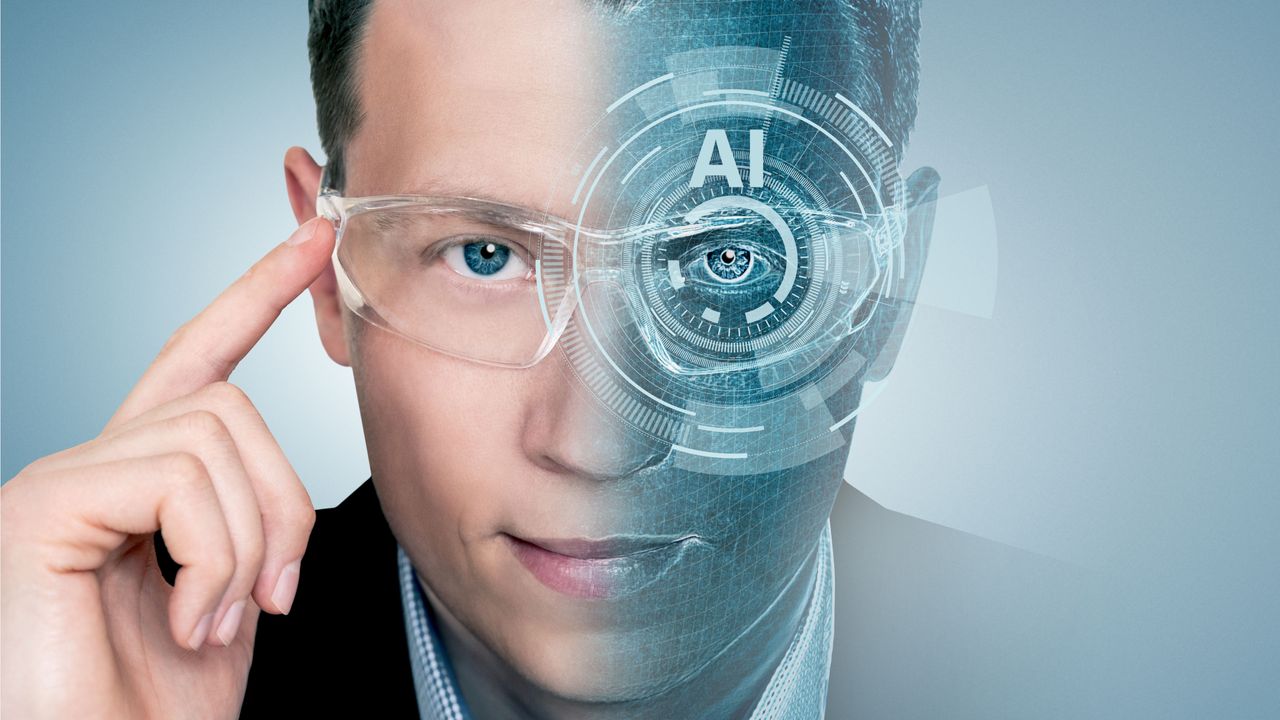
'For humans, the capacity to say, 'I don't know,' is very important': Report finds AI really might be harming our critical thinking skills
New paper reveals human critical thinking could be declining as participants choose to trust AI-generated outputs too much.


- Only 3% of participants with access to AI were willing to say 'I don't know'
- Participants failed to question AI-generated information enough
- "AI... eliminated participants' willingness to suspend judgment"
A new study conducted by researchers from French and Italian universities is arguing that humans are struggling to compete with artificial intelligence when it comes to critical thinking.
According to the data, participants with access to AI were less likely to say 'I don't know', with just 3% uncertain about an answer that required critical thinking compared with 44% of participants who didn't have access to AI.
The study ultimately concludes that humans rely too heavily on artificial intelligence to replace potentially correct personal judgments with incorrect AI suggestions.
Is AI harming our critical thinking?
The study purposely used a model that has a lower accuracy rate to produce incorrect results, and yet humans still opted to use those results rather than think for themselves, offer a more correct answer or simply say 'I don't know'.
But despite this reliance on AI, the human participants still seemed to acknowledge that AI could be wrong. With small financial incentives to be more honest, more participants were less likely to follow AI's exact word.
"Across five experiments, mere access to AI advice nearly eliminated participants’ willingness to suspend judgment," they wrote.
"As AI-generated answers become ubiquitous and, increasingly, unsolicited, our results show that the willingness to say 'I don’t know' may be among the first casualties of human–AI interaction."
The paper also reveals a related paradox whereby humans are more likely to feel confident in their responses with access to external information, be it AI-generated, even though it may not be correct or wholly relevant to their thought process.
Despite acknowledging many limitations and this study's small scope, the researchers still call for further AI literacy and education when it comes to verifying output and reinforcing the important of human critical thinking.
Via The Register
Share
What's Your Reaction?
 Like
0
Like
0
 Dislike
0
Dislike
0
 Love
0
Love
0
 Funny
0
Funny
0
 Angry
0
Angry
0
 Sad
0
Sad
0
 Wow
0
Wow
0