93. The Lionsgate-Runway Disaster: Hollywood’s Most Expensive Lesson in Reading the Fine Print.
And a $70 Million Bet That Answers Questions Nobody Asked.

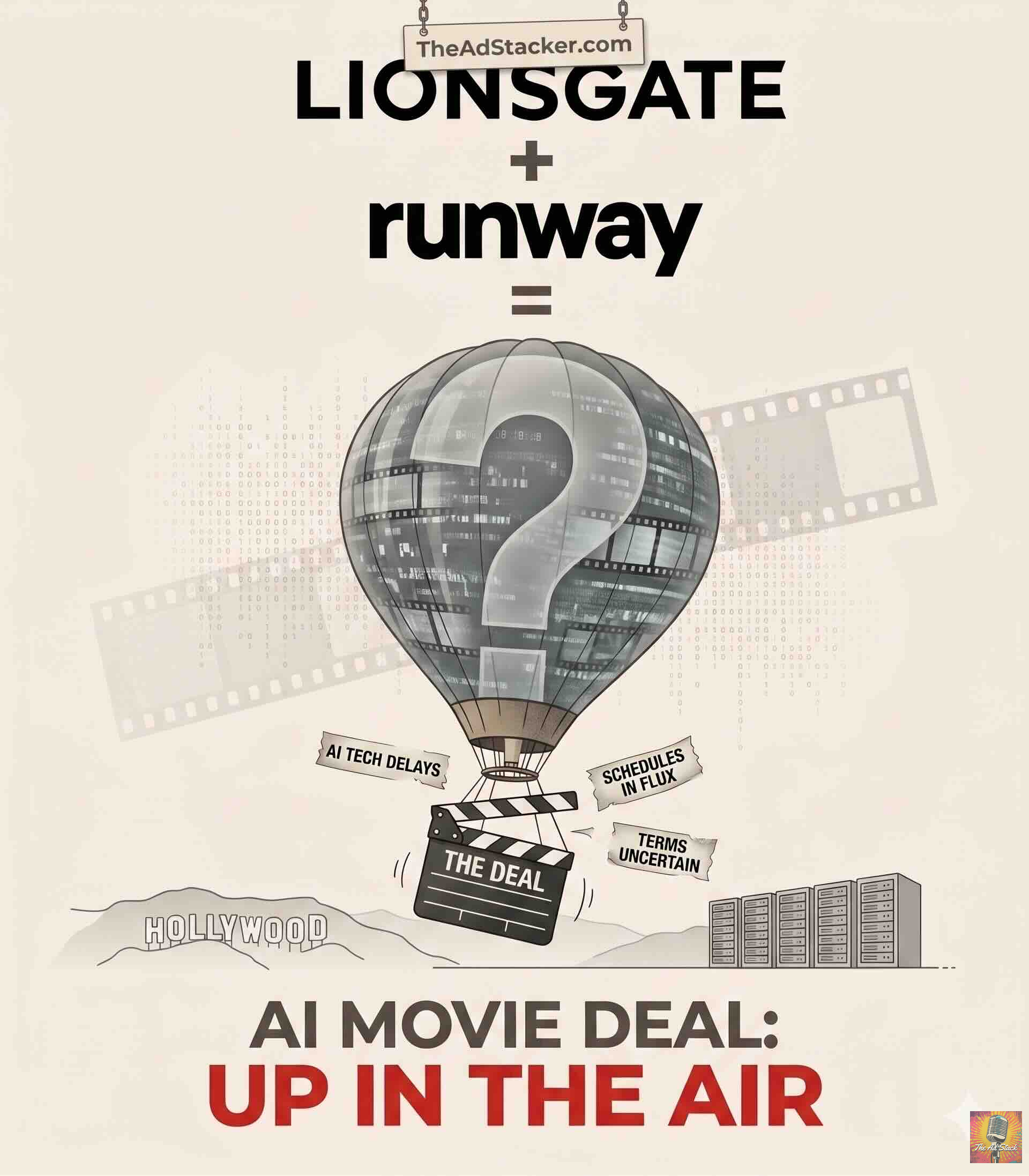
Welcome to the future of cinema, where a major Hollywood studio hands its entire film library to an AI startup, waits twelve months, and discovers that John Wick cannot be turned into anime because (stay with me here) data science is not impressed by press releases.
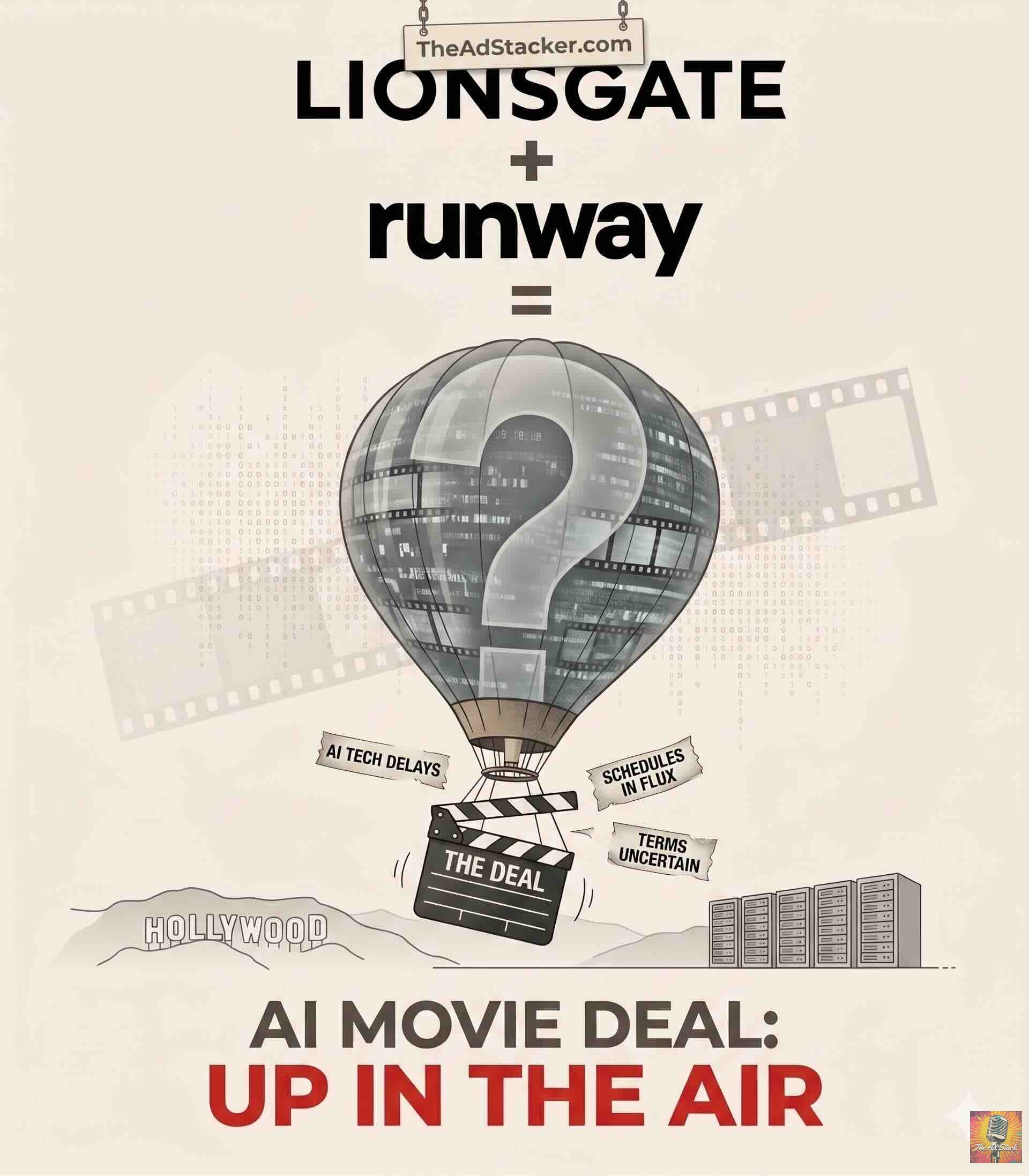
A year ago, Lionsgate and Runway unveiled what they breathlessly described as a groundbreaking partnership to train the studio’s film library with the ultimate goal of creating AI-generated shows and movies. That partnership has since hit some “early snags.” TheWrap
“Early snags” being the diplomatic understatement you reach for when your revolution produces approximately nothing useful and you’d rather not say so out loud.
1. The Deal That Made Perfect Sense (To People Who Don’t Know What Data Is)
The IP
Lionsgate would hand over its library of more than 20,000 film and TV titles to Runway, which would use that IP to train a custom model; a proprietary variant of Runway’s core model, exclusive to the studio.
Proprietary. Exclusive. Revolutionary.
The kind of deal that gets standing ovations at investor presentations from people who have definitely heard the word “model” before and are confident it means good things.
UTA CEO Jeremy Zimmer called it “concerning” for artists: *”If I’m an artist and I’ve made a Lionsgate movie, now suddenly that Lionsgate movie is going to be used to help build out an LLM for an AI company, am I going to be compensated for that?”* IndieWire
Nobody answered Jeremy. Answering him would have required acknowledging that the business model was built on legally uncharted territory and a touching faith in what AI can actually do;two things that tend to look worse in writing than on a whiteboard.
The Physics Problem Everyone Agreed Not to Mention
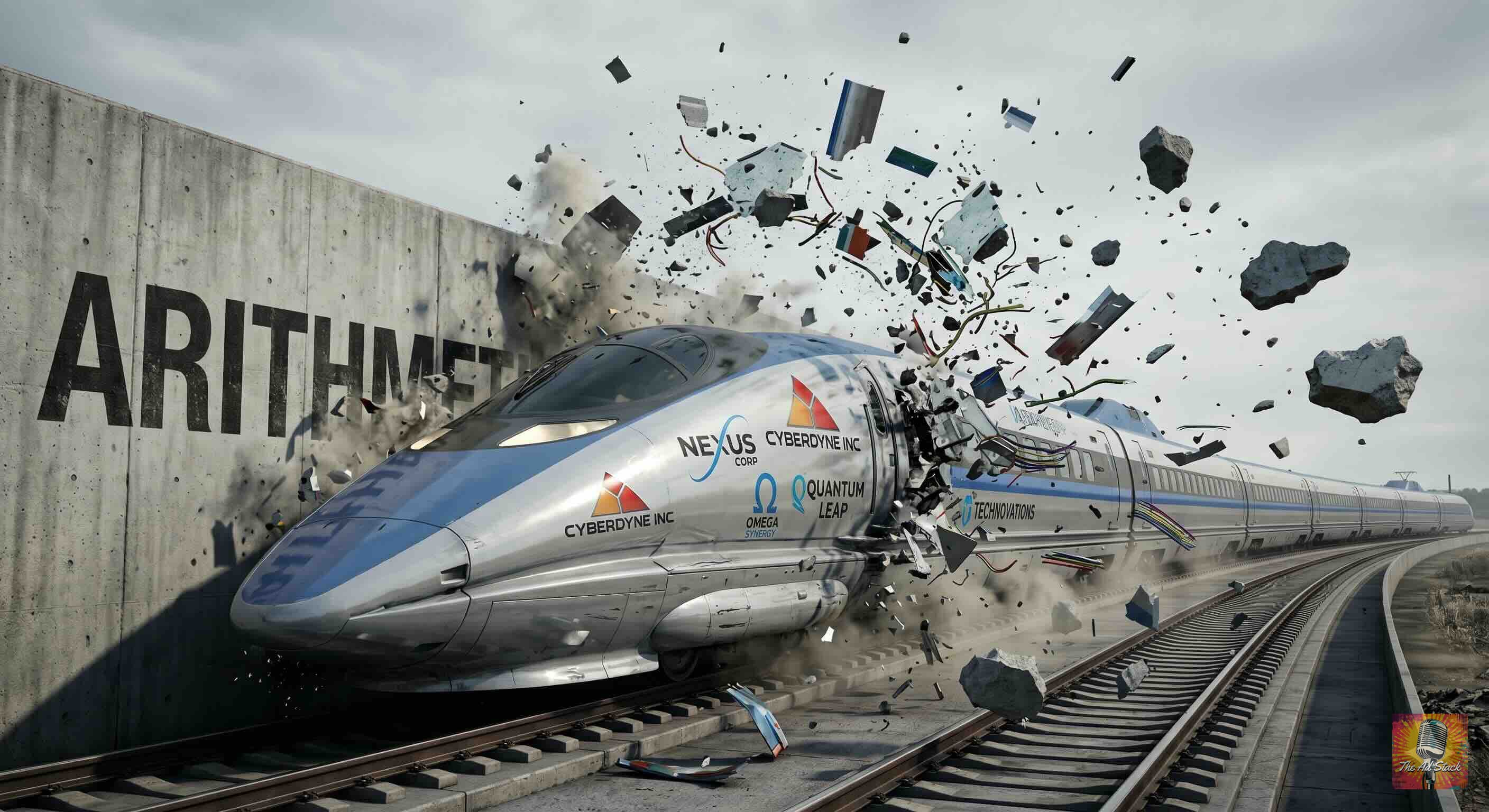
Here’s where the hype machine met something it couldn’t vibe through: a wall.
”The Lionsgate catalog is too small to create a model. In fact, the Disney catalog is too small to create a model.”* — a person familiar with the situation, TheWrap
Read that second sentence at your own pace. Disney. The entertainment company that turned a mouse into a multinational empire, that owns every superhero, every princess, every franchise capable of selling a breakfast cereal. Not enough. Not close.
*The reason these models succeed is that they have access to the entire internet. When you shrink it down, it has less to pull from and therefore cannot compute. Even though a movie studio may have thousands of movies, it pales in comparison to billions of examples of footage you’d find elsewhere.* PetaPixel
So the foundational premise of the deal (that a studio catalog could function as sufficient training data for a bespoke AI model) was not a business risk to be managed. It was a physics problem. The data isn’t there, and no amount of partnership announcements rearranges that arithmetic.
The laws of large numbers don’t have a publicist.
The Legal Minefield Nobody Thought to Map Before the Press Conference
Insufficient training data was, remarkably, not the only problem. The deal also encountered *”unforeseen complications including copyright concerns over Lionsgate’s own library and the potential ancillary rights of actors.”* IMDb
This is where it shades into genuine dark comedy. Lionsgate owns the IP. They can license their films to Runway. But the moment an AI model trained on those films generates a new “John Wick” using Keanu Reeves’ movement, vocabulary, likeness, and performance characteristics, who signs the check? Do the screenwriters get paid for the story architecture the AI is mimicking? Does the director see residuals for the visual grammar being replicated on demand? What about the gaffer whose lighting created the mood the AI is now selling as a feature?
Nobody knows. Because nobody asked before the announcement.
Lionsgate Vice Chairman Michael Burns had been pitching the possibilities with genuine enthusiasm. In an interview with Vulture, he made the mistake of being specific: *”Now we can say, ‘Do it in anime’”* and out comes an animated John Wick. Futurism
Burns subsequently acknowledged he’d have to pay the actors and rights participants to actually sell such a product.

The anime John Wick remains unproduced. The quote lives forever.
The Corporate Non-Denial Denial (A Masterclass)
Lionsgate’s Chief Communications Officer told Gizmodo: *”We’re very pleased with our partnership with Runway and our other AI initiatives, which are progressing according to plan.”* Gizmodo
The plan, apparently, was to publicly discover via expensive failure that AI video generation requires internet-scale data, that a studio catalog doesn’t constitute a training set, and that nobody in entertainment law designed the compensation framework with “AI silently replicates everyone’s work” as a use case.
*Progressing according to plan* is doing heroic work in that sentence.
*The challenges facing both Lionsgate and Runway offer a cautionary tale of the risks that come from jumping on the AI hype train too early — a story playing out across industries, from McDonald’s backing away from a generative AI drive-thru order system to Klarna slashing its workforce in favor of AI, only to backpedal and hire some of those same employees back.* TheWrap
What “Progressing According to Plan” Actually Means
A Lionsgate spokesman noted the deal isn’t exclusive, and that the studio is also planning to use tools from other AI companies to streamline pre- and post-production. TheWrap

Which is the corporate equivalent of announcing you’ve pivoted from “we will revolutionize cinema” to “we might use AI to organize the call sheets sometimes.”
Meanwhile, there are signs Lionsgate is making *some* use of Runway, though possibly not through the intended exclusive model. Earlier this year, the company was working on an AI-generated trailer for a film that hadn’t been shot yet, hoping executives could sell a movie based on fabricated scenes. Gizmodo
From “AI generates entire movies from our catalog” to “AI helps us make fake trailers for movies we haven’t started.”
That’s not a pivot. That’s a controlled crash with a press release duct-taped to the nose cone.

The advertising industry watched McDonald’s burn seven weeks and ten humans generating AI content that lasted three days online. Hollywood is now watching Lionsgate spend a year and a studio library discovering that math applies even when your press conference was very well attended.
The robots aren’t replacing Hollywood. They’re just teaching studios to write more precisely worded statements about revolutionary partnerships that are progressing exactly as described.
2. Bitcoin, AI, and Ryan Kavanaugh: A $70 Million Bet That Answers Questions Nobody Asked
Hollywood’s AI fever dream has produced spectacular disasters. Now it’s produced something potentially more dangerous: a $70 million argument that the whole thing might actually work.
Doug Liman has made a $70 million movie called *Bitcoin*; formerly *Killing Satoshi,* starring Gal Gadot, Casey Affleck, Pete Davidson, and Isla Fisher in a globe-trotting thriller about hunting down the inventor of cryptocurrency. TheWrap
The film is being positioned as the first fully AI-generated studio-quality feature film. The people behind it would like you to know this is not a gimmick. It is a paradigm shift. Please update your paradigms at your earliest convenience.
The Gray Box Theory of Cinema
The producers converted a former car showroom in West London into a studio with a soundstage they call the “gray box;” a large room wrapped entirely in gray screen, with neutral lighting, traditional wardrobe, practical props, and proxy set pieces like stairs and platforms. TheWrap

Everything else; backgrounds, environments, the visual world of the film, gets generated in post using AI.
The producers claim this approach let them make a film that would normally cost $300 million for a paltry $70 million. The goal: eliminate travel, reduce waste, and keep the performances untouched. World of Reel
This is, to be fair, a real argument. A $230 million reduction isn’t a rounding error. If AI-generated environments can replace location shoots without audiences noticing, that’s genuine economic disruption; the kind that makes studios very interested and crew members very loud.
The Cast That Raises Interesting Questions
Casey Affleck described the experience as resembling Broadway; total focus on performance, no elaborate production infrastructure competing for attention. *”He wanted the humor of ‘The Big Short’ and the energy of ‘The Wolf of Wall Street’ on steroids. He convinced me; he convinced everyone;that AI could help him realize that vision.”* TheWrap
Note the phrasing: AI could *help* realize his vision. Not *replace* it. Not *be* it. This distinction (AI as tool versus AI as author) is doing enormous conceptual work in how this film is being positioned, and it’s the right distinction to make.
The film follows Affleck as Craig Wright, a man who publicly claimed to be Satoshi Nakamoto, the pseudonymous inventor of Bitcoin, a claim later ruled false by the UK High Court in 2024. Deadline
So: a film named after a thing its central character lied about inventing, made with a technology its producers are carefully not overclaiming, produced by Ryan Kavanaugh the once-ascendant Relativity Media chief whose previous venture ended in bankruptcy proceedings.
The layers of audacity here are genuinely architectural.
The Cannes Test
The film will be shopped to buyers at Cannes in May. TheWrap
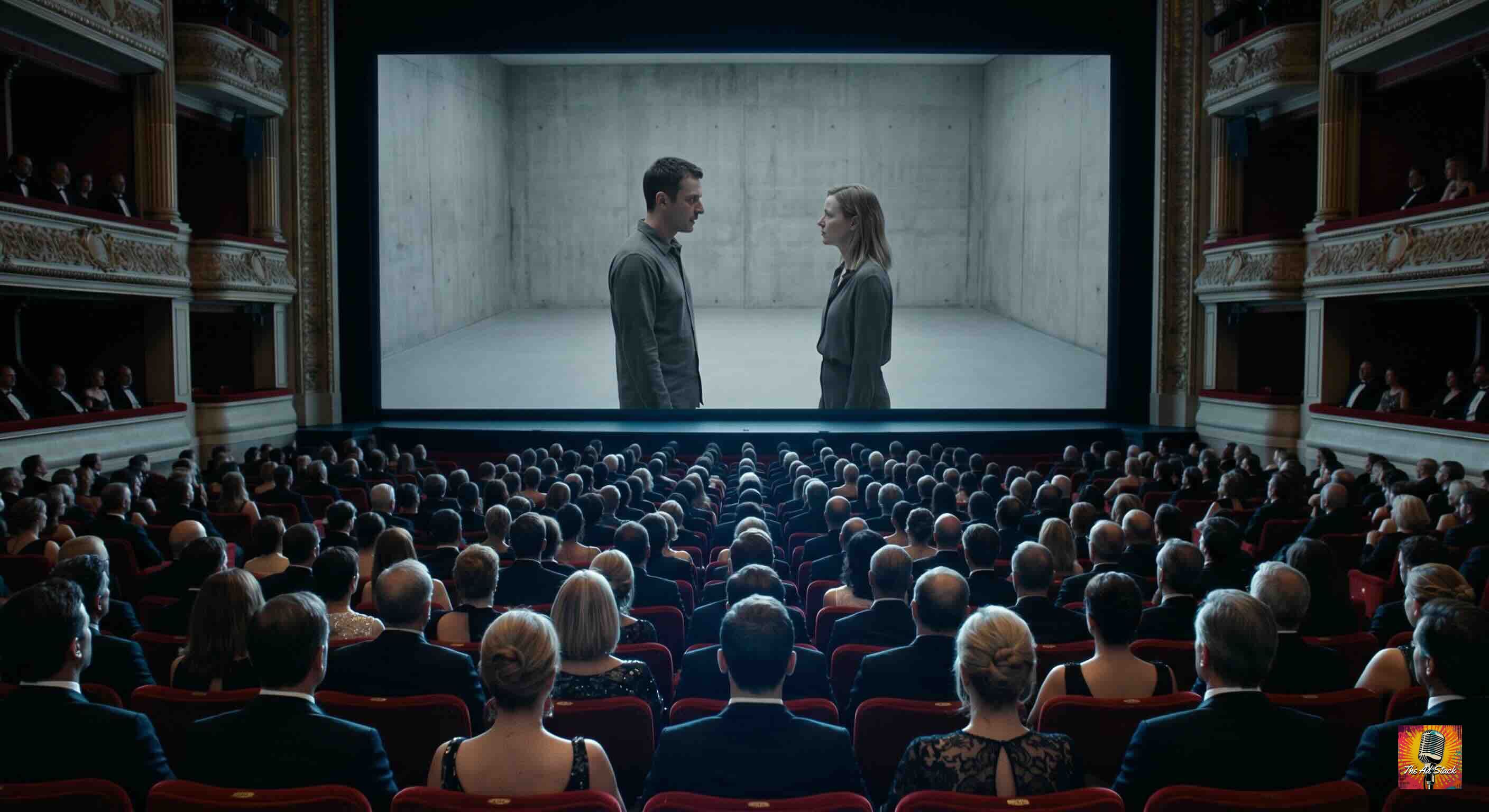
That’s when the argument gets resolved. Not by critics, not by AI skeptics, not by anyone writing newsletters about it; but by whether theatrical audiences notice or care that the backgrounds were generated rather than filmed.
If they don’t: Liman is a prophet. The gray box is the future. Update your paradigms.
If they do: this is the $70 million Exhibit A in the ongoing trial of AI cinema.
Either way, *Bitcoin* is a more honest experiment than most. Real director. Real cast. Real performances. AI environments. The variables are controlled. The results will be legible.
Unlike Lionsgate, which announced a revolution and discovered physics, somebody here apparently asked what the technology could actually do before booking the press conference.
That alone makes it interesting.
3. Necessary Gratuitous AI
If you haven’t seen this, it’s the most over the top thing in a bit. Sent by a loyal Stacker.
Somebody out there has their agency’s AI account credentials and has decided it’s time for a two-and-a-half minute film featuring Neil deGrasse Tyson as the hero and Stephen Hawking, in a jet-powered wheelchair, as a villain. And naked others.
I’d watch this movie. I’d watch it even if they cut in scenes from Clerks for no reason, which would destroy the edit, but that’s a me problem.
The part that should concern you isn’t that someone made this. It’s that it looks incredible. The kind of incredible that makes you forget to ask whether it should exist.
That’s the new LinkedIn. Coming for your feed at scale. Dressed up as thought leadership.
Arriving in two-and-a-half minutes with a villain in an afterburner chariot and a cinematography budget of approximately nothing.
But it’s a pretty f*cking amazing edit.
I hope you find this gumbo of value.
Feel free to share comments below. If you enjoyed this read, for the love of God please whack the bejabbers out of the heart icon at the top or bottom of the page so others can find this article. Re-stacking is great too.
Have a great week people!
Before you go ...
Please forward this to three randos, dorks, colleagues, or someone you met today.
Like and Re-stack it below so others can find it!
Drop a comment. If you’re into it, if it sucks … perhaps drop a Haiku about programmatic AI. Your call.
Share
What's Your Reaction?
 Like
0
Like
0
 Dislike
0
Dislike
0
 Love
0
Love
0
 Funny
0
Funny
0
 Angry
0
Angry
0
 Sad
0
Sad
0
 Wow
0
Wow
0