
'You can literally fix anything if you watch enough YouTube': I met with tech repair experts and campaigners to learn how to fix my broken gadgets — and why it's so important
Is fixing your tech easy? I spoke to green gadget companies, volunteer repairers and campaigners to understand your right to repair your possessions

Torn ear tips. Snapped charging case. Dented drivers. Like every other kind of gadget imaginable, the best headphones aren't built to last, and I'd wager that everyone reading this article has some skeletons (of old, ailing gadgets) in their (metaphorical) closet.
In fact, according to a European Union report, in 2024, 51% people kept their old smartphones even though they were no longer using them, and 34% were still holding onto their outdated laptops and tablets. We just don't know what to do with our old kit.
So, do you throw away your broken over-ear headphones and buy a new pair? Do you hunt down your nearest electronics recycling bank, or donate them to an organization which could use the parts? In recent years, the second-hand tech industry has boomed, with refurbishing and reselling sites such as Back Market and Refurbed ensuring that used gadgets get a second lease of life.
But too often, that first lease of life is all-too-easily abandoned. The tech you might be recycling — or consigning straight to landfill — might actually be easily repairable.
Per the BBC, a survey suggested that 7,000,000 wireless headphones (yes, seven-million) were thrown away in 2022, in the UK alone. And as we'll explore later, the majority of those may not have needed throwing away.
There's a simple truth. Gadget sellers are often loathe to admit it, worrying that repairing your own gadgets may affect their bottom line. And as we'll also soon learn, many companies seem to make repairs really quite difficult.
The thing is, your faulty gadget may be only a quick fix from working like new. From complicated pieces of kit such as AV machines and computers, to white-label toasters and kettles, electronics can often be repaired at home, for a fraction of the cost of buying new... within reason.
The long road to repairable tech

Tech repairability isn't a new concept, but it's a rather new debate. Or, at least, it's one that's only recently been at the forefront of the news cycle, under the somewhat beige name 'right to repair'.
For two years now, repairability has been of growing importance to politicians as well as makers. In July 2024, the EU entered into force its 'Directive on repair of goods', and since Europe is a major market for tech companies, changes made for the region have been reflected in tech sold globally.
Designed to go hand-in-hand with several other EU policies on eco-friendly design, the repair directive is designed to make your gadgets easier to fix.
For example, electronics makers are now obliged to repair faulty kit, or make spare parts accessible for a reasonable price, so that third parties can do the repairs for you.
There are several knock-on effects to this and follow-up motions, the most reported being that phone makers will have to fit readily-removable batteries, and manufacturers will have to provide tools so you can make repairs yourself. These rules are changing how companies make their products.
However, there are several exceptions: gadgets designed for wet use, including wearables and headphones won't need to change. And, more importantly, any gadget sold before the European Union's legislation went into effect will of course miss out on these repairability boons.
Some companies may look for loopholes — but not Fairphone
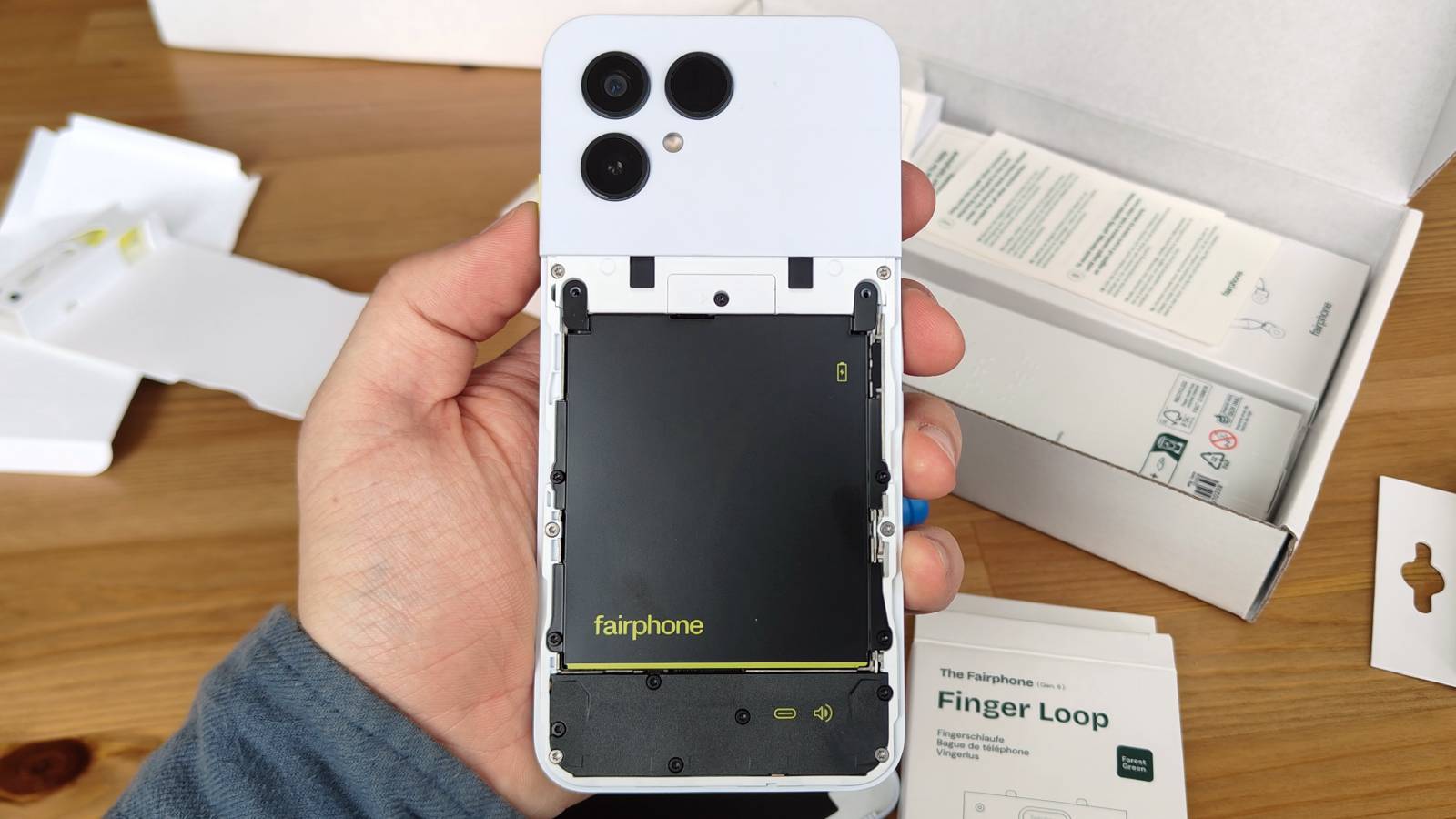
Before repairability was codified in legislation, it was still a focus for certain brands. One of those was Fairphone, a Dutch brand which began life as a campaign about conflict minerals in tech, and now makes phones and headphones. Miquel Ballester, its Head of Product, explained to us why it made the jump into physical devices:
"You can put the most ethically sourced materials in the world into a device, but if it dies in a year and a half because a battery's glued in, you've undone most of the good you just did".
He continued: "In the case of smartphones, earbuds, and headphones, repairability was what made the rest of the mission focus on bringing action into the industry. We've been fighting this fight for over a decade, long before 'right to repair' was something people brought up at dinner."
Fairphone devices are modular, meaning you can easily remove and replace the screen, camera, batteries, or other parts, all without having to extricate them from a tightly-packed device. The brand sells replacement parts online, so you can repair faulty components at home.
According to Ballester, Fairphone found that making its phones repairable didn't mean it had to change the performance and style of its products, but there was an impact on the price: "Designing for modularity means you're working with connectors, seams, and screws instead of glue and epoxy, and that adds a bit of cost compared to a phone that's built to be sealed shut forever".
We've been fighting this fight for over a decade, long before 'right to repair' was something people brought up at dinner
Miquel Ballester, head of product at Fairphone
Don't chase a high IP-rating (when you probably don't need it)
I also asked Ballester if any components or specs struggle in repairable gadgets. "Waterproofing is the one I'd point to first," he explained, railing against the trend of tech companies chasing an IP68 rating.
"Realistically, unless you're taking your phone free diving, IP55 gets you everything you actually need. It holds up against rain, spilled coffee, sweat at the gym, all the situations people actually put their phones through."
So, not IP68, which guarantees you protection for 30 minutes in a meter of water? "Chasing that rating basically forces you into permanent seals and factory-glued seams, because that's still the easiest way to guarantee a device survives being submerged.
"We'd rather give you a device that can be opened and repaired for the next seven years than one that survives a swimming pool once and then can't have its battery replaced. It's a genuinely difficult engineering line to walk, and I won't pretend IP68 wouldn't look nice on a spec sheet, but chasing it would mean compromising the thing we actually care about."
As mentioned, the EU's right to repair changes mean that companies may have to sell tools to repair their gadgets. But for Fairphone, that isn't a problem; they've been designed not to require proprietary tools. A Phillips screwdriver is all you need.
But how repairable is tech really?
Just because a company doesn't make gadget repairability a selling point, doesn't mean that you can't easily fix it. To learn more about the repair process, I visited a local community repair shop called Fixing Factory, which operates several locations in London, UK.
Fixing Factory lets residents bring in broken items to get them repaired, but it also operates as a way to train volunteers in fixing household items.
When I visited the Fixing Factory's Camden location, the streets around the shop were abuzz — England was just hours away from its ultimately-unsuccessful World Cup match against Argentina. But inside the repair shop, a different kind of squad was assembled: a troop of junior repairers (volunteers learning how to repair tech) were being briefed on safety procedures.
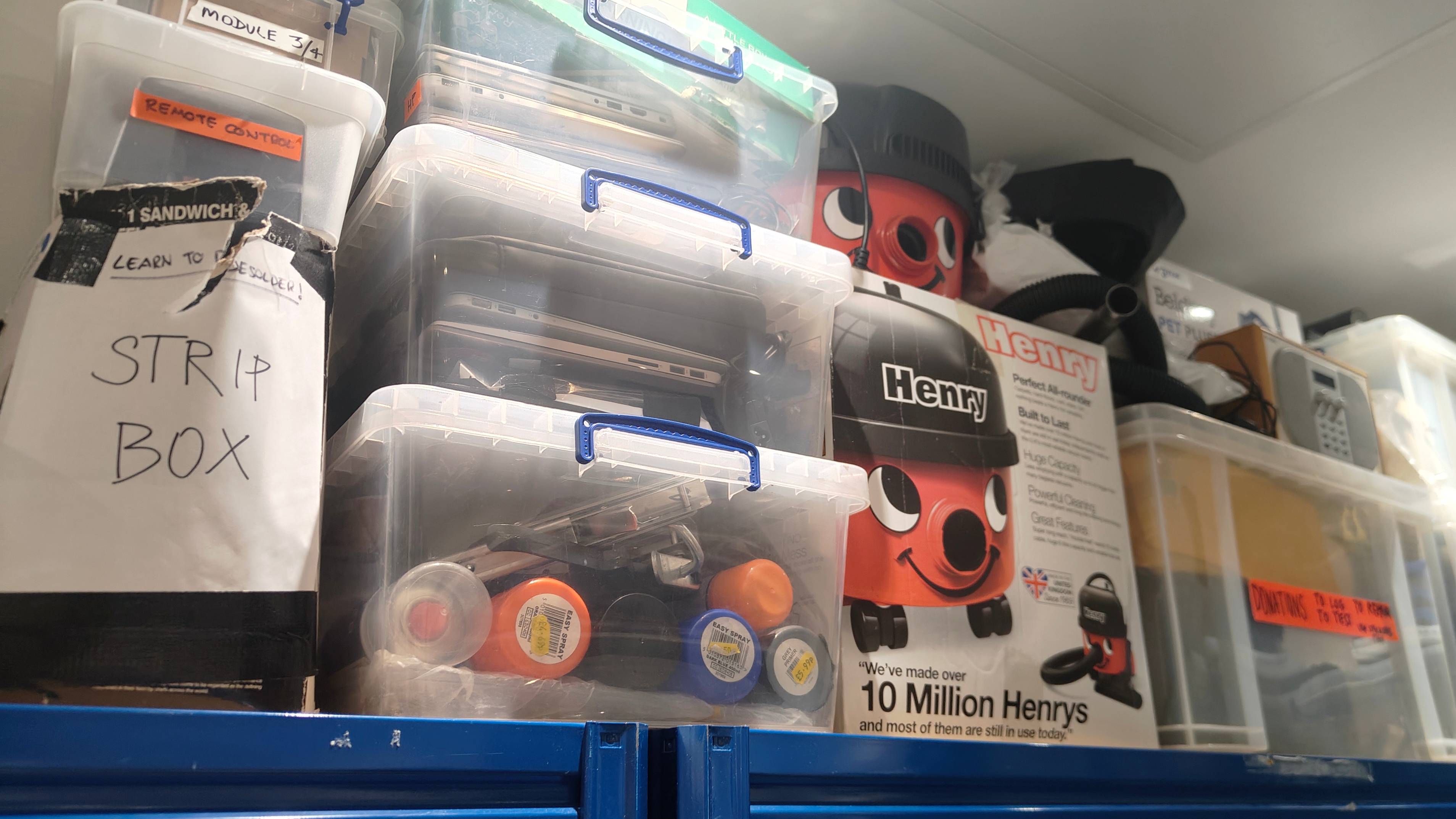
As I waited, I got to admire the huge collection of gadgets in various stages of repair (or lack thereof, in the cases of some training toasters). Laptops, vacuum cleaners, radios, even some throwback iPod nanos. Waiting alongside me was an older lady, who'd somehow managed to transport several startlingly-sized antique lamps in a series of backpacks and strollers, all ready to be repaired by the volunteers.
Not all of the Fixing Factory attendees were in training, and I was lucky enough to speak to several of the expert volunteers. They explained to me how to tell if a gadget can be repaired, what to do if you want to fix your tech, and when you should rely on an expert to bring your tech up to spec.
Identifying gadgets as repairable
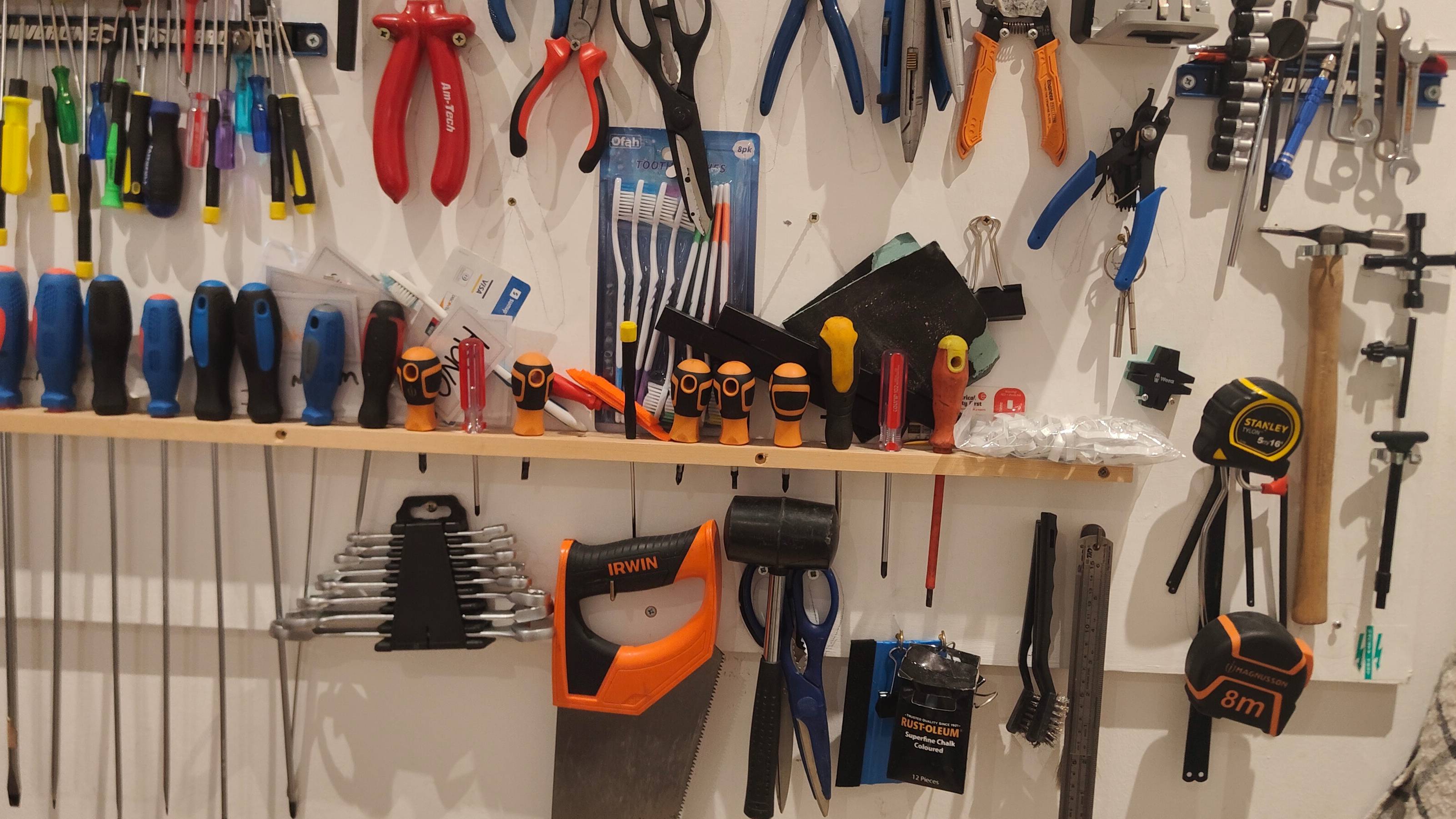
One repair volunteer, describing themselves as a 'generalist' who liked to fix everything, told me how they'd helped create the teaching material for the trainees in the next room and explained how they work out if a gadget can be fixed in the first place.
"The first thing we do is we will safety check the device. If we've got a plug, we'll make sure we do PAT testing [a standardized way of checking the safety of portable appliances], and then everything goes into an RCD [Residual Current Device, which can instantly turn off power if something goes wrong] before we plug it in, and then we'll do a functional test.
"From there, we'll then diagnose what's going wrong and sit down with a member of the public, and work with them and go: 'okay, tell me the story, what happened, what's not working.'"
From what I was told, about half of the people with broken tech know why it's broken, either because of their own research or because the fault is obvious. And the other half "just have no clue".
We had far in excess of 70% repairability on e-waste
A Fixing Factory volunteer
The volunteer told me about a recent trial the group conducted, in which they went to a local recycling facility for several months, to log the kind of items thrown away and how much was actually repairable.
"We had far in excess of 70% repairability on e-waste. And so I like to think that's probably reflective of what comes into Fixing Factory locations."
I was staggered by that number; by the sounds of it, well over half of the gadgets we throw away could actually be fixed!
Stats from a similar study carried out by The Restart Project also found that only 12.4% of electrical devices thrown away were truly at the end of their life span. A further 7.2% needed repairs that were deemed too costly to be worthwhile; 9.5% were economical to repair; 36.2% were working just fine, and for the remaining 34.7% it wasn't possible to determine what state of life they were in.
Looking back at that 7,000,000 headphone figure I mentioned before, that'd suggest about 2.5 million of them could get back to a state of working just fine. Truly, the trash is not the first destination for faulty gadgets.
Do (or don't) try this at home
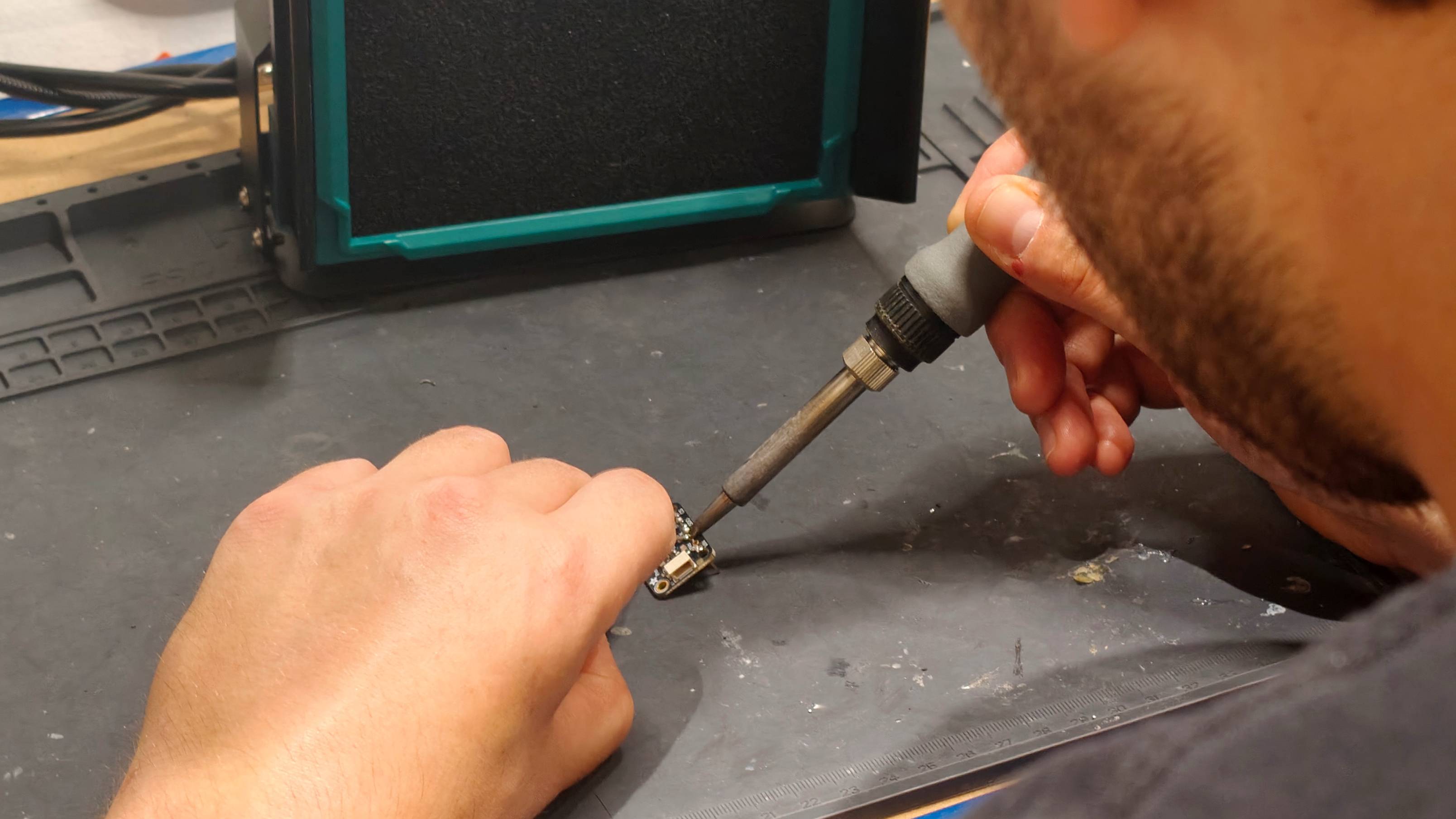
Repair shops such as Fixing Factory are one option for handling your broken tech, but how easy are they to fix at home? (Unless you have a Fairphone product, of course). I spoke to another Fixing Factory volunteer to find out.
Kevin, a student at a local university, told me: "You can literally fix anything if you watch enough YouTube... but it's pretty complicated".
He was one of many volunteers who flagged YouTube and the iFixit channel (and website) specifically, as an invaluable source of information for prospective home repairers. The site publishes teardowns, repair guides, and has an active forum to help you understand just how feasible a home repair is.
Sometimes, even this isn't necessary: "A lot of things are just dirty and need to be cleaned deeply."
You can literally fix anything if you watch enough YouTube
A Fixing Factory volunteer
This is something I understand all too well; a deep-clean of my home-built PC recently made me realize that I didn't need to buy new parts. It was just dusty.
Kevin gave some sage advice: "Take good notes or good photos to make sure you put [the gadget] back together correctly".
Another volunteer pointed out, though, that online guides and a little clean both play second fiddle to another, more important type of learning: "Sitting down with someone and sharing the experience, I think is something that's very valuable."
Not all tech is worth repairing
Most of the advice so far has pertained to smaller electricals and 'safer' items, but often you want to fix something more complicated. When I asked one volunteer whether home tech repairs were feasible, I was told: "Is it feasible? Yes. Is it safe? Questionable."
There are several dangers involved with lithium-ion batteries, the kind of which you find in most portable gadgets, and their predilection for catching fire is chief amongst them. You don't even have to be repairing them for disaster to strike.
The North London Waste Authority has identified several types of lithium-ion battery-toting gadgets — including smartphones and electric toothbrushes — as major fire risks. According to the organization, which handles waste disposal for seven London boroughs, "electrical items can easily catch fire if they are thrown into general waste and become damaged in waste vehicles".
A spokesperson told me that, across 2025, they saw at least 20 fires which could be linked to battery combustion. They even shared a video of one such incident, which you can see above. Stats from the National Fire Chiefs Council point to there being over 1,200 battery fires across the UK in bin lorries and waste sites that same year.
One false move and you can suddenly have a nasty fire.
Fixing Factory volunteer
And it's even worse if you're intentionally trying to fiddle around with them.
"One false move and you can suddenly have a nasty fire," one volunteer told me, adding, "Equally, when you're dealing with mains voltage, you can suffer some serious burns, let alone cardiac arrest. I would encourage anybody to find a friendly electrician, or someone with some qualifications, or a place like Fixing Factory."
Unrepairable tech isn't a manufacturing accident, as the Senior Workshop Manager and Operational Specialist of the Fixing Factory location I visited, Petra Backovska, explained to me. "Sometimes, you find that tech isn't built to be repaired, or repaired easily. And if there's something that wasn't made to be repaired, they make it really hard for you to do it — you can actually break it very, very easily".
Backovska identified cheap electronics manufacturers as a prime culprit for unrepairable tech, where important considerations are forgotten in favor of low costs and mass production. But more complex electronics were just as bad: "There could be things that need to have a CE mark on every item [as opposed to one for the entire gadget]".
If there's something that wasn't made to be repaired, they make it really hard for you
Petra Backovska, Senior Workshop manager at Fixing Factory
This is a mark affixed to most tech products sold in the European Economic Area to show that they're compliant with European health, safety and environmental standards. It'll be familiar to anyone who lives in the area; inspect any gadget within arm's reach, you'll likely find the mark hidden somewhere.
"So if the item doesn't have a CE mark, it's not safe, and we're not going to touch it anyways. So that could increase the number of things that we turn down, because we just don't know if it was manufactured safely."
I was also told that such a mark doesn't necessarily mean tech is safe: "Sometimes the mark is actually fake, and someone just slapped it on and didn't actually do all of the standardized testing in the process, which allowed them to produce something in large quantities very quickly, to sell it very cheap. But that also means that the item is not safe."
So how do you know if something should be repaired at home, or by an expert? Every volunteer advised that, if in doubt, consult an expert or take it to a repair shop: "It's that classic thing: asking is always the safest way."
There's a hard way to learn, and an easy way
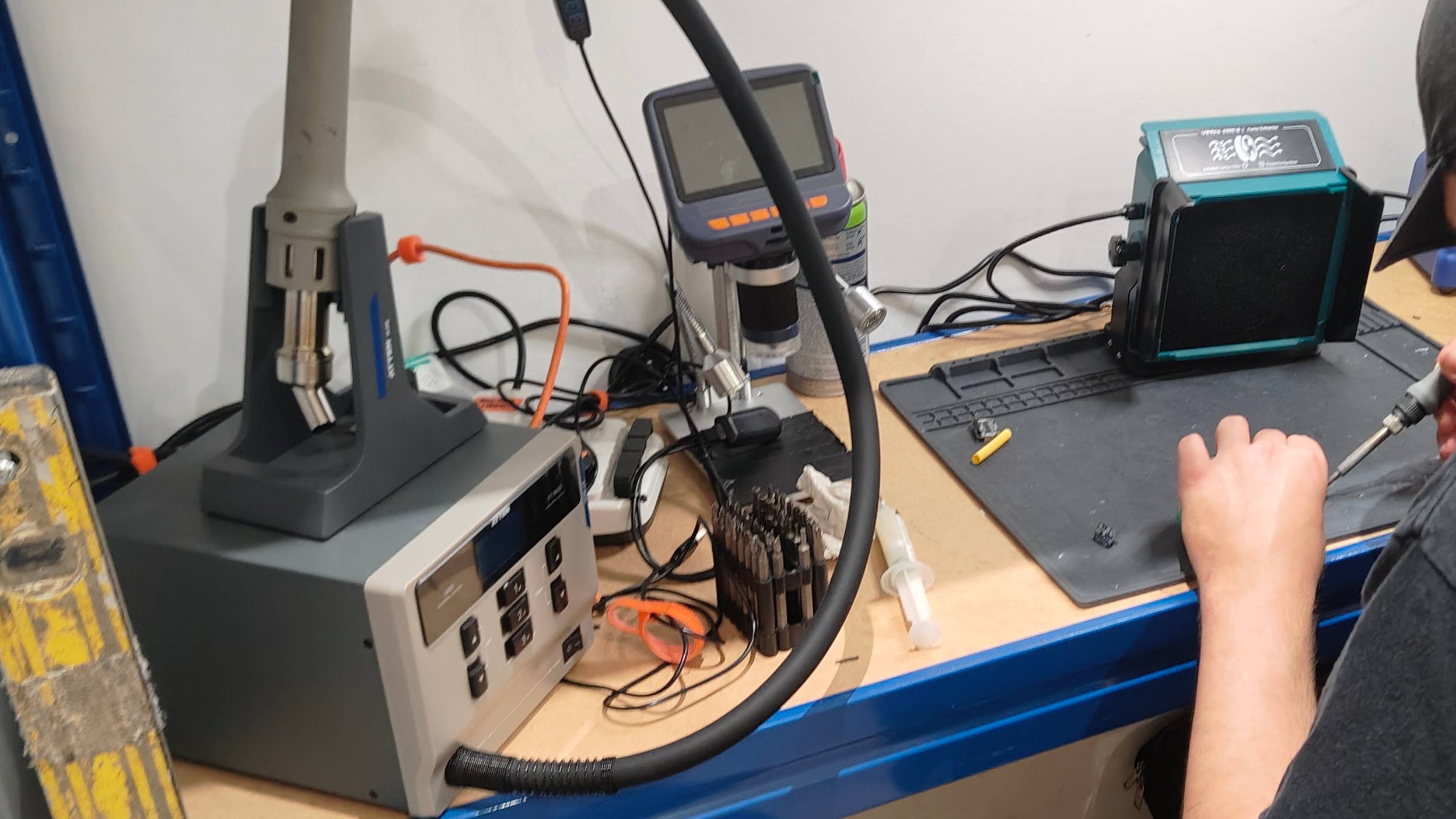
Given the risks mentioned, I asked whether repairing tech from home could actually be dangerous, but was told by Backovska, "It doesn't have to be, but you need to have some training and follow the safety steps."
"If you jump into something just guessing things, then you're learning the hard way — and the hard way might be that you give yourself an electric shock. If you don't have experience with repairing, bring it to your local repair group."
I was told that Fixing Factory works with regulators, safety experts and product designers in order to create health and safety processes. These are taught to trainee volunteers, many of whom pass them onto customers whose goods are broken.
One of the volunteers I spoke to helped develop the training courses I got to witness, and told me that gadget-specific skills were often passed along, between volunteers and gadget owners.
The money and the waste

At the heart of the matter, two key reasons define why tech repairs are important. The first is economical: it will often be much cheaper to fix a device than to buy a new one. Second is the environmental impact: e-waste is a massive (and growing) problem, and keeping a hold of old gadgets (by repairing them) reduces the amount of clutter in landfill.
I love to quote a United Nations stat looking at e-waste from 2022: apparently, it'd fill roughly "enough trucks to form a bumper-to-bumper line encircling the equator". Our planet has a gastric band of junk, and hopefully, it'll push us to stop throwing away electronics. It's one of the core drives behind the aforementioned EU legislation.
The Restart Project is a UK-based charity which focuses on the right to repair electronics; it lobbies for legislation, helps organize repair groups (like the Fixing Factory I visited) and educates on the state of electronics. I spoke to Fiona Dear, co-Director at The Restart Project, to learn where repairable tech is going in the future.
There's nothing much on the horizon for other product categories
Fiona Dear, Co-Director at The Restart Project
"We have seen a bit of change [from companies] in recent years, and that's generally as a response to legislation. Even if the legislation isn't enacted, [manufacturers' changes are] in anticipation of legislation."
At the moment though (and in Europe, at least), this is limited: "There's only really legislation for two kinds of products. The first is white goods like dishwashers, and there's been legislation in place for a few years now. And it's just expanded to smartphones and tablets in Europe — that's why we're seeing a difference.
"Unfortunately, there's nothing much on the horizon for other product categories". That's why it's such a shame that, as mentioned earlier, wireless earbuds have seen a repairability exemption.
A problem of parts pairing
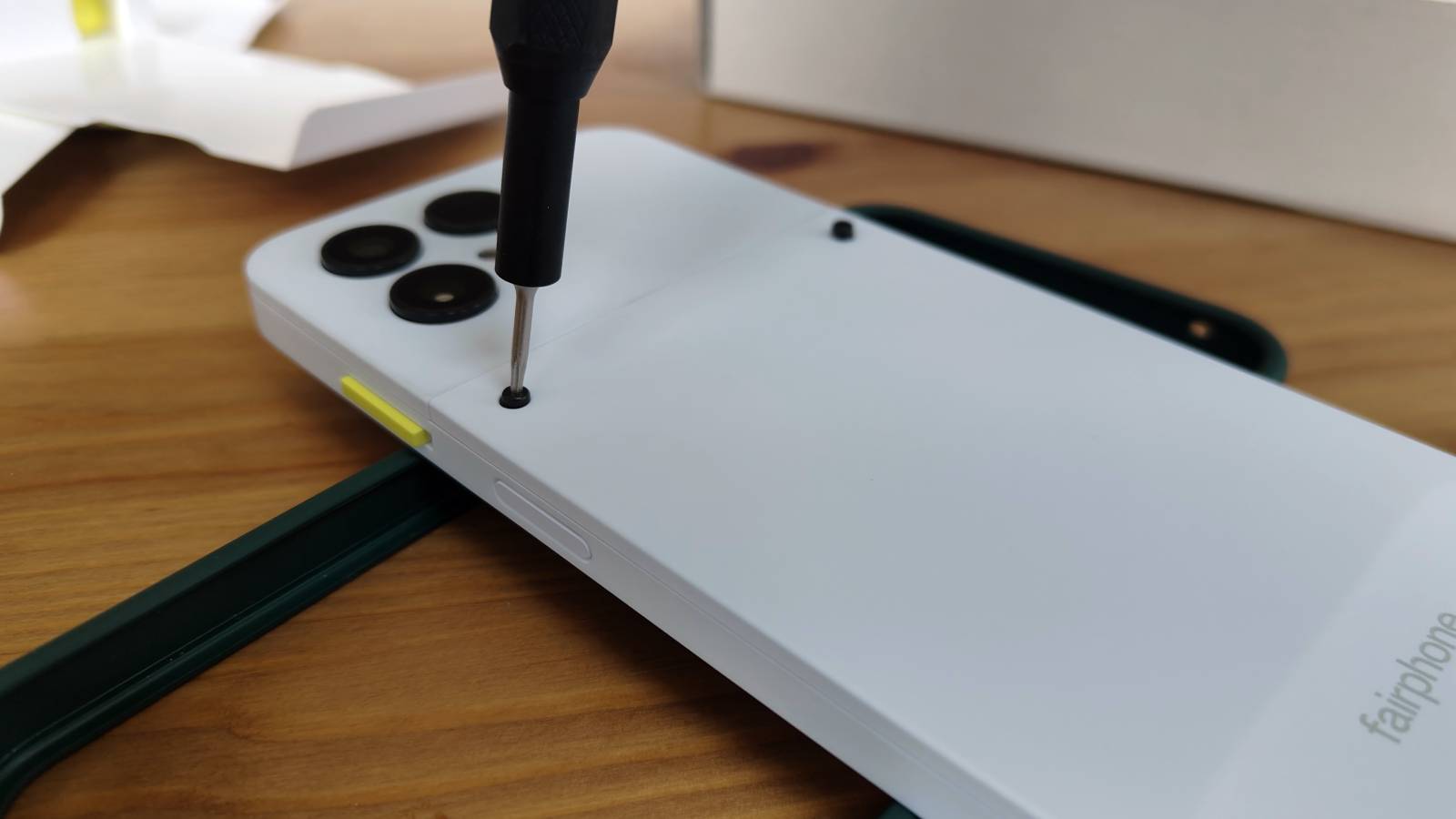
When I asked how technological changes are affecting repairability, one massive problem reared its head, which Dear called out specifically: "Parts pairing".
Parts pairing is a software limitation some brands apply to their devices. The gadgets will recognize when non-native parts are added, and throw up an error message when you try to use them.
For example, a phone might not let you use a new screen, a pair of headphones might reject their drivers, or a laptop might not play with a battery you install. In fact, software seems to be public enemy number one for tech repairability at the moment.
"A dishwasher or even a toaster, might have some kind of smart element in it," Dear explained, "which means it's dependent on software, and software isn't designed to last for as long as the mechanics of the product".
As iFixit points out in its guide to parts pairing, this is done by brands to encourage you to use its own repair services, instead of third-party ones (or repairing your own tech at home, using replacement parts). Often, the brand in question has unique access to make these error messages disappear. Dear flagged refurbished smartphones as being especially susceptible to this practice.
Parts pairing is one of the more cynical practices in this industry
Miquel Ballester, head of product at Fairphone
"Parts pairing is, in my personal opinion, one of the more cynical practices in this industry", Fairphone's Miquel Ballester explained. "Every component we ship, whether it's a battery in a Fairphone or bud and case battery in Fairbuds, is built to be freely interchangeable".
But software limitations remain an issue for tech longevity. "The repair experts who point out that software is the real bottleneck are right. It's exactly why we also treat long-term software support as inseparable from the repairability story".
The brand's latest mobile, the Fairphone 6, has a guaranteed 8 major Android updates, one of the longest life spans pledged by an Android maker. For many years, any more than two years' updates were a rarity, but nowadays companies are offering more and more updates. The Samsung Galaxy S26 and Google Pixel 10 series, for example, both have 7 years in the can.

Become a TechRadar Insider by simply clicking 'Join Now' at the top of this page. Have a question? Please email [email protected]
It takes a change of attitude

When I told peers that I was working on a tech repair piece, I received some intriguing reactions. Some view it as a great way to keep your gadgets ticking along (as it should be), but stories of cowboy repairers abound.
Recently, we covered a story about a Best Buy repairer who downloaded private photos from a broken iPhone, and some people I spoke to seemed to harbor suspicion towards the rows of mobile phone repair shops which line some British high streets.
But the high proliferation of gadget repair stores is indicative of something different: a strong demand for our gadgets to keep working longer. Tech shops aren't fronts for dodgy dealings; they fix the devices we use every day, which is probably a more lucrative market than narcotics or single-use vapes.
Over the last few years, the rise of AI has driven up memory prices, causing gadgets to cost a lot more money, and new purchases to be more and more of a treat. You've surely noticed that electronics purchases nowadays cost a lot more (and bundle in some useless AI tools as a consolation prize, but that's a gripe for another day).
With no sign of that slowing down, gadget repairs are only going to be more and more important. And so a change is needed: a change in attitude to tech fixing, a change in our own skill sets so we're able to do so at home, and a change in legislation so that companies have to make it easier for us to mend our ailing electronics.
Share
What's Your Reaction?
 Like
0
Like
0
 Dislike
0
Dislike
0
 Love
0
Love
0
 Funny
0
Funny
0
 Angry
0
Angry
0
 Sad
0
Sad
0
 Wow
0
Wow
0