Why 'time to token' is the new battleground for data centers
The disconnect between the pace of software capabilities and physical constraints of data center infrastructure.

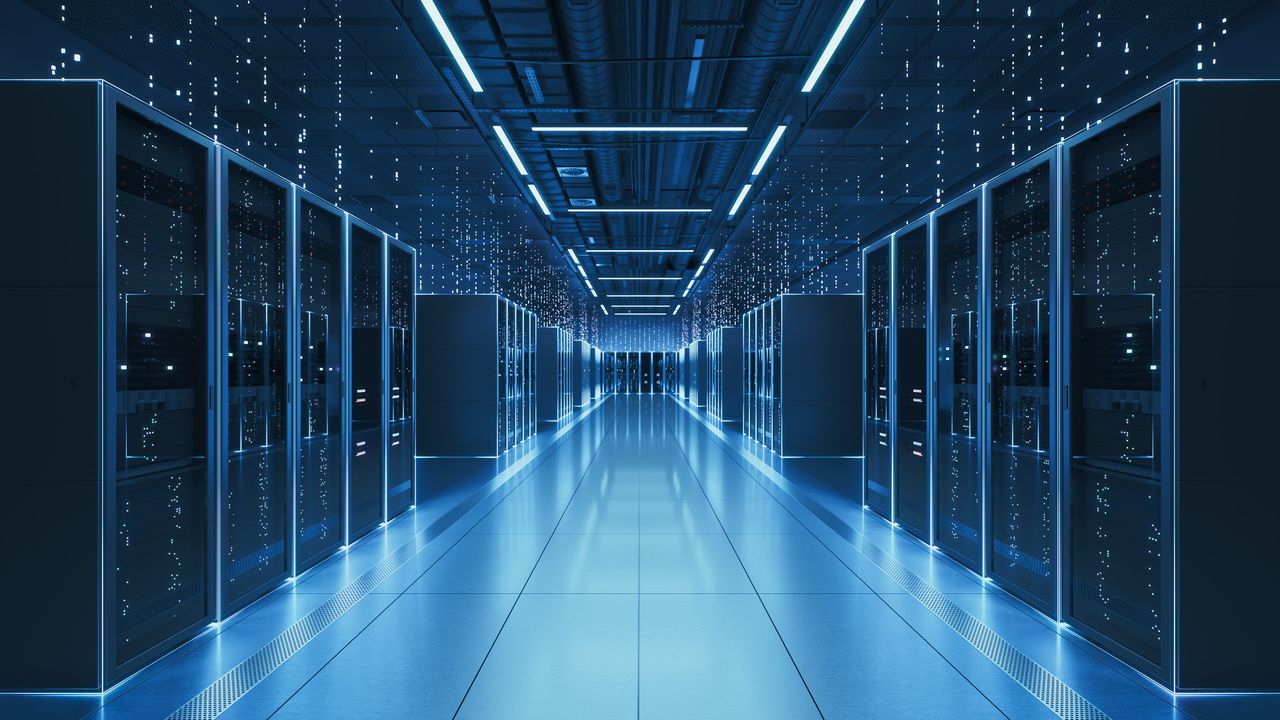
The rapid expansion of Generative AI has created a significant disconnect between the pace of software capabilities and the physical constraints of data center infrastructure.
Hyperscalers and enterprises alike are discovering that raw compute capacity alone is no longer the differentiator. Instead, the focus has shifted decisively toward the speed of deployment.
In this new era, the primary metric for success is Time to Token - the end-to-end duration from initial planning and site preparation to the moment an AI cluster powers up and begins generating its first output tokens.
This metric encapsulates far more than inference latency (the traditional "time to first token" in model serving).
It measures the full orchestration challenge - securing power, procuring hardware, navigating logistics, implementing advanced cooling and integrating systems under immense time pressure.
As AI capital expenditure rises, delays in activating capacity carry a growing commercial cost. This means that the IT infrastructure challenge is shifting from isolated component optimization to end-to-end delivery.
From silos to high-velocity orchestration
Traditional data center construction followed a predictable, linear hierarchy. Power providers, cooling specialists, civil engineers, and hardware vendors operated in silos, handing off responsibilities sequentially.
This model worked for stable enterprise workloads, but AI deployments have changed those assumptions. Where high-performance clusters are concerned, infrastructure dependencies become tightly coupled and delays in one layer of the stack can slow the entire program.
Modern AI deployments demand deep, partnership-based orchestration that brings power, cooling, and hardware vendors together from day one. The power train and thermal chain should be co-designed alongside compute as an integrated stack.
This collaborative approach compresses deployment timelines from years to months with industry leaders increasingly designing infrastructure to be "silicon-ready," with facilities prepared and waiting for graphics processing unit (GPU) shipments rather than the reverse.
The economic driver is that idle high-end AI hardware is extraordinarily expensive. When racks worth millions of pounds sit unpowered due to lack of site readiness, the financial implications are immediate and severe.
Converged infrastructure eliminates traditional bottlenecks such as mismatched power feeds, inadequate cooling loops, or incompatible networking, that once plagued brownfield retrofits.
Bridging the density gap with liquid cooling
One reason this issue has become so urgent is the sharp increase in rack density associated with AI workloads. Legacy data centers were typically engineered for 5-15 kW per rack. AI clusters now push toward 100 kW and beyond, with some next-generation designs targeting 175 kW+ or even 600 kW per rack. Air cooling hits fundamental physical limits at these densities.
Bridging this cooling gap involves integrating more advanced liquid-based solutions with traditional air cooling. IEEE Spectrum suggests that liquid cooling is essential for capturing the intense heat generated by modern GPUs. Rear-door heat exchangers or direct-to-chip systems allow legacy sites to support AI hardware without a total rebuild.
The integration of these cooling systems requires precise mechanical engineering of secondary loops. Even minor pressure drops or temperature fluctuations can destabilize hardware in high-density AI clusters. Using Coolant Distribution Units (CDUs) to manage the interface between facility-side and rack-side cooling is now a baseline necessity. This orchestration allows thermal equipment to remain stable even during peak processing loads.
Hybrid approaches enable operators to retrofit existing sites, extending the life of brownfield facilities while avoiding full rebuilds. Liquid cooling also delivers significant efficiency gains, with studies showing notable increases in Power Usage Effectiveness (PUE) compared to air-only systems.
The role of converged infrastructure
The rise of sovereign AI - where nations and regulated industries demand local control over data, models, and compute for security, privacy, and compliance - requires dedicated infrastructure that remains within specific jurisdictional boundaries.
Meeting this demand requires the rapid deployment of industrialized data center blocks. These converged infrastructure designs can reduce deployment times by up to 85%, allowing organizations to scale their AI capacity locally and securely.
The pre-engineered, factory-integrated blocks are validated in controlled conditions and delivered for streamlined on-site deployment, which reduces the complexity of on-site construction and improves overall reliability. By adopting an industrialized approach, organizations can bypass the traditional multi-year construction cycle. This agility is important for keeping pace with the rapid evolution of the AI sector.
Standardized modules offer predictability in cost and timeline, scalability ("pay-as-you-grow"), and higher reliability through offsite quality control. For organizations pursuing national AI strategies, this agility enables secure, localized clusters without waiting for multi-year construction cycles. Hybrid modular solutions further allow brownfield expansions or edge deployments.
A collective ecosystem for infrastructure success
The lesson from recent major AI deployments is clear. To meet deployment windows of months rather than years, the ecosystem must operate as a collective with transparent collaboration across grid operators, energy providers, critical digital infrastructure providers, and logistics partners. Heat orchestration, power management, and supply chain synchronization are now core competencies.
Organizations can overcome complexity by using digital twins for simulation, advanced automation, and real-time visibility. Facilities will need to become more adaptive, efficient, and responsive as concerns such as water usage, energy sourcing, and environmental impact face greater scrutiny alongside performance metrics.
Success in this new era will be defined by the ability to orchestrate a transparent and integrated ecosystem. This requires a tight feedback loop between grid providers, energy companies, and end-to-end infrastructure partners.
Critical digital infrastructure is no longer a static foundation - it is a dynamic, strategic asset. Deployment velocity should be treated as a core engineering discipline, orchestrating every layer from electrons to tokens with precision and speed.
The race to minimize Time to Token is about keeping pace with innovation as well as defining the next generation of digital infrastructure.
We list the best cloud hosting services.
This article was produced as part of TechRadar Pro Perspectives, our channel to feature the best and brightest minds in the technology industry today.
The views expressed here are those of the author and are not necessarily those of TechRadarPro or Future plc. If you are interested in contributing find out more here: https://www.techradar.com/pro/perspectives-how-to-submit
Share
What's Your Reaction?
 Like
0
Like
0
 Dislike
0
Dislike
0
 Love
0
Love
0
 Funny
0
Funny
0
 Angry
0
Angry
0
 Sad
0
Sad
0
 Wow
0
Wow
0