Ukraine claims $400 FPV drone destroyed Russia's $19 million 'Apache rival' attack helicopter
A $400 Ukrainian FPV drone chased down and allegedly 'destroyed' Russia's Mi-28 "Night Hunter" attack helicopter.

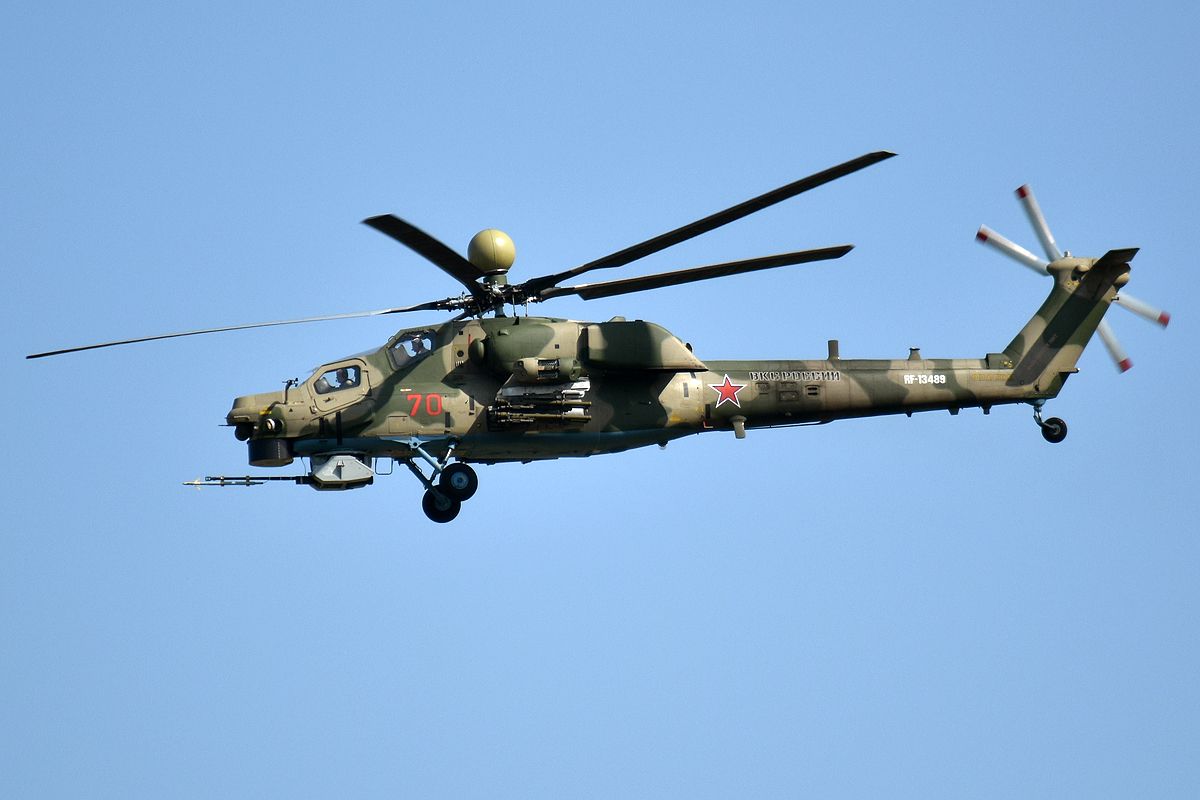
- Ukraine's Unmanned Systems Forces (USF) struck a Russian Mi-28 attack helicopter in flight over the Belgorod region with a SkyFall Shrike 10 FPV drone, hitting the helicopter from above
- The attack, which saw a $400 drone strike and 'kill' a $19 million attack helicopter as per Skyfall, represents an impressive 47,500x exchange ratio
- The attack isn't isolated: Russia has lost over 20+ Mi-28s in similar attacks since the conflict began in 2022
The Russia-Ukraine conflict continues to expand as the latter continues to leverage asymmetric warfare to hold its own against a rival with superior technology and manpower, even as the conflict heads into its fifth year.
Much of this is due to Ukraine's pivot to home-grown drone and bot manufacturing, which helps to counter heavy Russian weaponry such as tanks, helicopters, and APCs using cheap but effective drones and bots to hold the line.
It has also allowed several startups to join the fray, offering low-cost options, often funded by external partners and allies to bolster Ukraine's war effort, and SkyFall's Shrike 10 FPV drone is one of them.
An impressive achievement, albeit with disputed claims
The Shrike 10 FPV drone, which costs less than a mid-range smartphone, flew up alongside a Russian Mi-28 attack helicopter, climbed above it, and dove into its tail boom on the morning of the July 17, 2026, in Russia's Belgorod region.
The strike was carried out by operators of the 427th Separate Unmanned Systems Brigade "Rarog," and confirmed by Major Robert "Magyar" Brovdi, commander of Ukraine's Unmanned Systems Forces (USF), who published the drone's own final-approach footage on Telegram with the terse caption that the "Night Hunter" had gone "into the ground."
Ukrainian firm SkyFall, whose FPY drone, the Shrike 10, was involved in the attack, stated that it was priced at under $400 per unit. The Mi-28, per the same company, costs $19 million.
While the headline is impressive, the math might not completely check out: other sources put the cost of the Mi-28 at approximately $15 million, while a recent deal with Germany (50,000 SkyFall-built FPV drones for Ukraine, fitted with autonomous targeting software from US firm Auterion in a €90 million (~$103 million) deal) could mean that some liberties may have been taken to get to the $400 figure, though the Shrike 10 that attacked the Mi-28 might be differently configured or on the lower end of the spectrum.
The instance, which sees Ukraine claiming a kill on what is a pricey part of the Russian arsenal, is partially unconfirmed, with independent observers pointing out that there is no aftermath video and that attack helicopters often survive and successfully land after such hits. To Ukraine's credit, a similar kill, however, was reported in 2025 by the Ukrainian armed forces with footage to confirm the crash that followed.
Irrespective of the sum, the fact that a drone that costs a ten-thousandth of an attack helicopter that has been retrofitted to hunt it can be a credible predator of the same is potentially alarming, not only for the Russians but for military planners across the world, even if the damage in question might be open to dispute.
This is further corroborated by unverified sources claiming that the damage was 'minor' and did not affect either of the helicopter's two occupants at the time, thereby disputing much of SkyFall's claims beyond the drone's impact.
Russia's defense ministry, however, has not commented directly on the matter, and no open-source tracker such as Oryx has confirmed imagery of any wreckage either.
Ukrainian President Volodymyr Zelensky recently said the natiopn is producing 10 million drones a year while vying for a production target of 20 million drones in the future, much of it backed by foreign aid, indicating that the Russian Mi-28, which has 20+ confirmed visual losses since the conflict began, continues to be both, an attacker and defender against drones of all shapes and sizes
Share
What's Your Reaction?
 Like
0
Like
0
 Dislike
0
Dislike
0
 Love
0
Love
0
 Funny
0
Funny
0
 Angry
0
Angry
0
 Sad
0
Sad
0
 Wow
0
Wow
0