The MSI Raider 16 Max HX delivers on gaming performance and packs an excellent display, but the build quality leaves a lot to be desired
MSI's Raider 16 Max HX can throw down with the best gaming laptops in terms of performance, but I was unimpressed by the chassis.

MSI Raider 16 Max HX: Two-minute review
MSI has something of a mixed history with gaming laptops. I've reviewed quite a few products from the Taiwanese computer hardware brand, and in the past, I've championed MSI for its ability to provide high-performance products with very competitive price tags.
Unfortunately, it seems that the ongoing RAM crisis has caused MSI's latest high-end gaming laptop, the Raider 16 Max HX, to take a hit in this department. Needless to say, this laptop is very far from cheap, with my review configuration clocking in at a steep $4,299 / £3,999 (around AU$6,235).
I'll dig more into the pricing details further down in this review, but the days of wallet-friendly gaming laptops are truly over. That's not a pure criticism of MSI, but I'll admit I balk a bit less at a sky-high price tag on something like Razer's Blade 18; at least Razer gear has always cost a premium, while MSI has frequently offered comparable specs at more reasonable prices.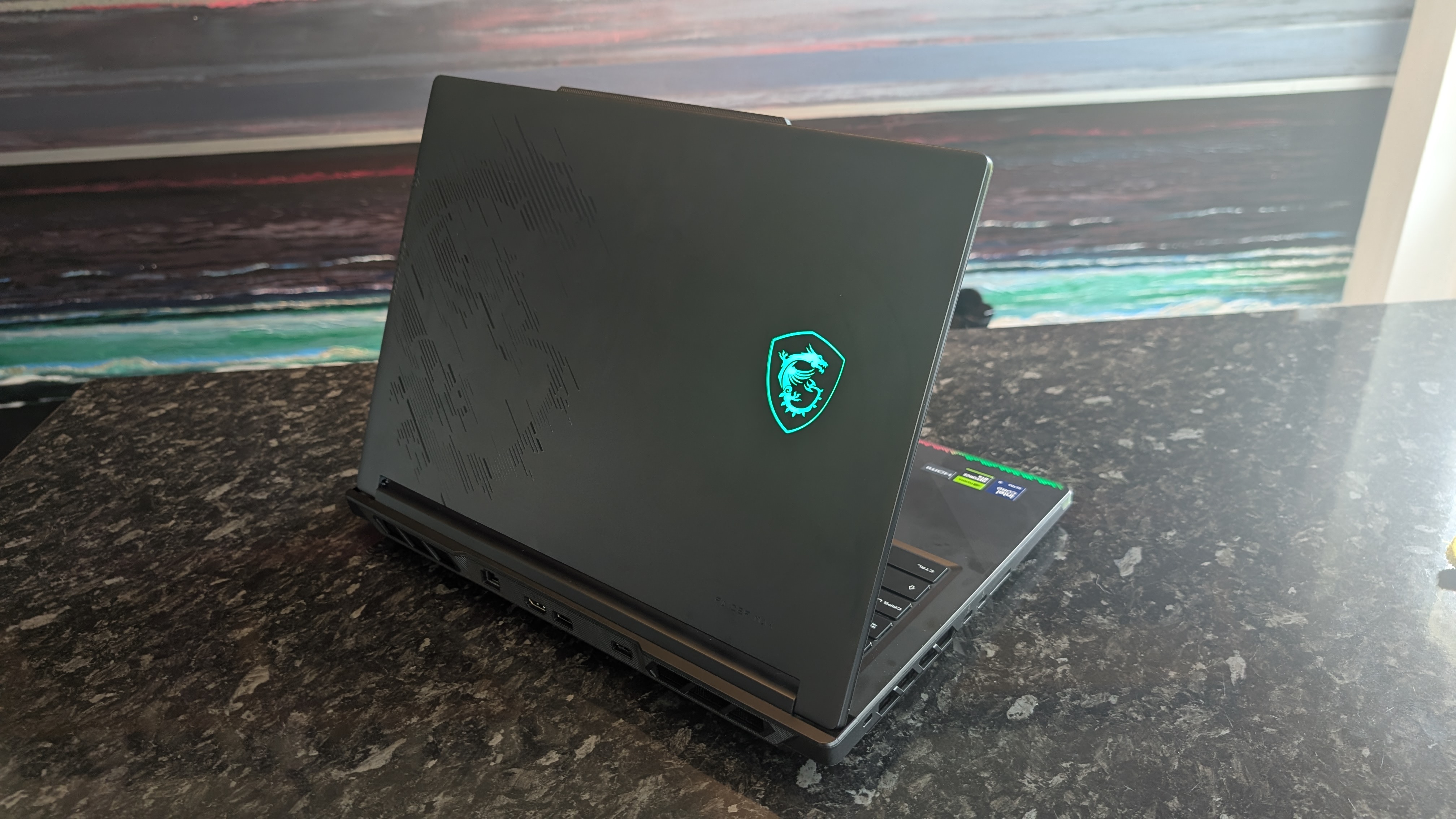
Setting aside the price tag for a moment, though: is this a good gaming laptop? Well, for the most part, I'd say yes. Performance is strong across the board, with an Intel Core Ultra processor and Nvidia RTX 5000 GPU combined with 32GB of RAM to deliver high framerates in games and power through creative workloads. It's well-equipped for AI-focused workloads too, if you're looking for a device that can pull double duty for both work and play.
The VESA-validated QHD+ screen is bright and colorful, with optional OLED models available in some regions. The chassis is pretty chunky – I certainly wouldn't recommend the Raider 16 Max HX to anyone looking for a laptop they can easily take on the go – but it makes good use of that size, with a full-scale keyboard that doesn't feel cramped in use and a great selection of ports for physical connectivity.
Pricing aside, my main criticism of the MSI Raider 16 Max HX is the overall build quality. The plastic outer casing and screen hinge feel sturdy enough, but the keyboard housing has far too much flex on firm keypresses, and the touchpad is frankly abysmal, feeling like it might break if I pressed down too hard.
I'll delve more into these issues in the design section of this review, but I will say this here: they're not absolute dealbreakers. For starters, you should really be using one of the best gaming mice with any gaming laptop anyway, so the weak touchpad shouldn't actually be a huge problem for actual gaming. Overall, I did quite like the Raider 16 Max HX – it's simply difficult to recommend such a high-end laptop in the current hardware climate.
MSI Raider 16 Max HX review: Price & availability
- Starts from $2,999 / £2,249 (around AU$4,350)
- Available now in the US and UK
- Higher-end configurations get expensive fast
Even the base configuration of the MSI Raider 16 Max HX isn't cheap, starting out at $2,999 / £2,249 (around AU$4,350) for a version with the Nvidia RTX 5070 Ti graphics card, 16GB of RAM, and a less powerful Intel Core Ultra 7 CPU.
The review unit I received from MSI is a high-spec model, packing an RTX 5090 and Intel Core Ultra 9 290HX Plus processor along with 32GB of RAM. This configuration will set you back a rather eye-watering $4,299 / £3,999 (around AU$6,235). There's also a middle-ground model, which uses the RTX 5080, and a few interstitial configurations that swap out the CPU, RAM, or display for slightly different components (including the aforementioned optional OLED display).
In short, it ain't cheap. Sure, you can find more expensive laptops out there, but not many of them. I can't comment on it with absolute confidence since I was sent an RTX 5090 version, but my past experiences with laptop RTX 5070 Ti GPUs lead me to suspect that the lower-end models might actually provide slightly more bang for your buck than the top-spec configurations.
MSI Raider 16 Max HX review: Specs
Base spec | Max spec (review config) | |
Price | $2,999 / £2,249 (around AU$4,350) | $4,299 / £3,999 (around AU$6,235) |
CPU | Intel Core Ultra 7 251HX | Intel Core Ultra 9 290HX Plus |
Graphics | Nvidia GeForce RTX 5070 Ti Laptop GPU | Nvidia GeForce RTX 5090 Laptop GPU |
RAM | 16GB DDR5 | 32GB DDR5 |
Display | 16-inch QHD+ (2560 x 1600p), 240Hz, IPS | 16-inch QHD+ (2560 x 1600p), 240Hz, IPS (OLED optional) |
Storage | 1TB NVMe SSD PCIe Gen4 | 2TB NVMe SSD PCIe Gen4 |
Ports and Connectivity | 3x USB-A (3.2 Gen2), 2x USB-C (Thunderbolt 4), 1x HDMI 2.1, 1x SD card reader, 1x RJ-45 Ethernet, 1x 3.5mm combo audio; Wi-Fi 7, Bluetooth 5.4 | 3x USB-A (3.2 Gen2), 2x USB-C (Thunderbolt 4), 1x HDMI 2.1, 1x SD card reader, 1x RJ-45 Ethernet, 1x 3.5mm combo audio; Wi-Fi 7, Bluetooth 5.4 |
Battery | 91.8Whr | 91.8Whr |
Weight | 5.73lbs / 2.60kg | 5.73lbs / 2.60kg |
Dimensions | 10.6 x 14.3 x 1.1 inches / 26.9 x 36.3 x 2.89 cm | 10.6 x 14.3 x 1.1 inches / 26.9 x 36.3 x 2.89 cm |
MSI Raider 16 Max HX review: Design
- Large, bulky 'gamer' design
- Bright, colorful display
- Plenty of ports and good cooling
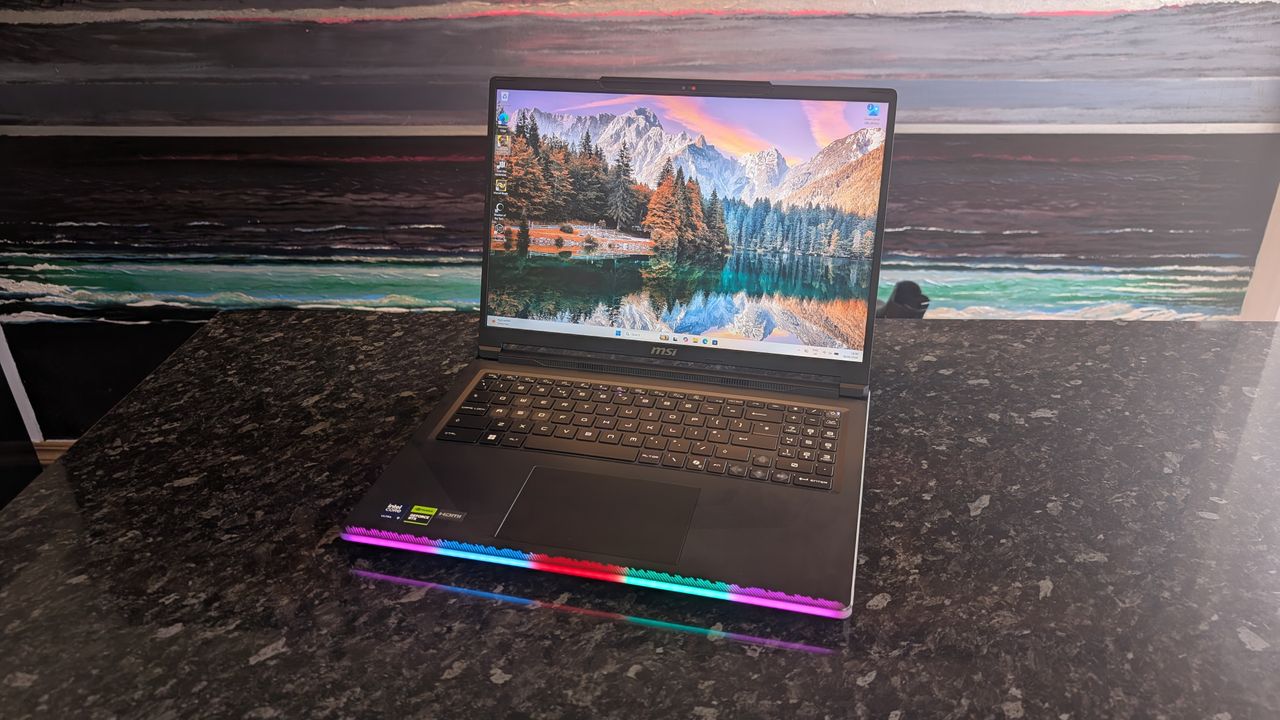
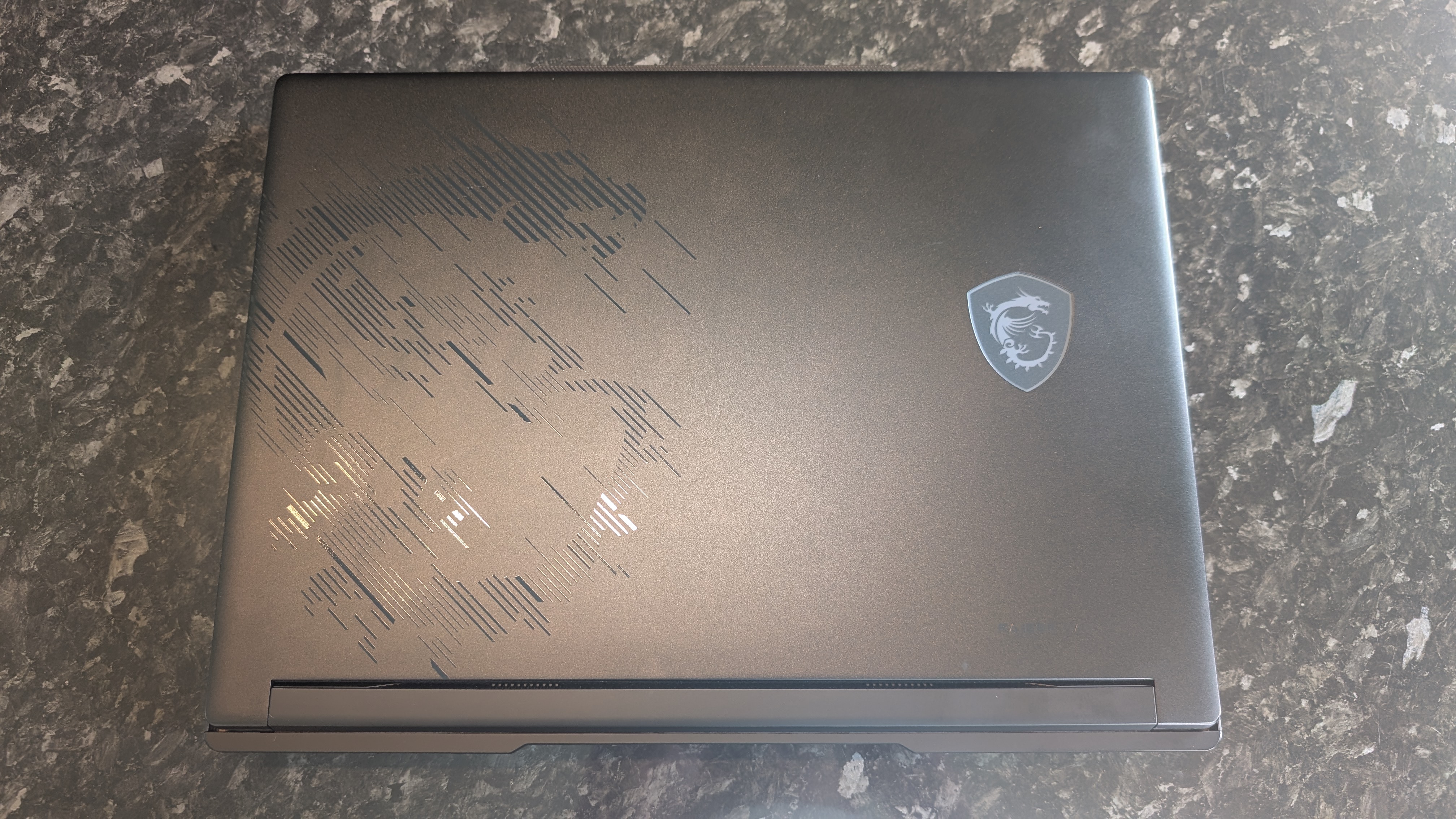
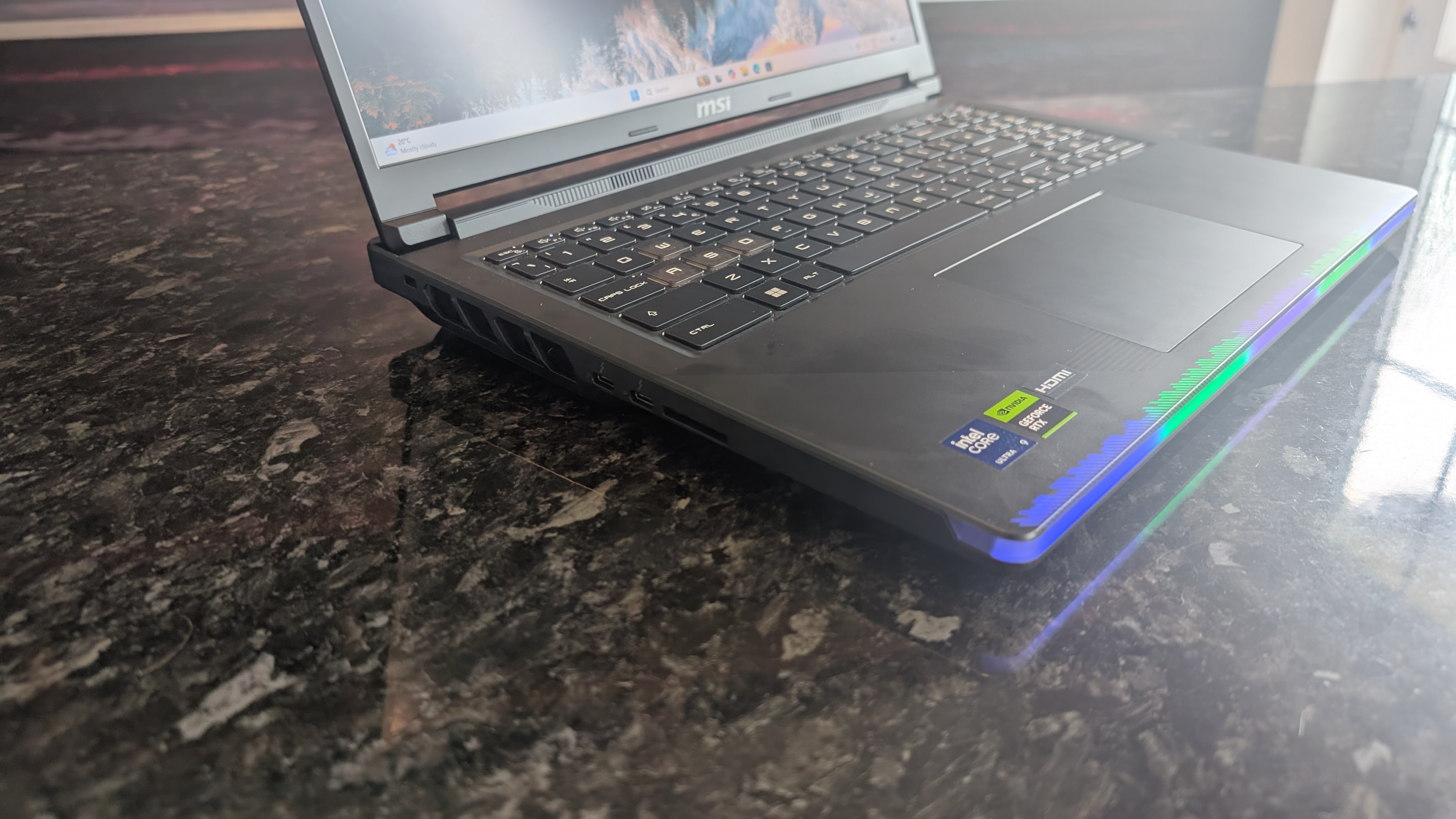
Make no mistake, this is a gaming laptop through and through. From the translucent WASD keys to the patterned lid and RGB lightbar across the front of the chassis, the MSI Raider 16 Max HX absolutely screams 'gaming aesthetics' – so it might not be the laptop for you if you want something you can take into a serious office environment as well as gaming at home.
This advice goes double, in fact, because the Raider 16 Max HX is a bit of a chunky device, which hurts its portability. Weighing more than two and a half kilos and measuring over an inch thick with the lid closed, it's far from a lightweight laptop.
That being said, I won't knock the score down for the bulky chassis. MSI has made good use of the extra size, squeezing in a full-size RGB-backlit keyboard with a numpad, yet the main key spread doesn't feel cramped – I found it pretty good for typing, with decent spacing and a reasonable amount of travel. Unfortunately, the aforementioned flex in the keyboard housing gives a slightly spongy feel on firm presses, which may turn some users off.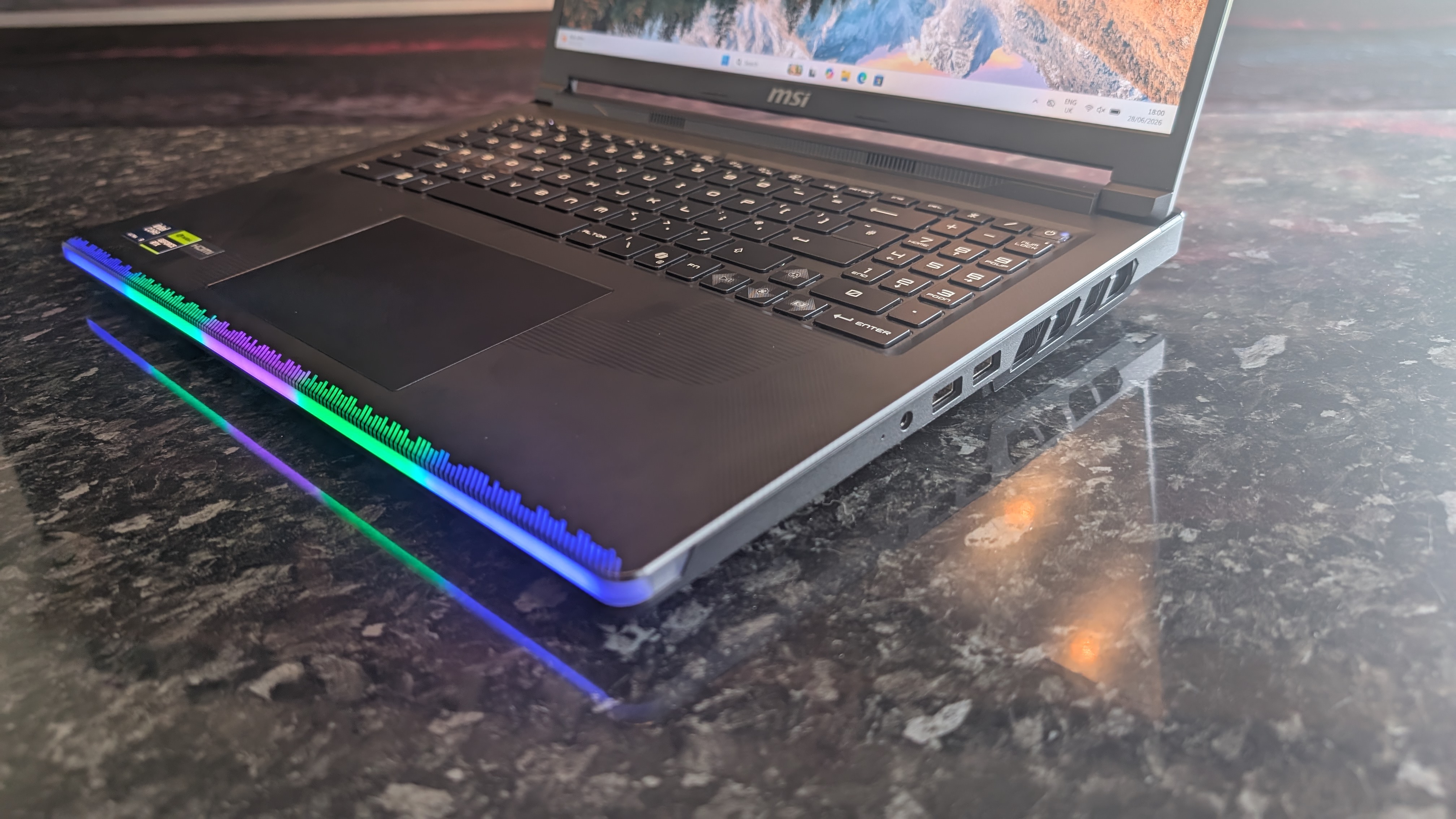
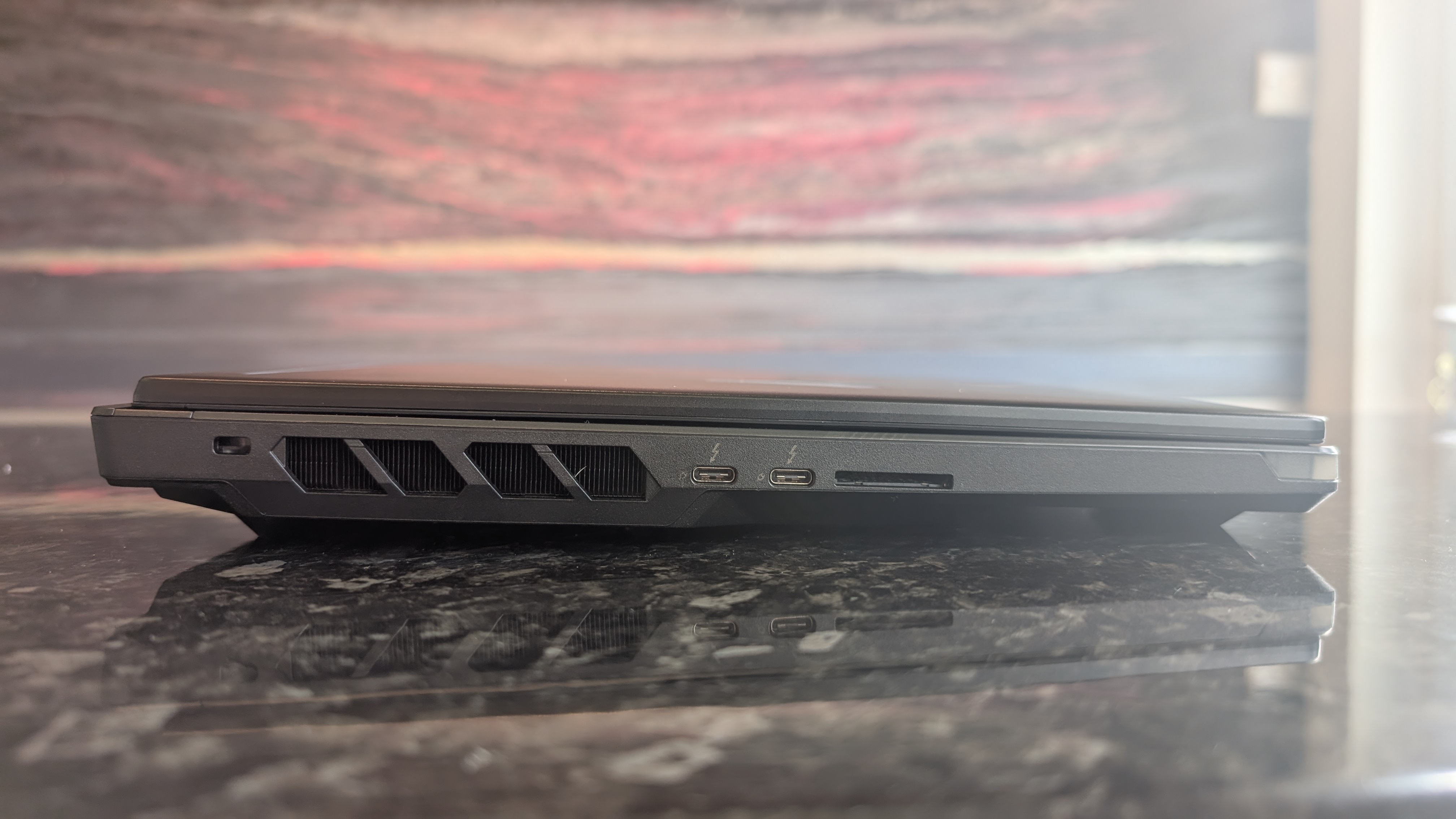
The large chassis has some other bonuses, too; you get a rich selection of physical ports here, which I'm always pleased to see. In addition to multiple USB-A and USB-C (Thunderbolt 4) ports, you also get HDMI for connecting a second display and an SD card reader – potentially excellent for digital photographers or filmmakers who want to use their laptop both for gaming and editing work.
A bulkier design also allows for superior cooling. I'll dig into this more in the performance section, but long story short: this Raider has a pretty solid cooling solution, utilizing a triple-fan design with five large exhaust vents that help keep the laptop from getting too warm even during lengthy gaming binges. Considering that some gaming laptops can get pretty toasty when running graphically demanding titles, this is a good inclusion.
There's also a degree of upgrade flexibility here, with a removable underside panel that lets you swap in a new SSD (with an empty slot) or upgrade the RAM should you so desire. This isn't an uncommon sight in modern gaming laptops, but I always appreciate the option to boost my system a little.
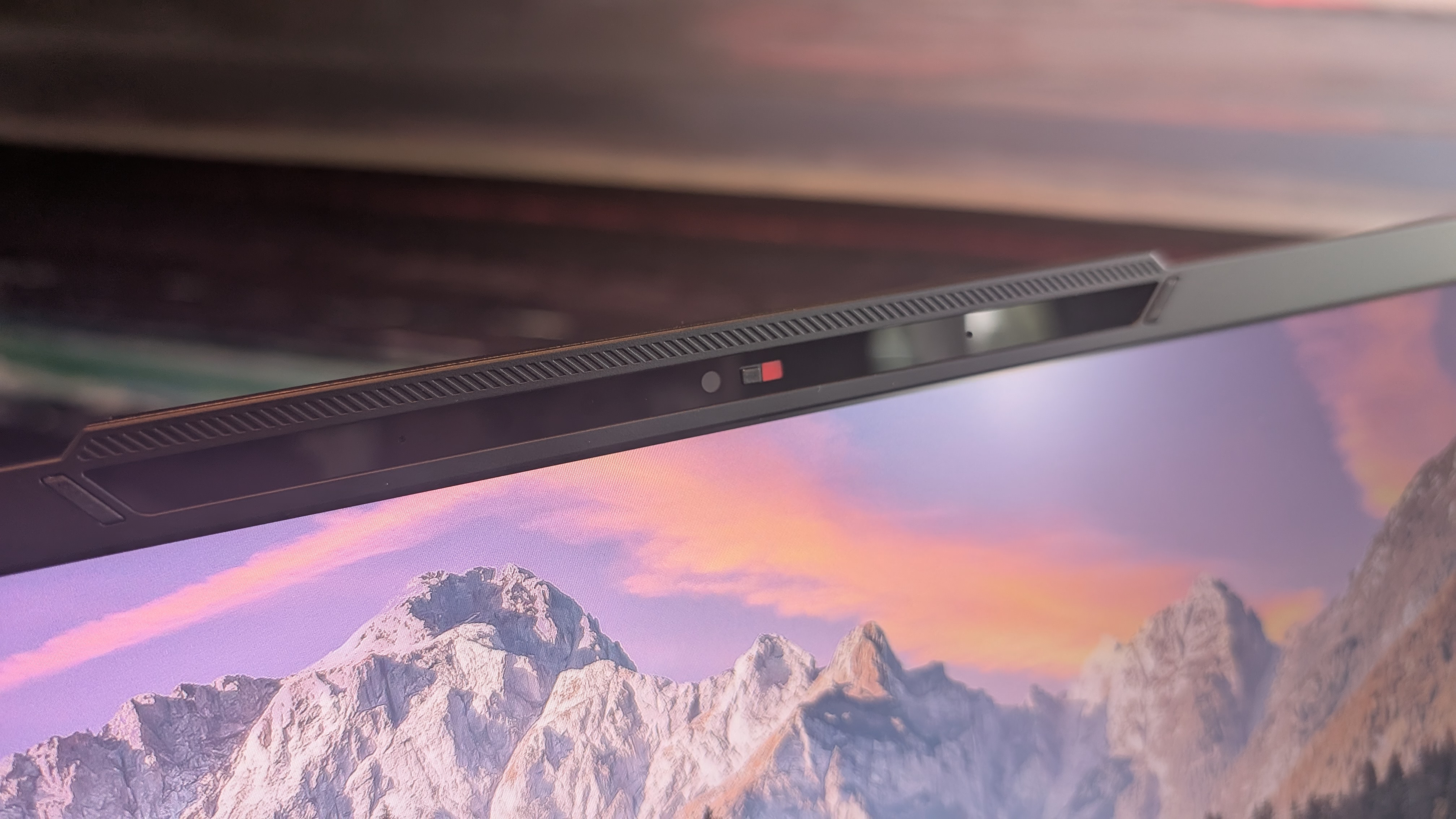
Moving over to the display, it certainly feels like it belongs on a high-end laptop, delivering good maximum brightness and color reproduction even on the default IPS panel in my review unit (certain high-spec configurations swap this out for an even more vivid OLED panel instead). The QHD+ (1600p) resolution and 240Hz refresh rate are ideal for gaming – especially if you're into fast-paced esports games that demand a high framerate, like Counter-Strike or Valorant.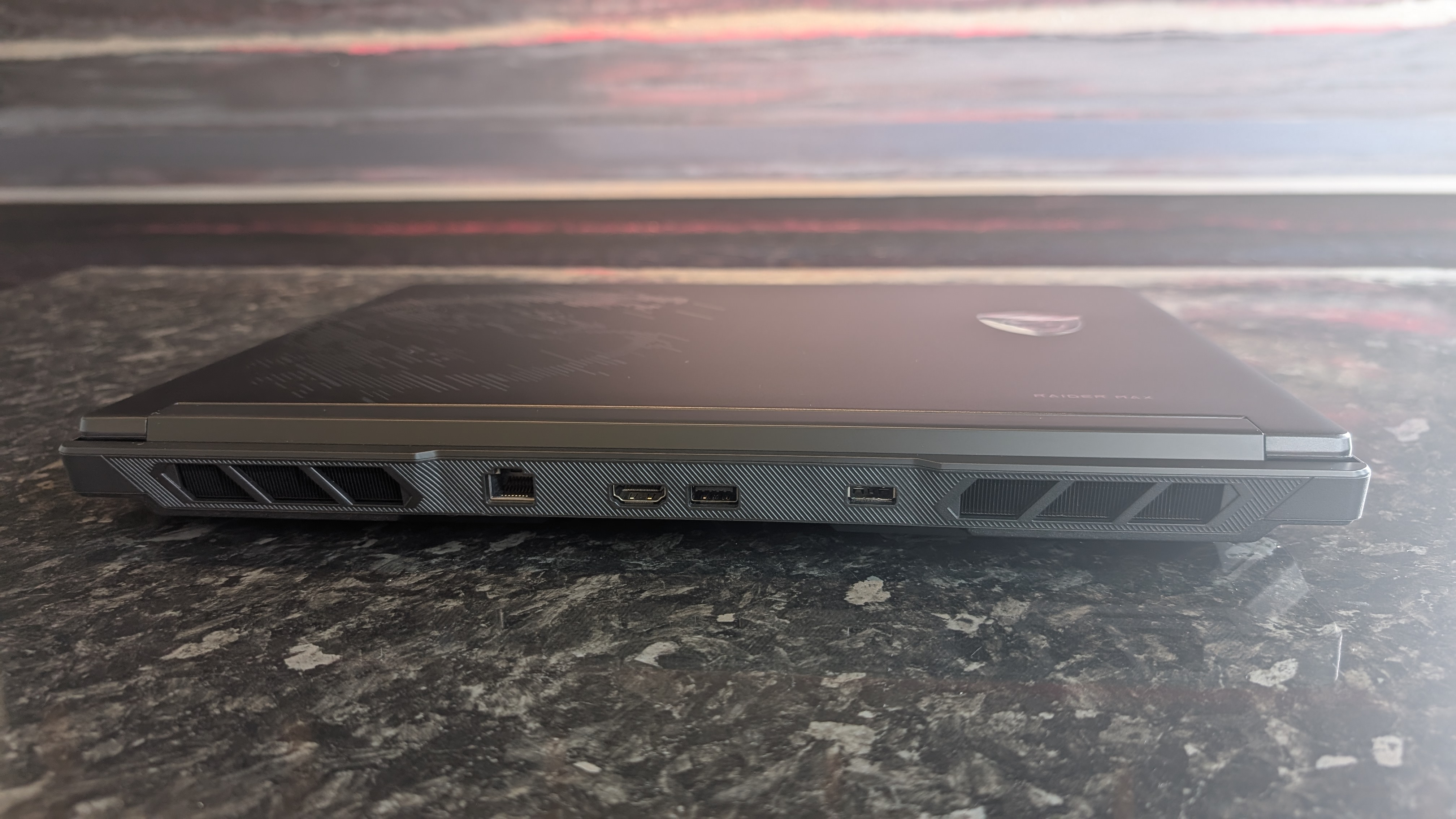
Above the display sits a 1080p webcam, which also includes a physical privacy shutter. In my opinion, physical shutters or camera killswitches should be mandatory in laptops, so I'm glad to see one included here.
I really do need to address the touchpad. This might be one of the worst-feeling touchpads I've ever seen on a 'premium' laptop; in fact, I've legitimately seen better pads on budget-friendly Chromebooks. Clicks feel wobbly and unsatisfying, the whole housing flexes far too much even on less forceful presses, and right-clicks sometimes fail to register unless your finger is in the extreme bottom-right corner of the pad.
It's just... bad. I acknowledge that in practice, this won't be a massive issue since all but the most unhinged PC gamers will always use a mouse over a touchpad, but considering that my review model costs in excess of four thousand US dollars, it feels egregiously poor quality.
Lastly, the speakers and microphone are decent but unspectacular. You could find a gaming laptop with superior audio features, but I won't mark the Raider 16 Max HX down for that, because much like the touchpad situation, any sensible PC gamer will be using a gaming headset anyway.
MSI Raider 16 Max HX review: Performance
- Powerful AAA gaming performance
- Also good for creative and AI workloads
- Fans do get noisy
3DMark: Night Raid: 92,257; Fire Strike: 39,894; Steel Nomad: 6,203; Speed Way: 6,254; Solar Bay: 111,156
Geekbench 6: Multicore: 20,638; Single-core: 3,114
Cinebench R24: Single Core: 134; Multi Core: 2,229
Crossmark: Overall: 2,402; Productivity: 2,195; Creativity: 2,729; Responsiveness: 2,148
Passmark Overall: 15,144; CPU: 64,888; 2D Graphics: 1,016; 3D Graphics: 30,528; Memory: 3,730; Disk: 43,681
BlackMagicDisk: Read: 4,790MB/s; Write: 3,314MB/s
HandBrake 4K to 1080p: 119.5fps
Civilization VII: (Max resolution, AMD FSR 3, High): 209fps; (1080p, High): 219fps
Shadow of the Tomb Raider: (Max resolution, Highest, Balanced upscaling): 228fps; (1080p, Highest, SMAA x4): 209fps
Total War: Warhammer III: Mirrors of Madness: (1080p, Ultra): 98fps; (Max Resolution, Ultra): 80fps
Cyberpunk 2077: (Max resolution, Ultra, Balanced upscaling): 132fps; (1080p, Ray Tracing: Ultra, Balanced upscaling): 108fps; (1080p, Ultra): 146fps
Marvel Rivals: (Max resolution, Balanced upscaling, Ultra): 798ps; (1200p, Low): 175fps
Battery Life (TechRadar movie test): 8 hours and 11 minutes
Shocking nobody, my RTX 5090-toting review unit of the MSI Raider 16 Max HX blasted through our benchmarking tests with aplomb, delivering top-notch performance throughout.
Naturally, that meant excellent framerates in a range of triple-A games; in addition to the ones visible in that boxout, I also tested Marathon, Elden Ring, Warframe, and Ratchet and Clank: Rift Apart, and they all looked fantastic on the QHD+ display.
It was even able to average exactly 60 frames per second in Cyberpunk 2077 with the Ray Tracing Overdrive preset at the Raider's native 1600p resolution, using only Balanced DLSS upscaling with no frame generation – a notoriously demanding benchmark that batters many of the best gaming laptops.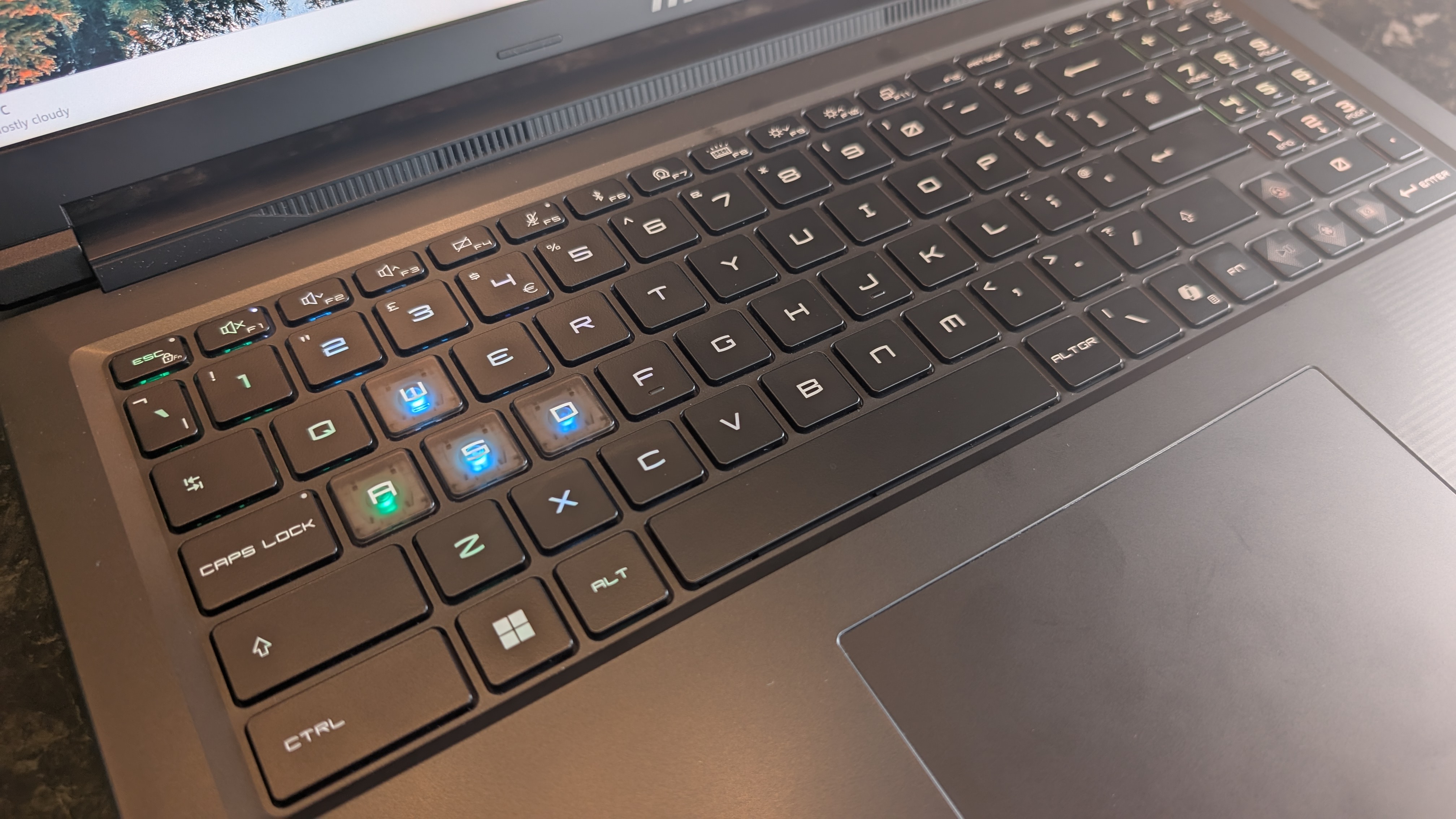
So, both synthetic and real-world gaming tests went smoothly – but what about creative workloads? Well, the Raider 16 Max HX delivers on that front too, handily matching (and even exceeding, in some tests) the scores achieved by Razer's most recent Blade 18 with the same GPU. 3D rendering, video editing, statistical modelling, LLM training... you name it, the Raider can handle it.
The Intel Core Ultra 290HX Plus in my review unit is also a beast, delivering solid performance across both single- and multi-core workloads. For anyone looking to play CPU-bound games like large-scale management sims, strategy, and 4X titles, this ensures you won't encounter CPU bottlenecks that hamper performance.
I would note that during intensive workloads (predominantly games and creative software), the fans do get fairly loud. They're not the noisiest I've ever heard in a gaming laptop, but it's something potential buyers may want to bear in mind if they're planning to use the Raider in shared spaces, because they do have quite a noticeable whine that almost completely drowned out the fans of my nearby desktop PC during benchmarking. A good headset should insulate your ears from this noise, at least.
It also offers pleasingly fast SSD read and write speeds – which, in fairness, is something I would fully expect from a laptop in this price range, but is good to see nonetheless. Creative professionals who regularly work with large file sizes will appreciate how quickly you can transfer your files around.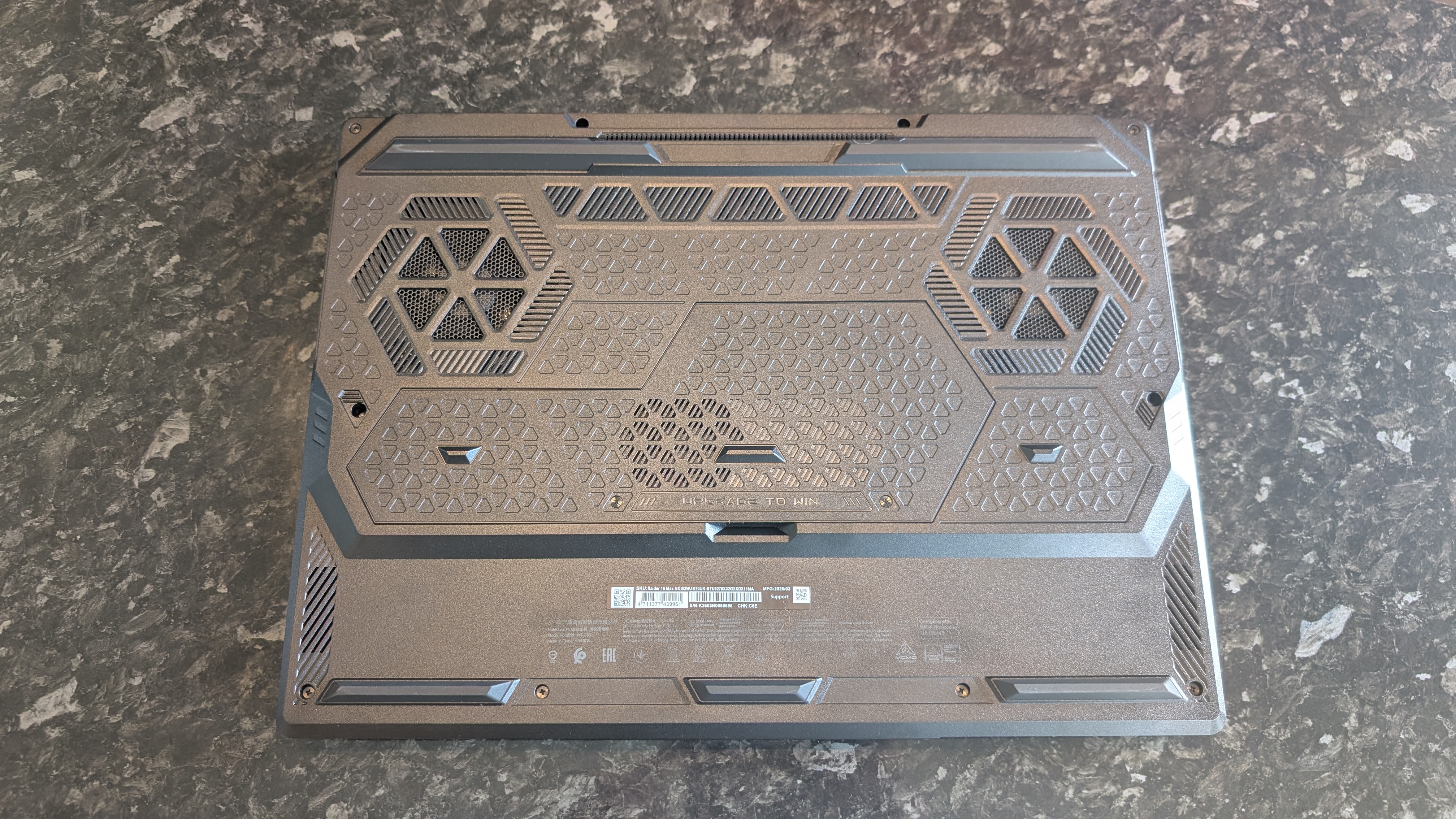
Since this is an Nvidia RTX 5000 laptop, regardless of which configuration you purchase, you're also getting the full suite of performance-boosting software tools inside the newly redesigned (and hugely improved) Nvidia App. That naturally includes DLSS resolution upscaling, but also up to 4x frame generation – though I'd personally recommend sticking to 2x for now, for better visual fidelity – as well as features like Nvidia Reflex, in-depth system monitoring, and AI-powered filters like RTX HDR.
Unfortunately, it seems MSI couldn't resist cramming in a load of their own software as well, and to be brutally honest, this is mostly bloatware. The default MSI Center tool is... fine, I guess, letting you customize the RGB lighting as well as tweak system performance presets, but it's hardly groundbreaking stuff. Add in Norton 360 antivirus, Nahimic audio, the Intel Killer network tool, SteelSeries GG, MSI True Color, MSI App Player, and all the Windows Store nonsense Microsoft insists on pre-installing with Windows 11, and it all becomes quite annoying.
Mercifully, you can uninstall the majority of this garbage, or simply do a clean Windows install when you first set it up. But I'm never going to stop being mildly irritated by laptop manufacturers cramming as much software as possible into their devices – especially when some of them are literally mirrored by base functionality within Windows itself.
MSI Raider 16 Max HX review: Battery life
- Great for a gaming laptop
- Good at auto-switching to the iGPU
- Can be charged via USB-C or bundled adapter
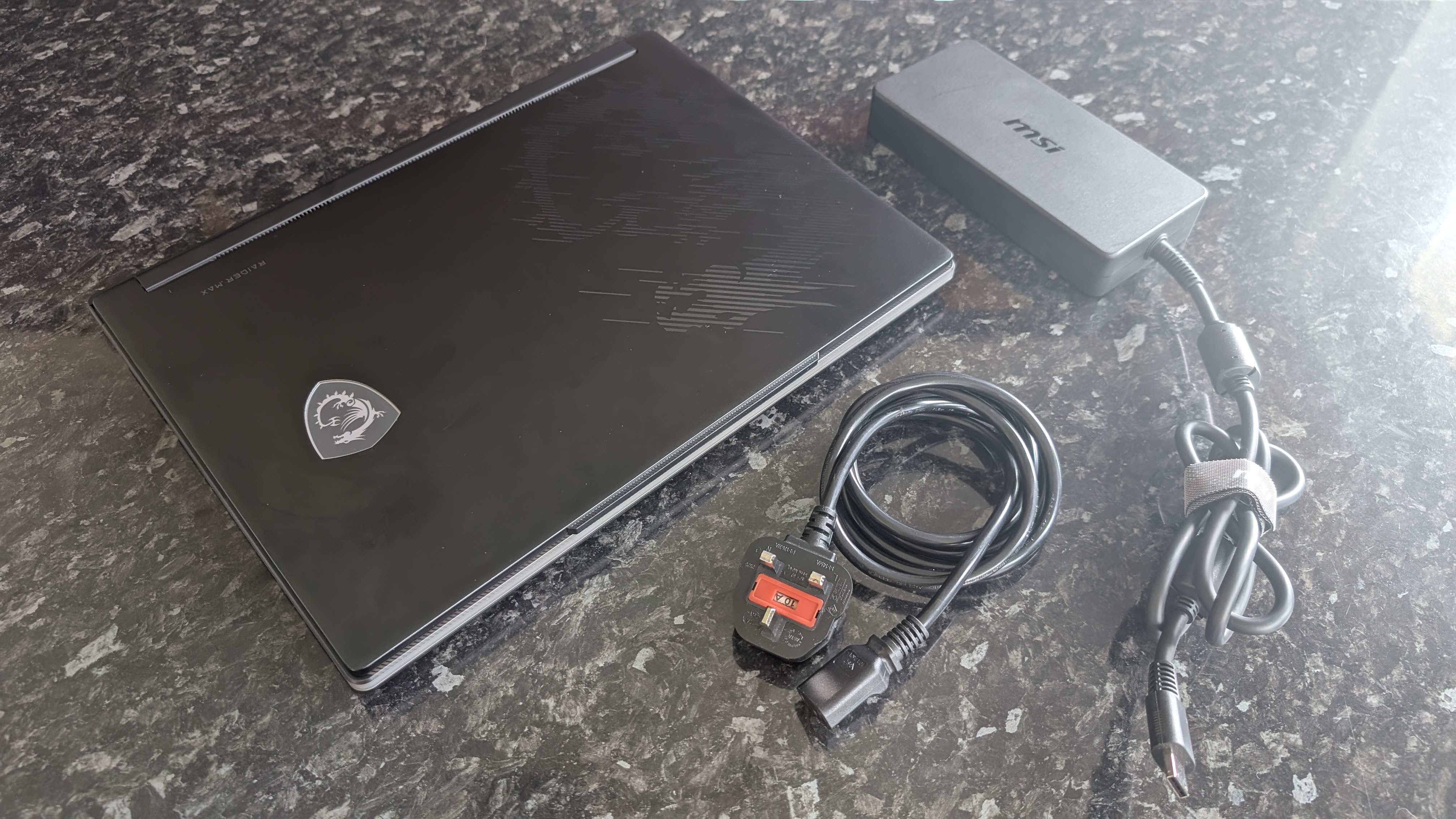
MSI has evidently pulled some funky witchcraft with the Raider 16 Max HX, because it cleared the 8-hour mark in our video playback test – an exceedingly rare sight for a gaming laptop.
Okay, there aren't actually any magic spells involved here; the trick is in the new Intel Core Ultra chip that powers this Raider, which offers stellar power efficiency compared to older CPUs from the likes of Intel and AMD. Of course, the GPU will guzzle power when you're gaming (in my online gaming test playing Marathon on the Raider 16 Max HX, it drained from full charge to 10% in just over two hours, which is still decent), but the laptop will automatically switch to the Intel chip's integrated graphics when not running graphically-intensive software in order to conserve battery life.
I also found that it held charge very well, still packing more than 50% after sitting on my desk for several days following my initial unboxing and photography. You can charge it via the (very chunky) bundled adapter, or use any appropriate USB-C charger for slower but more portable charging if you ever opt to take it out of its usual desktop-replacement environment.
Should I buy the MSI Raider 16 Max HX?
Razer Blade 18 (2026): Scorecard
Attributes | Notes | Rating |
Value | Very expensive considering some of the build quality missteps, especially for higher-spec configurations – even if you could feasibly spend more on an RTX 5000 gaming laptop. | 3.5 / 5 |
Design | Offers a fairly durable build with lots of ports and an very good display, but the bulky chassis, RGB-heavy gamer aesthetic, and terrible trackpad might ruin it for some potential buyers. | 3.5 / 5 |
Performance | Best-in-class performance across both gaming and creative workloads, with an effective cooling solution that prevents the keyboard from getting too warm even during intense gaming sessions. | 5 / 5 |
Battery life | Very impressive for a gaming laptop, with more than two hours of triple-A gaming or more than 8 hours of basic everyday use. | 4.5 / 5 |
Total Score | The Raider 16 Max HX is a solid desktop-replacement offering from MSI, provided you can stomach the price tag. | 4.125 / 5 |
Buy the MSI Raider 16 Max HX if…
You want best-in-class performance
The RTX 5090 configuration of the Raider 16 Max HX is an absolute monster when it comes to gaming performance, and can function as a professional workstation too.
You're a creative and a gamer
The high-spec components, VESA-validated QHD+ display, and broad port selection make the Raider 16 Max HX a decent choice for digital creatives who also want to play games on the side.
Don't buy it if…
You want something portable
The Raider is undeniably a chunky unit, serving far better as a static desktop-replacement system than a gaming device for taking on the go.
You’re on a tight budget
Even the lowest-spec configuration of the Raider 16 Max HX will set you back a few thousand bucks; sadly, gone are the days when you could easily get a good gaming laptop for under $1,000.View Deal
MSI Raider 16 Max HX review: Also consider
MSI Stealth A16 AI+
A similarly powerful but significantly more compact and portable gaming laptop, MSI's own Stealth A16 AI+ also packs a selection of RTX 5000 configurations, but trades out an Intel CPU for the latest AMD Ryzen fare instead. Read our full MSI Stealth A16 AI+ review.
Asus V16
If the price of the Raider 16 Max HX made you balk while reading this review, my current top pick for laptop gamers on a budget is the Asus V16, which offers very respectable performance without breaking the bank. Read our full Asus V16 review.
How I tested the MSI Raider 16 Max HX
- Replaced my usual system for 10 days
- Used for gaming and other tasks
- 8+ years of experience reviewing dozens of laptops
As usual for my laptop review process, I used the MSI Raider 16 Max HX as a replacement for my usual laptop and desktop PC, putting it through its paces in everything from gaming to my everyday work at TechRadar.
Naturally, I also ran the Raider through our synthetic and gaming benchmark testing suite as seen in the Performance section of this review, as well as playing several other games (just for fun!) which included Marathon, Warframe, Elden Ring, and my long-running obsession Slay the Spire 2 – though of course, that last one is hardly a hardware stress test, since it can literally run on my phone.
I've been a PC gamer since my tender pre-teen years, starting out on my dad's boxy beige home office desktop, and I've been a professional tech journalist reviewing all kinds of laptops and PC tech for nearly a decade now, starting out at Maximum PC magazine before making the jump to digital journalism and joining the TechRadar team. I've personally reviewed more than seventy laptops, so you can trust that my knowledge and experience give you reliable insights into the quality of the products I write about.
- First reviewed: July 2026
- Read more about how we test
Share
What's Your Reaction?
 Like
0
Like
0
 Dislike
0
Dislike
0
 Love
0
Love
0
 Funny
0
Funny
0
 Angry
0
Angry
0
 Sad
0
Sad
0
 Wow
0
Wow
0