The Mission 1 Pro isn’t just GoPro's flagship action cam, it’s a fantastic all-round vacation camera with the point-and-shoot grip — I just wish it was cheaper
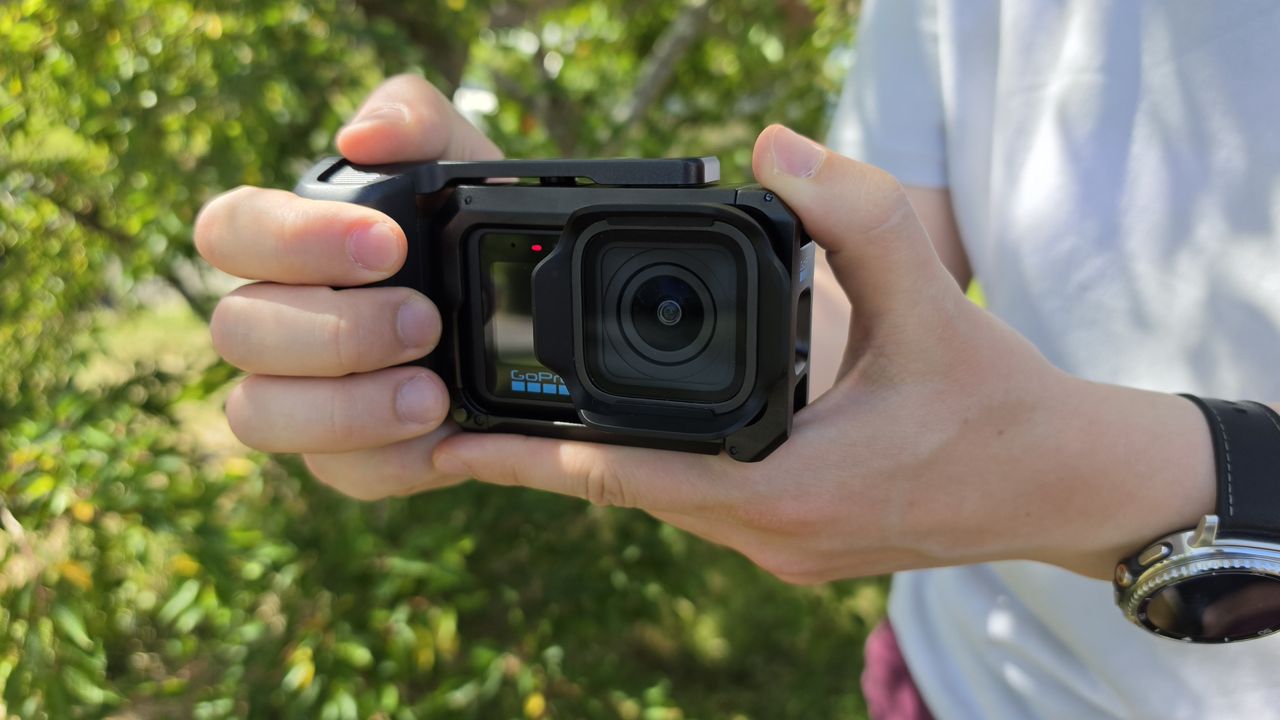
After spending a month with the Mission 1 Pro I think it could be the ultimate holiday camera, if you pick up the point-and-shoot grip.

GoPro Mission 1 Pro: One-Minute Review
The Mission 1 Pro is as rugged as you’d expect any GoPro action camera to be, with a highly water-resistant design — even without an additional casing — and a shock-resistant body that can survive tumble after tumble, but with 8K recording quality it enables you to capture footage with a real cinematic feel.
Thanks to impressive subject tracking and GoPro’s HyperSmooth stabilization tech, the Mission 1 Pro can capture the action smoothly whether you’re wearing it yourself, or following your subject along a trail or down a piste.
Plus, thanks to the new larger 1-inch sensor, low-light video quality is better than ever for a GoPro — letting you take advantage of the roughly two hours of 4K 60p recording time available to you on a single charge even as the sun starts to set.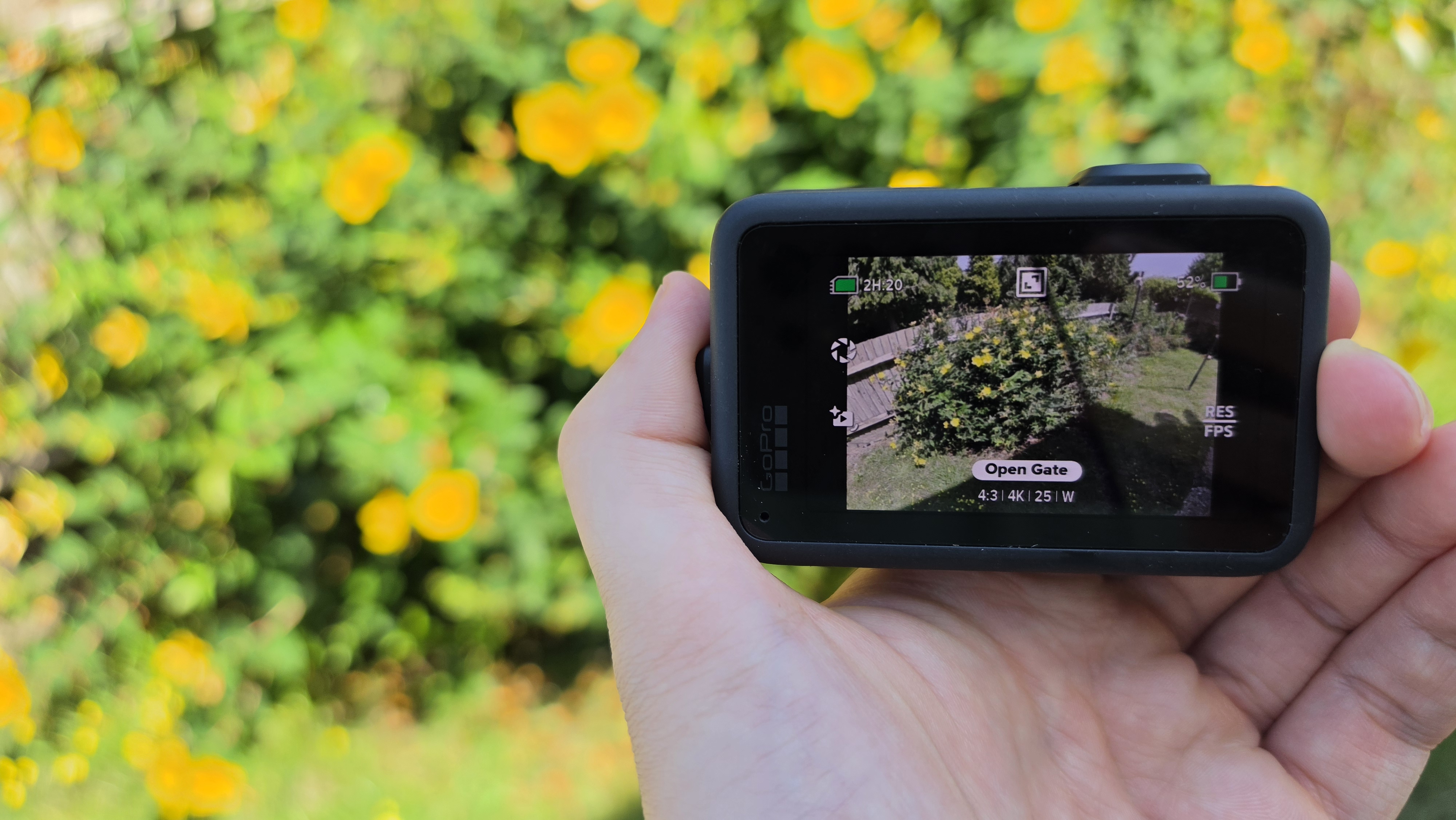
Meanwhile, HLG HDR format and GP-Log2 support, control over ISO, EV, white balance and shutter speed, and the freedom to record in 8K/30p open gate — the full height and width of the versatile 4:3 aspect ratio sensor — will give you more artistic and post-processing options that make this action camera feel more like a professional piece of kit.
The downside of all this is that the Mission 1 Pro doesn’t come cheap. It’ll set you back $699 / £599.99 / AU$1,099.95 if you aren’t already a GoPro member, while members can take advantage of a healthy discount, with prices starting at $599 / £509.99 / AU$949.95. This sure is pricey even for one of the best action cameras when DJI rivals cost substantially less, but if you’re going to take full advantage of its cinematic capabilities, it’s certainly one to consider.
The only real disappointment is that its photography capabilities left me wanting. With its optional point-and-shoot camera-style grip I had hoped that the GoPro Mission 1 Pro might perform well as a stills snapper, but it did struggle at times. Hopefully, the ILS model with its Micro Four Thirds lens mount will deliver a more all-round performance when it debuts later this year.
The grip does at least help make the Mission 1 Pro much easier to handle when shooting video, and it feels like a useful upgrade for anyone who plans to use this GoPro as their new vacation camera, and take advantage of its improved video and audio quality, and durable design.
GoPro Mission 1 Pro: Price and release date
- $699 / £599.99 / AU$1,099.95 (non-member price)
- $599 / £509.99 / AU$949.95 (member price)
- Other models in the series are the Mission 1 and Mission 1 Pro ILS
The GoPro Mission 1 Pro is available to buy now for $699 / £599.99 / AU$1,099.95 (non-member price, or $599 / £509.99 / AU$949.95 for members), while the more basic Mission 1 will cost you $599 / £529 /AU$949.95 (non-member price, or $499 / £439.99 / AU$799.95). The Mission 1 Pro ILS costs the same as the Pro, but it won’t launch until later in 2026.
Other bundles include one with a point-and-shoot camera-style grip, which I had for my review. This bundle feels quite pricey at $779.99 / £679.99 / AU$1,229.95, seemingly with no member discount at the time of writing.
The Mission 1 Pro and Mission 1 share a lot of the same features and hardware, but the Pro version unlocks 8K 60fps footage and 8K Open Gate 4:3 filming for greater editing flexibility. You’ll also unlock slow-mo 4K video at 240fps, and 1080p up to 960fps for more extreme slow-mo shots.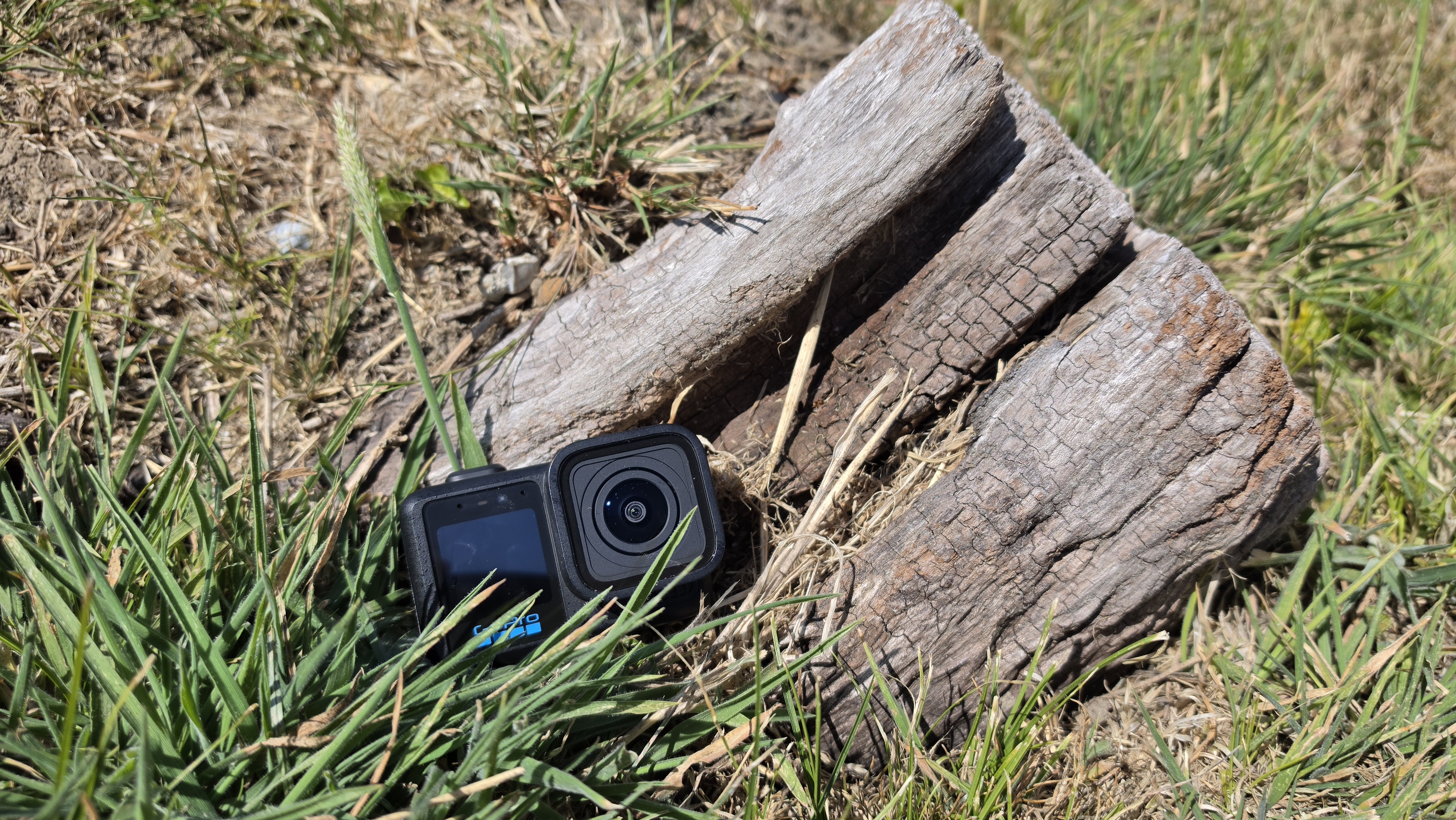
Meanwhile the ILS model is interesting as it takes away some features — such as built-in autofocus and the ultra-wide lens of the regular Pro — to give you more control, with manual focus control and a Micro Four Thirds (MFT) mount, enabling you to attach a wide variety of lenses for different cinematic effects. If you’re more of a cinematographer than a casual user, the ILS model could be what you’re after.
That said, even the base-model Mission 1 is a fair bit pricier than the GoPro Hero 13 Black — our current pick for the best overall action camera. If you care about low-light shots the Mission 1 could be worth the price premium, but for a lot of people who are just looking to capture fun clips of their action sports escapades even the basic model may be overkill.
- Value score: 3/5
GoPro Mission 1 Pro: Specs
Type: | Action camera |
Sensor: | 50MP 1-inch type CMOS |
Displays: | Front: 1.4-inch LCD Rear: 2.59-inch OLED touchscreen |
Memory: | None; supports V30 and Class A2 rated microSD cards |
Video: | 8K up to 30fps (no crop) / 8K/60p (cropped) |
ISO range: | Video: 25-6400 Photo: 100-3200 |
Burst shooting | 60fps |
Processor: | GP3 SoC |
Connectivity: | BlueTooth, USB-C, 5GHz Wi-Fi 6 |
Dimensions: | 80.1 x 52.1 x 44.3mm (including buttons and lens without hood) |
Weight: | 207g |
GoPro Mission 1 Pro: Design
The ideal action camera is one that can handle just about anything you throw at it, and the GoPro Mission 1 Pro GoPro is a camera that’s designed to be pushed to its limits.
If you’re a fan of underwater video, the Mission 1 Pro boasts a design that’s waterproof to 66ft / 20m without the need for a housing — plus the hydrophobic lens cover should help keep water splashes and droplets from obstructing your view massively when you’re using the camera above the waves.
It’s also rated to work in temperatures between -20C and 45C, with its power and shoot buttons designed to make them easier to press while wearing the kind of thick gloves that are necessary in frigid climates.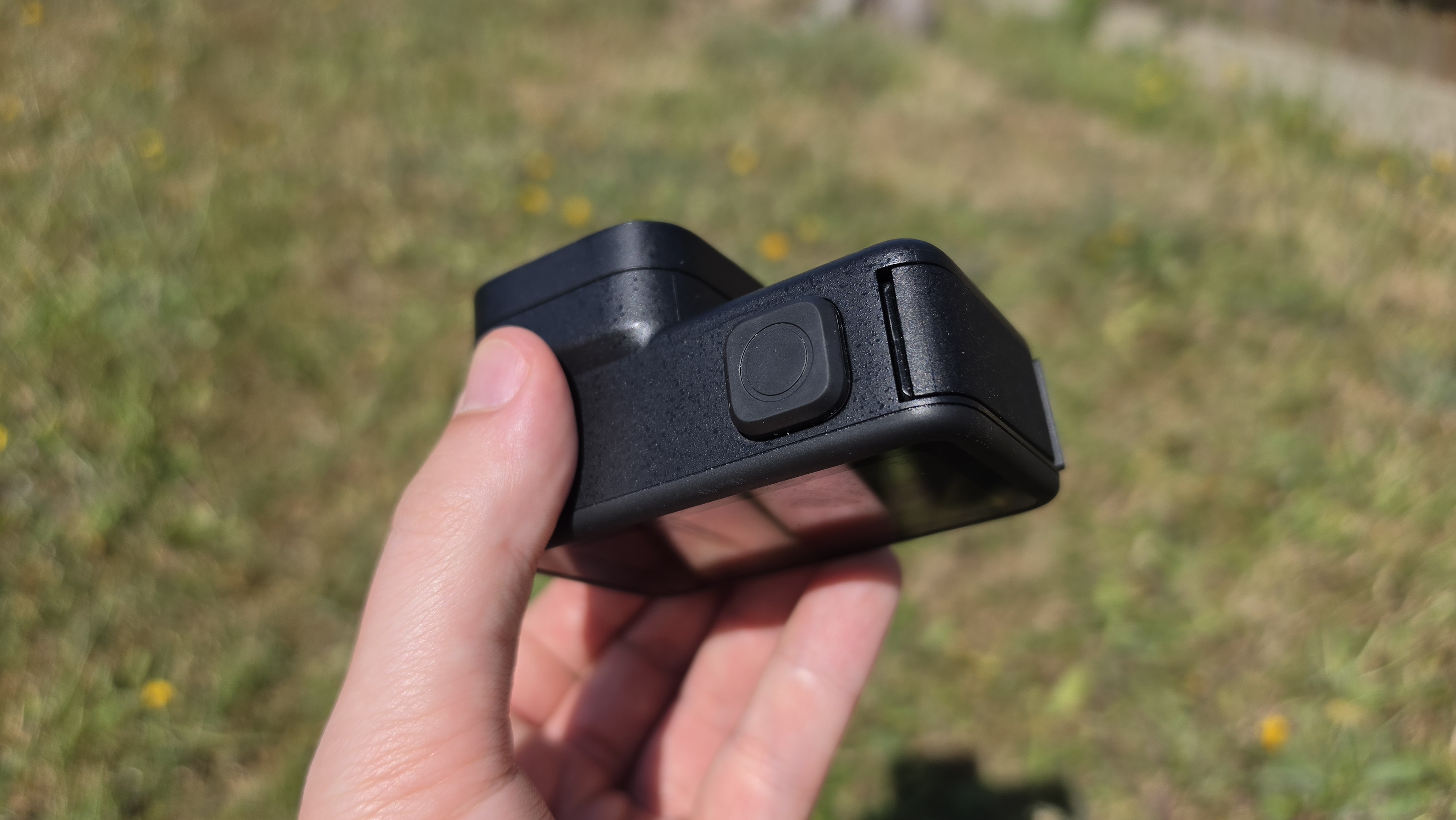
The Mission 1 Pro’s shock-resistant body can also survive tumbles and drops, giving it an almost indestructible feel. While I never pushed the Mission 1 Pro too far, I never felt like I needed to be careful with it.
Moving on from the action-focused aspects, the 2.59-inch OLED rear touchscreen display offers enough real estate for you to easily manage and track your settings while also leaving plenty of room to clearly see your compositions.
Meanwhile, the 1.4-inch front LCD is a good size for vloggers to track what is/isn’t in frame as they talk to camera, with a convenient and concise readout of your shot settings letting you know that you haven’t, for example, accidentally swiped to a different mode while turning the camera 180 degrees.
Included in the box are a lens hood to help reduce glare — just note that it can fall off easily, so keep an eye on it, or be prepared to pick up replacements — a 2150mAh Enduro 2 battery, an adhesive mount, mounting buckle and a thumb screw.
You’ll need to provide your own microSD card, as there’s no internal storage. The Mission 1 Pro relies on V30 and Class A2-rated microSDs for the best performance; A1 cards will work, but will encode more slowly.
You can pick up a series of attachments for this camera, including ND filters; however, the bigger sensor size of this camera means the Hero 13 Black’s suite of lens attachments can’t be used here, and sadly there aren’t, as yet, equivalent accessories for the Mission Pro 1.
Other GoPro attachments, such as harnesses or helmet/bike mounts, should be compatible, as the Mission 1 Pro relies on the same bracket as models that came before.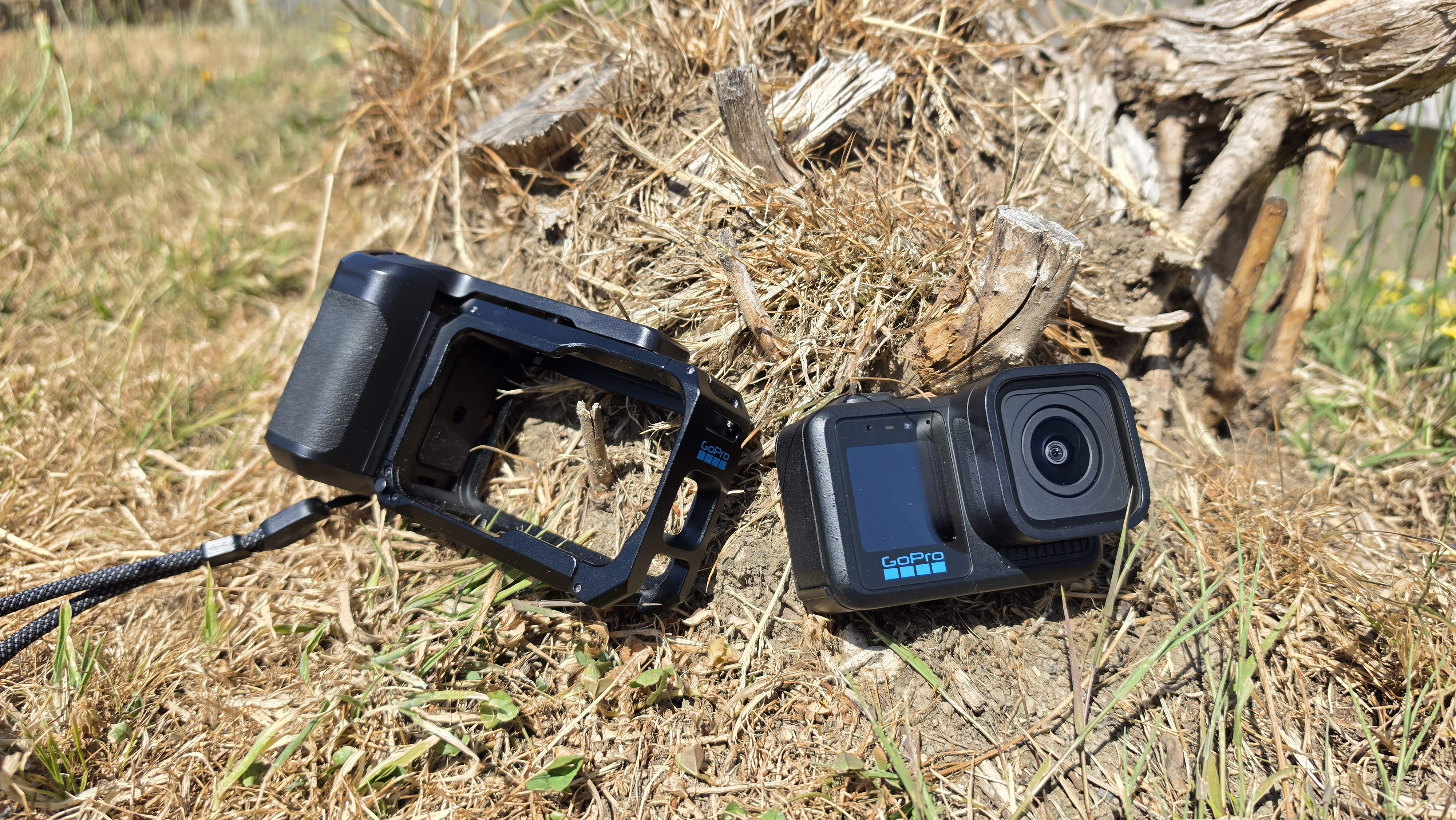
Lastly I’ll mention the point-and-shoot camera-style grip attachment, which was supplied to me for testing alongside the Mission 1 Pro and can be purchased separately ($99.99 / £89.99 / AU$154.95) or as part of a bundle. The grip is incredibly simple, yet effective at transforming the Mission 1 into something that feels more like a regular point-and-shoot compact.
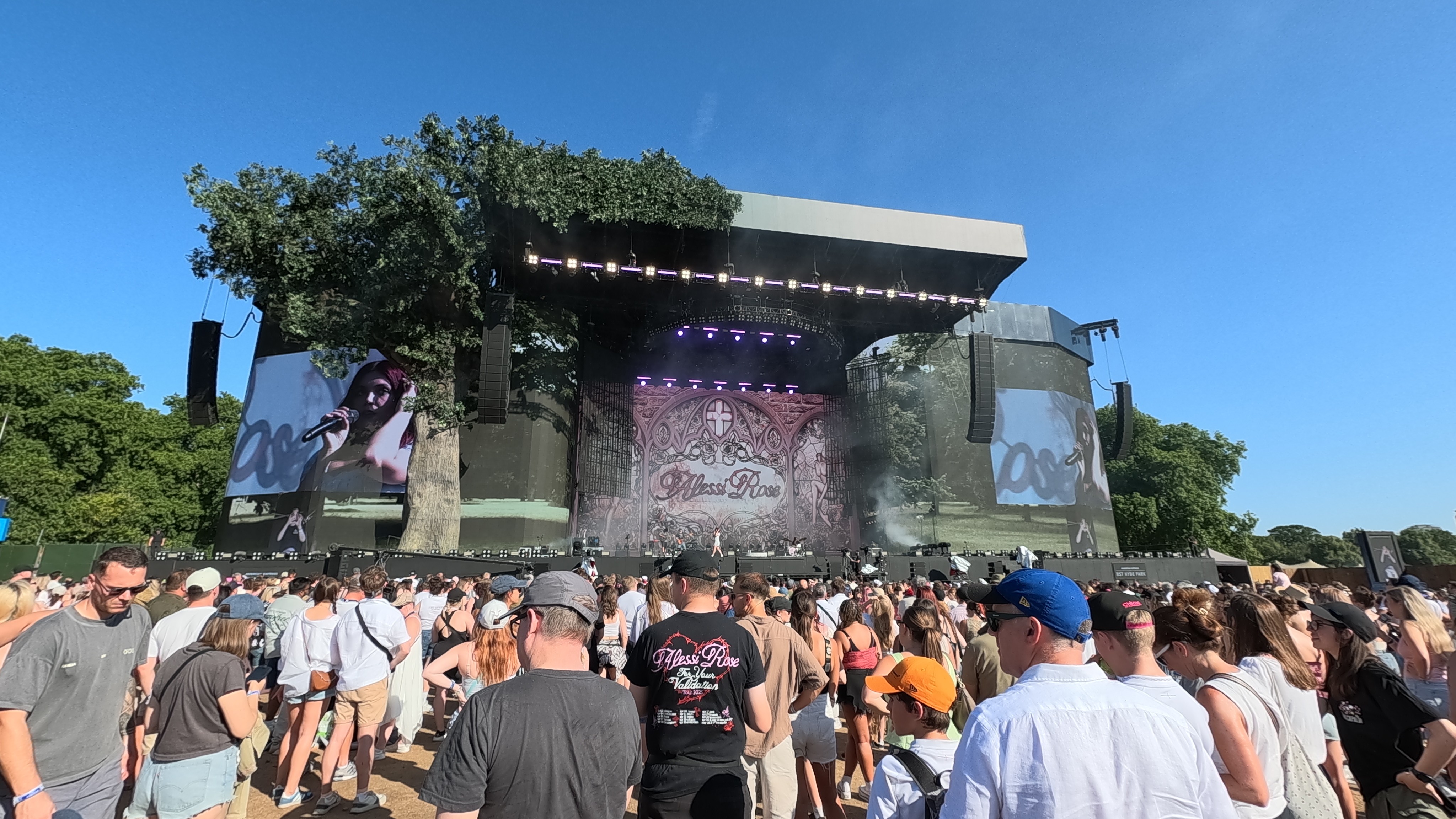
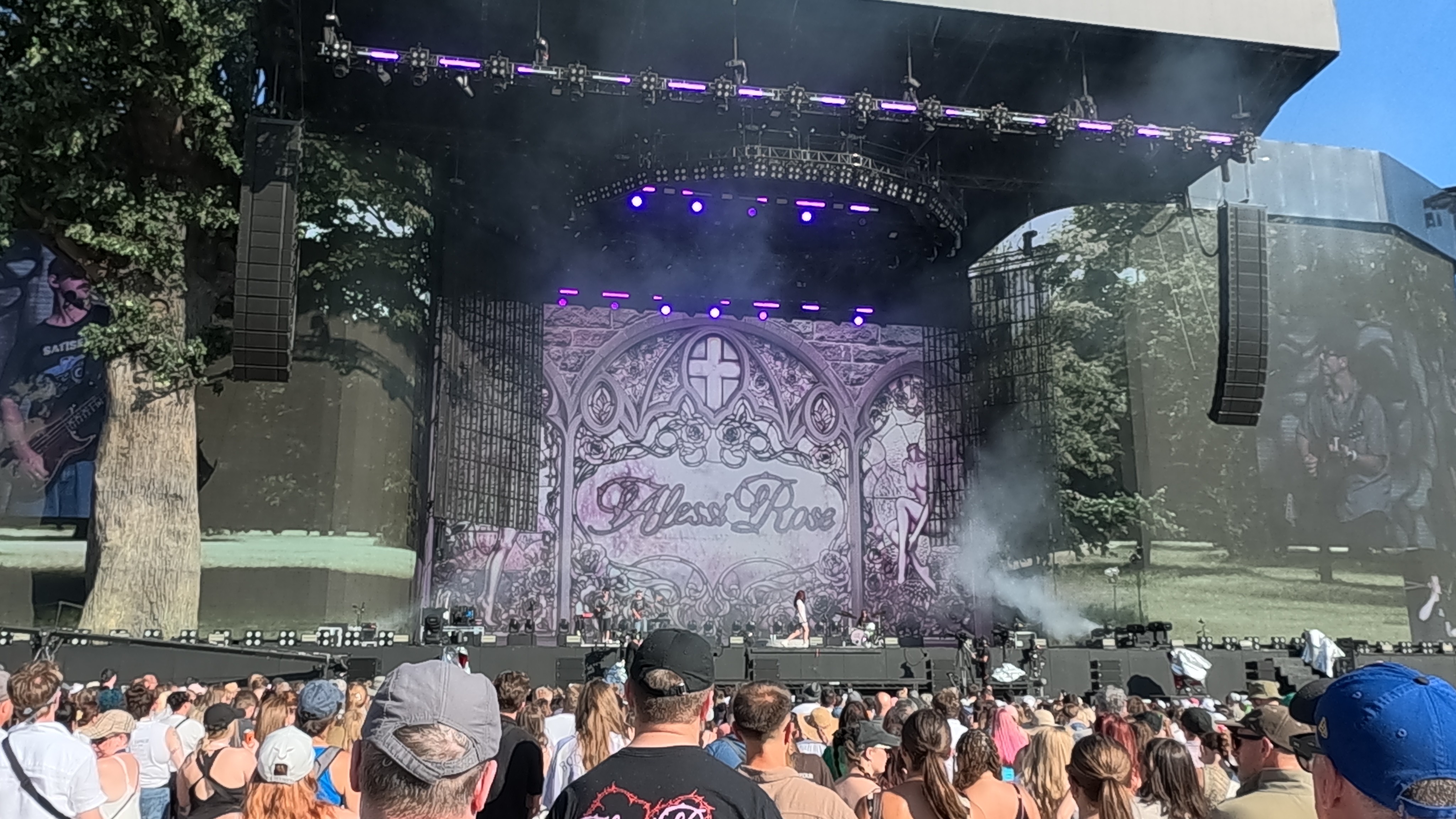
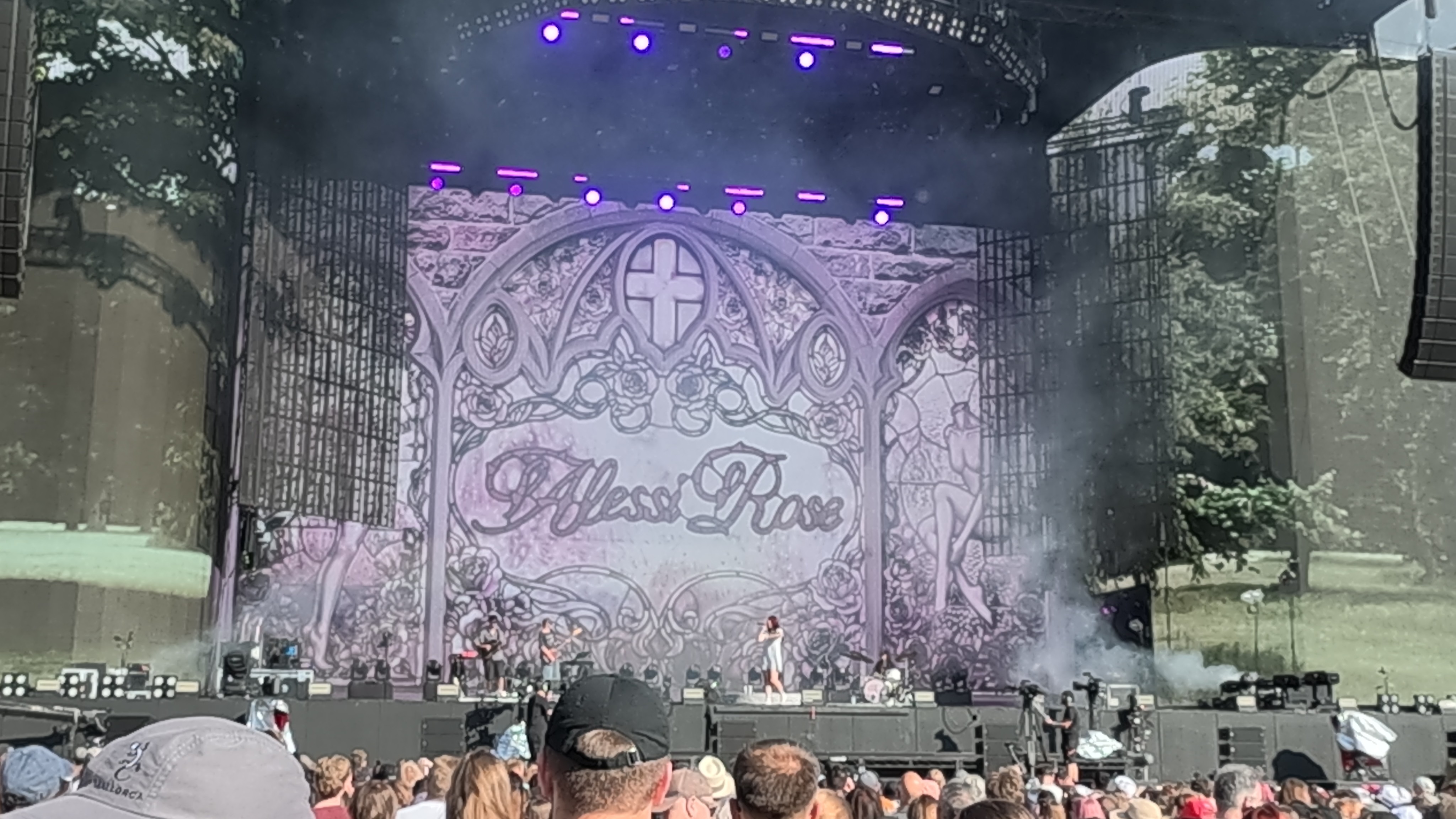
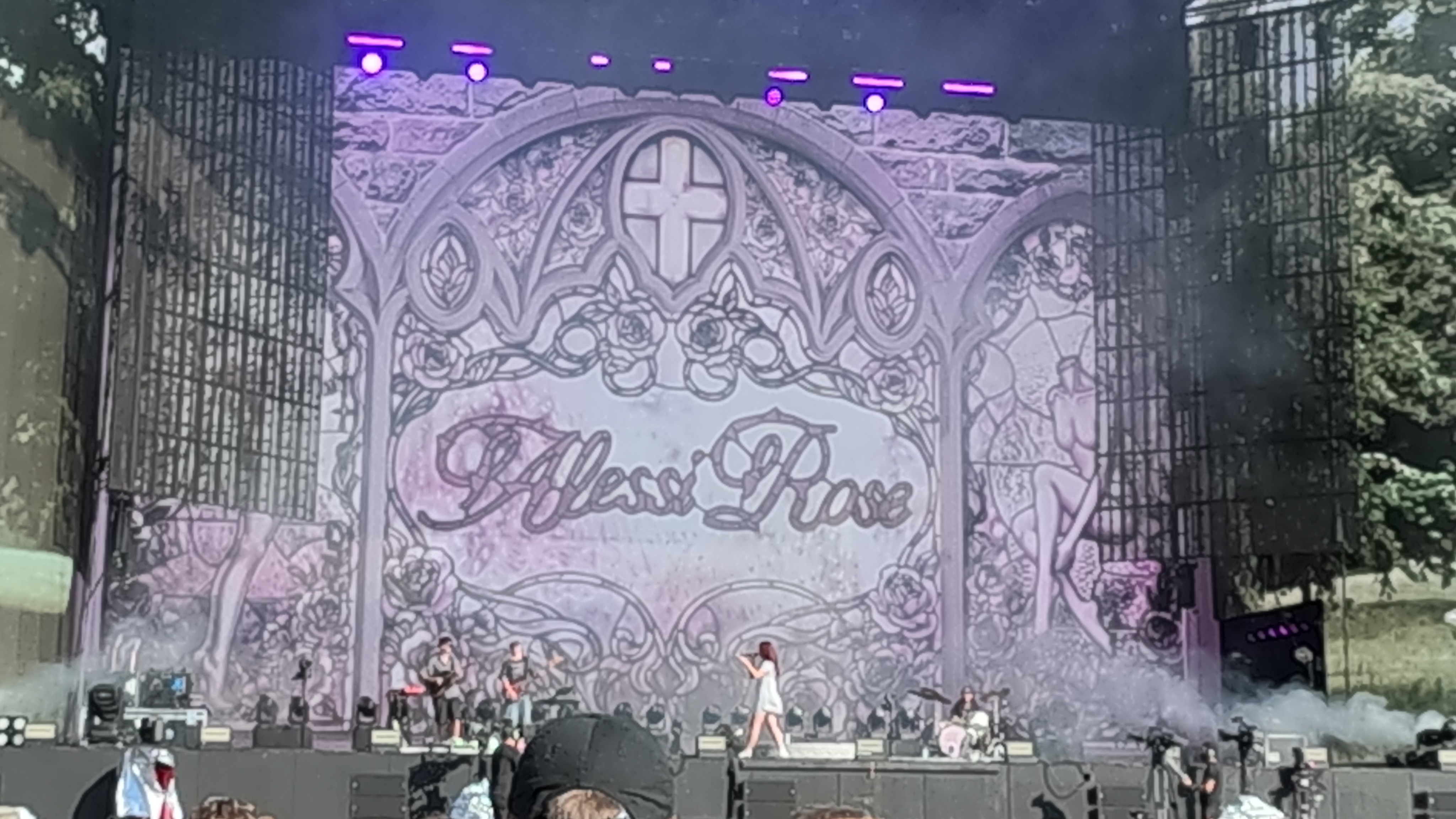
When it comes to capturing quick videos, such as clips at the beach or at a festival, the grip makes it easy to hold the camera without the risk that your hand will get in the way of the lens, although as mentioned, the Mission 1 Pro doesn’t perform as well as a stills camera — more on that below.
- Design score: 5/5
GoPro Mission 1 Pro: Performance
To make video capture easier than ever the Mission 1 Pro features a slew of preset capture modes that adjust settings based on your needs, with modes for Vlogging, SportPOV, TimeLapse, Open Gate, SlowMo, Low Light, Dive and plenty more.
You can tweak the settings for each mode to fine-tune your image quality needs, and also manage modes by hiding ones you never use, or adding custom settings that are your go-tos.
For most scenarios, I found the 4K open gate option to be the most versatile. The image quality is solid, and you have the option to reframe the footage to 16:9 or 9:16 later based on your needs — plus it’s less of a drain on the battery than shooting in 8K.
Vlog-style recording is made easy thanks to the front screen, and automatic subject tracking that centers you in the frame — ideal for casual vloggers who constantly find they steadily drift out of shot unless they pay close attention to the camera they’re holding.
The audio quality is decent too, picking up voices and essential sounds, but cutting out wind noise.
Slow mo is also a lot of fun, though as you’ll see in my example video above, raw untuned footage at resolutions lower than 4K can start to look grainier than is ideal — upscaling and/or sharpening the image with editing software is essential to get things to look better.
The larger sensor also helps in low-light conditions, especially with the new Low Light shooting mode. Unsurprisingly, in proper darkness the camera still struggles, but with some illumination remaining the camera performs well in this mode.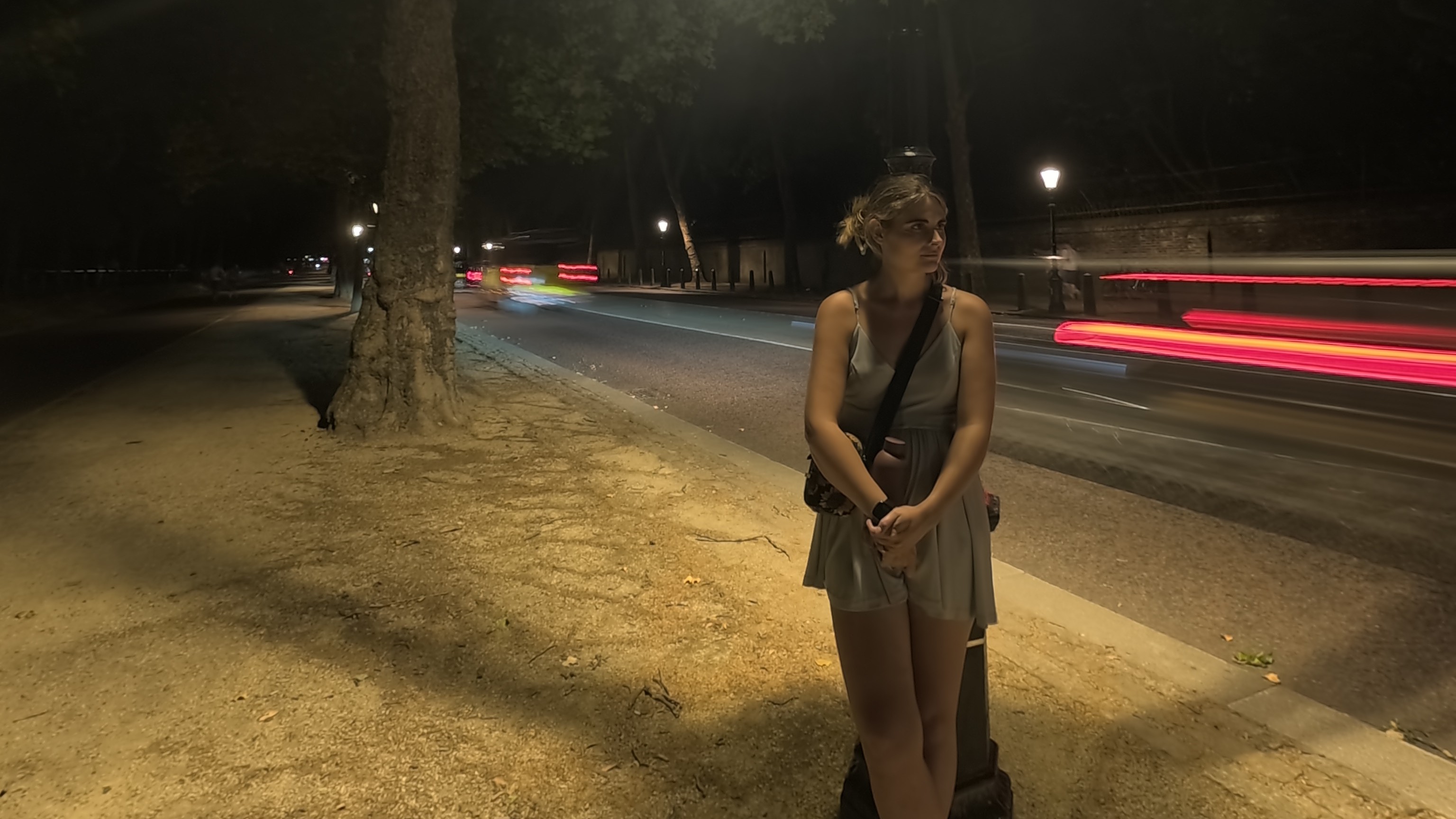
Where I’m less convinced of the Mission 1 Pro’s abilities is when it comes to stills photography, which is a massive shame considering you have the option to add the point-and-shoot grip.
Whenever I tried to take photos I found myself fighting against its lack of autofocus — or even manual focus — and the less-than-ideal zoom quality. The camera has a fixed focus with a minimum focus distance around 60cm — which counts out close-up photography — and an optimal focal distance of about 1.5m. This also means it isn’t focused to infinity, so landscapes will appear a little soft in your shots, especially since the larger sensor has a shallower depth of field than previous GoPros.
In addition, as soon as you zoom in you’ll find the image quality drops a fair amount, although this is to be expected from the digital zoom this camera uses.
The overall quality isn’t terrible, though, and the point-and-shoot grip does offer some useful versatility for video recording beyond the more traditional action camera use-cases.
- Performance score: 4.5/5
Testing Scorecard
Attribute | Notes | Score |
Design | With its rugged build and larger display you couldn’t realistically want more from the design of the Mission 1 Pro. My only gripe would be that longtime GoPro fans may be frustrated that they can’t, for now at least, bring all of their lens attachments over to this new camera. | 5/5 |
Performance | The Mission 1 Pro delivers some great-looking video with great audio even without external accessories, and even in low light. I’m skeptical of the camera’s photography credentials, though. | 4.5/5 |
Value | The GoPro Mission 1 boasts a slew of pro-level enhancements, although these do come with a higher price tag. | 3/5 |
Should I buy the GoPro Mission 1 Pro?
Buy it if…
You want a professional-quality action camera
With 8K recording and a full suite of settings that you can adjust, the Mission 1 Pro delivers as professional-grade camera more so than its predecessors.
You don’t want to think too much
Like its predecessors, the Mission 1 Pro boasts a selection of preset recording modes that you can fine-tune to suit your video needs. If you want good shots without putting in a lot of thought and effort, the Mission 1 Pro will still help you capture great shots.
You want a small camera that’ll last
With a hardy exterior that can survive high heat, freezing cold, and excursions deep below the water, and roughly two-hour battery life when shooting 4K/30p, the GoPro Mission 1 Pro will be ready when you need it.
Don’t buy it if…
You want to capture high-quality stills
As an action camera the Mission 1 Pro is great, but as a stills camera I found it wanting, even if there is a dedicated point-and-shoot grip accessory.
You’re on a budget
The GoPro Mission 1 Pro is a lot pricier than other action cameras out there, and if you’re a more casual and budget-conscious user the upgrades might not be worth the outlay.View Deal
You want lens options
The Mission 1 Pro doesn’t support the lenses GoPro has previously offered with its action cameras like the Hero 13 Black. For lens variety you’ll want to check out the Mission 1 Pro ILS model when that launches later this year.View Deal
Also consider
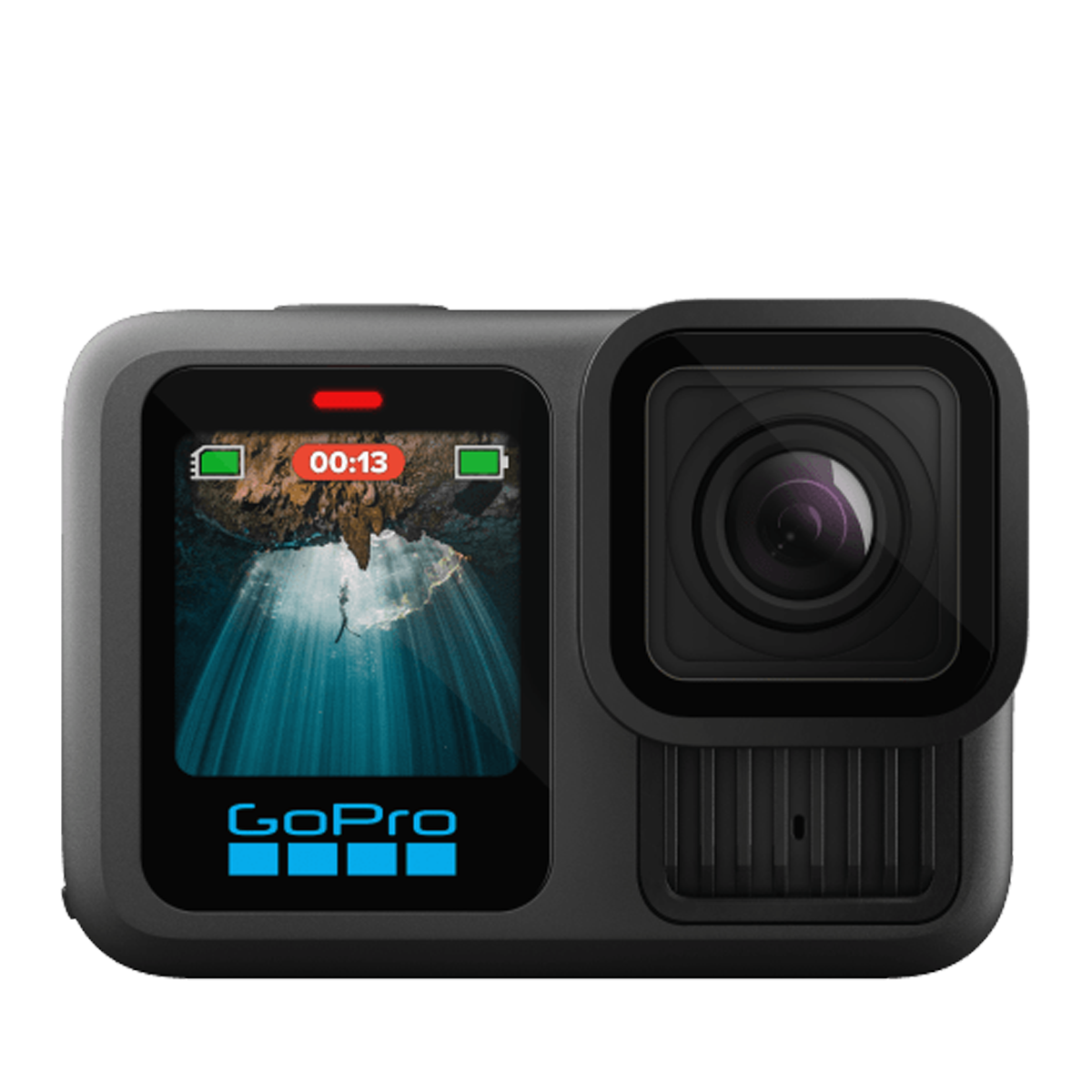
GoPro Hero 13 Black
A more budget-friendly option, and, even years after launch, still a solid action camera performer, the GoPro Hero 13 Black doesn’t boast the 8K quality of the Mission 1. However if you’re after something smaller and lighter for more casual use it’s an excellent alternative.
Read our GoPro Hero 13 Black review
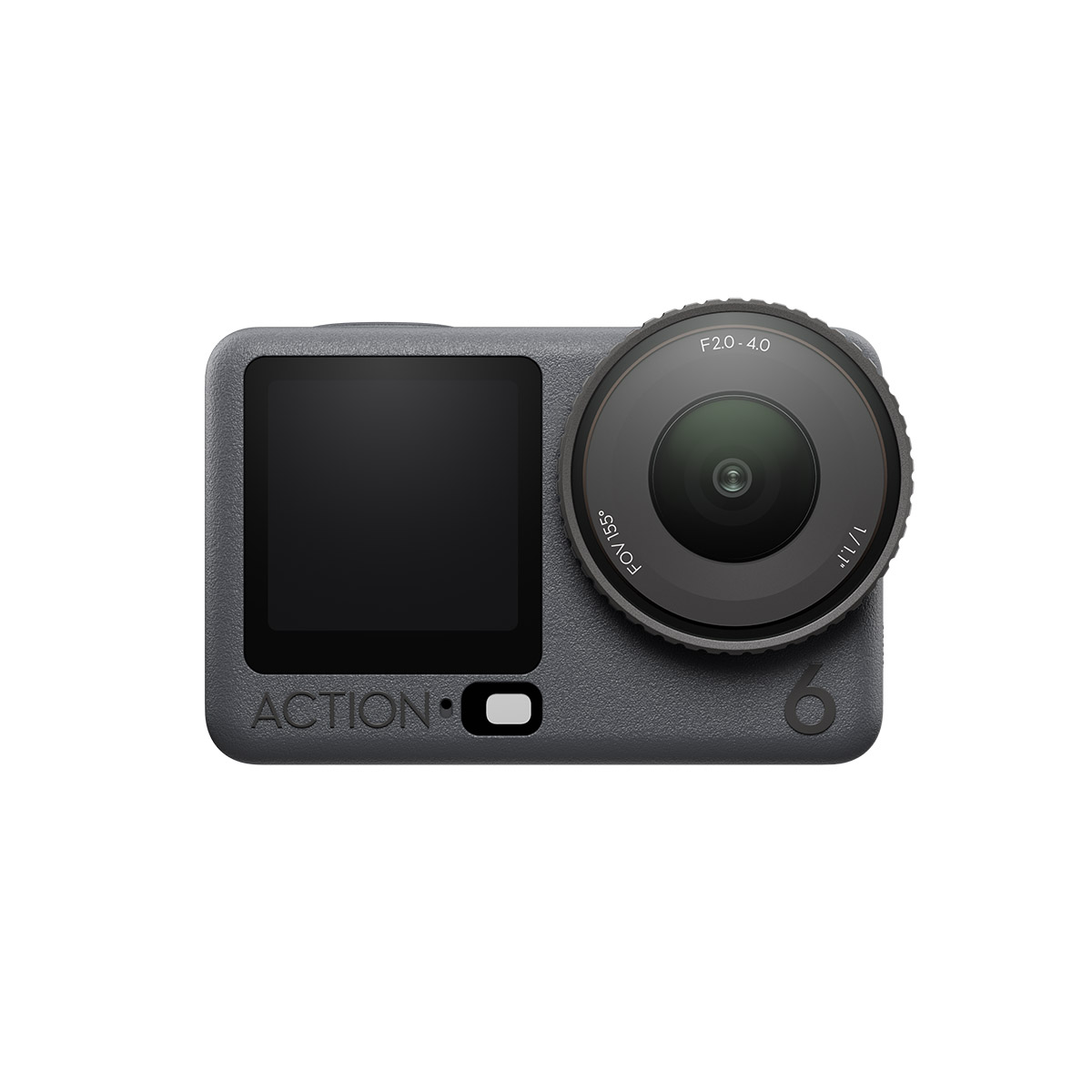
DJI Osmo Action 6
If you’re already part of the DJI ecosystem, want tools like wireless Hi-Res audio recording when using a DJI Mic 3, or are just after some frankly excellent battery life, decent waterproofing, and a generous 47GB of built-in storage, this DJI camera could be for you. Just note that its video is capped at 4K resolution.
Read our DJI Osmo Action 6 review
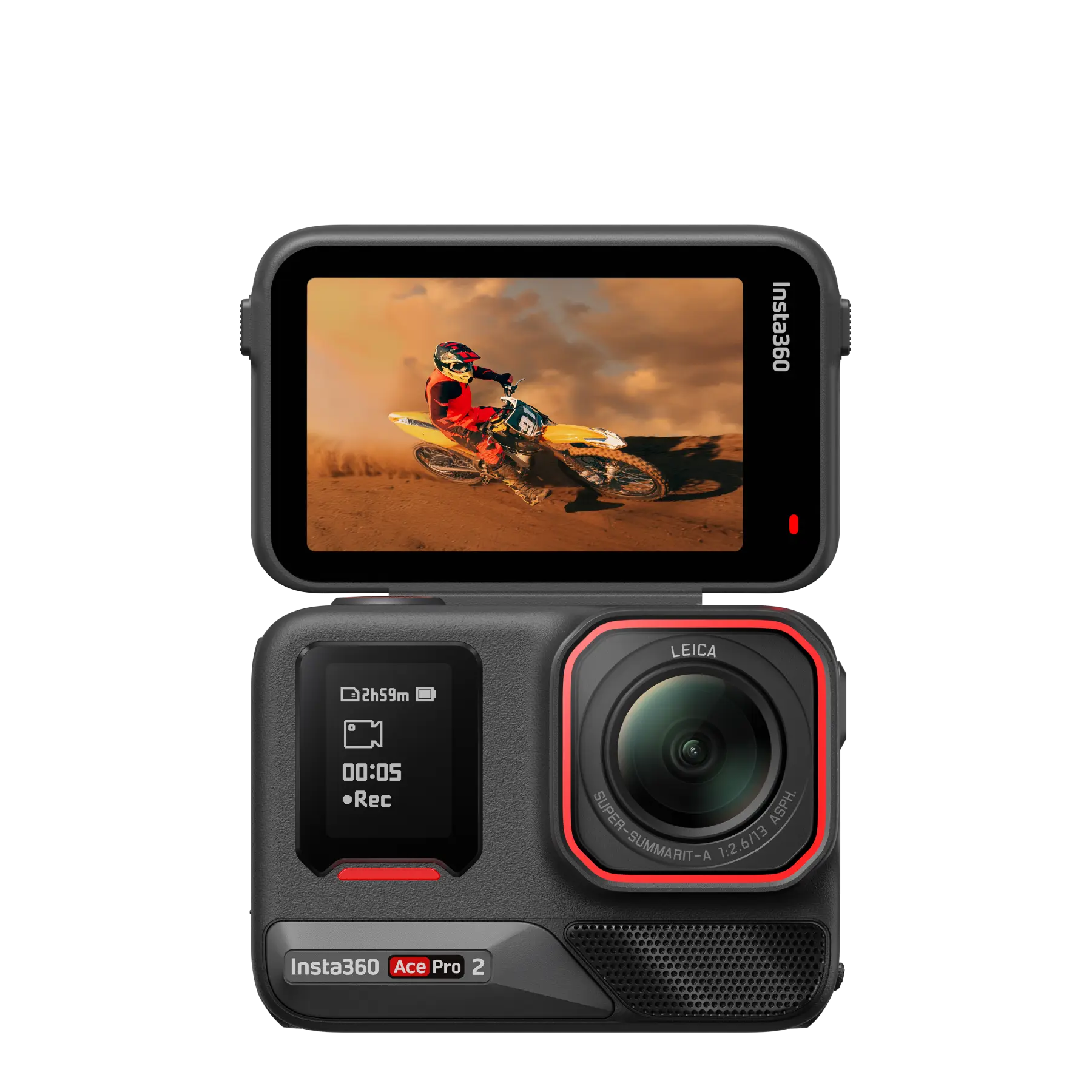
Insta360 Ace Pro 2
If 8K is a must, the best alternative for you is the Insta360 Ace Pro 2. Admittedly it isn’t as capable as the GoPro Mission 1 (the 8K quality doesn’t support the best image stabilization) and overheating is an issue, but the Insta360 Ace Pro 2 is a superb all-rounder.
Read our Insta360 Ace Pro 2 review
How I tested the GoPro Mission 1 Pro
I spent just over a month with the Mission 1 Pro, taking it out on excursions to snap photos and videos to test its capabilities not just as an action camera, but as a point-and-shoot video capture tool — with that latter case aided by the point-and-shoot grip.
If you’re planning to use the GoPro Mission 1 Pro as your vacation camera — aided by its durable design and waterproofness — the grip is super helpful at helping to keep you hands out of frame, and as a pure action camera the GoPro fits the same mounts and accessories as previous models like the Hero 13 Black (save for the lens attachments).
Inspired by shows like Hunted and Jet Lag The Game, a lot of my testing focused on running and vlogging with the action camera to capture my fitness progress and to record personal cuts of games of hide-and-seek across London — passing the camera between my friends so they could record their stints too. They found the GoPro super easy to use, with the smoothing tech and subject tracking ensuring thaty vlogs and action shots look great without requiring constant focus on what the camera is doing — you just press go and it’ll come with you.
First reviewed: July 2026
Share
What's Your Reaction?
 Like
0
Like
0
 Dislike
0
Dislike
0
 Love
0
Love
0
 Funny
0
Funny
0
 Angry
0
Angry
0
 Sad
0
Sad
0
 Wow
0
Wow
0