The Evolution of Remote Monitoring: From Telegraph Lines to Cloud-Based Monitoring
Imagine sending a message across the country and waiting weeks for a reply. Less than two centuries ago, this was the reality of long-distance communication. People relied on letters carried by horses, ships, or trains. If a machine broke down or a vital system failed, you only found out when someone physically checked it. We… The post The Evolution of Remote Monitoring: From Telegraph Lines to Cloud-Based Monitoring appeared first on RMON Networks.

Imagine sending a message across the country and waiting weeks for a reply. Less than two centuries ago, this was the reality of long-distance communication. People relied on letters carried by horses, ships, or trains. If a machine broke down or a vital system failed, you only found out when someone physically checked it.
We now live in an era where data flows instantly. You can monitor the temperature of a server room in Tokyo while sitting in an office in New York. You can track a fleet of delivery trucks across a continent from your smartphone. This massive shift did not happen overnight.
This post explores the fascinating journey of communication and monitoring technologies—a journey that is at the heart of what we do at RMON Networks. Our company name is no accident; “RMON” comes from the industry acronym for Remote Monitoring, and our team has built a legacy around that core principle! From technology’s earliest days, we have seen firsthand how reliable monitoring not only prevents downtime but fosters trust, drives growth, and empowers organizations to focus on what matters most.
In this article we will look at the groundbreaking invention of the telegraph, to the rise of the telephone, the birth of the internet, and the leap into cloud computing. Each advancement has shaped the way businesses stay connected, secure, and proactive. By the end, you will see why remote monitoring is more than just a technology—it’s a commitment to operational excellence that RMON Networks has always championed.
The Spark That Started It All: The Telegraph
Before the 1830s, information could only travel as fast as a horse could run or a ship could sail. The telegraph changed everything. By sending electrical pulses over a dedicated wire, operators could transmit messages instantly across vast distances using Morse code.
This technology completely transformed industries. Railroads used telegraphs to coordinate train schedules, significantly reducing accidents. Newspapers received reports from distant cities in minutes rather than days. For the first time, businesses could monitor operations happening hundreds of miles away.
Laying the transatlantic telegraph cable in 1858 marked another massive milestone. Suddenly, North America and Europe could communicate directly. While it seems primitive now, the telegraph laid the groundwork for all instant communication and remote monitoring systems that followed.
Finding Our Voice: The Telephone Era
While the telegraph was revolutionary, it required trained operators to translate dots and dashes. Alexander Graham Bell’s invention of the telephone in 1876 made long-distance communication personal and accessible. You could simply pick up a receiver and speak.
The telephone network expanded rapidly. Huge switchboards connected cities, states, and eventually countries. This infrastructure created new possibilities for monitoring systems. Alarm companies began using telephone lines to transmit security alerts from businesses directly to police stations.
For decades, telephone lines served as the primary backbone for transmitting both voice and early data. If a factory manager needed to check on a distant warehouse, they simply made a phone call. However, this method still required human interaction. Automated, continuous monitoring remained out of reach for most applications.
The Dawn of Digital: Computers and the Internet
The mid-20th century brought the next major leap: the computer. Early computers were massive, room-sized machines that processed simple data. But as they shrank in size and grew in power, researchers realized they needed a way for these machines to talk to each other.
Simultaneously early Supervisory Control and Data Acquisition SCADA concepts emerge alongside early computing. The first rudimentary SCADA-like systems appeared in the electric utility and pipeline industries in the late 1950s, using telemetry to transmit readings from remote equipment. These were pre-digital, analog systems at first.
In the late 1960s, the US Department of Defense funded ARPANET, the precursor to the modern internet. It allowed multiple computers to communicate over a single network and by 1970 SCADA becomes truly digital. SCADA didn’t wait for the internet — it developed its own private communication infrastructure (telephone lines, radio, dedicated networks) independently. ARPANET/internet computing evolved on a separate track, primarily in academia and defense. As microprocessors became available, SCADA systems evolved from analog telemetry into the computer-based supervisory systems with RTUs, central control rooms, and automated alerts.
By the 1980s and 1990s, the internet went public. The World Wide Web changed how we share and consume information entirely.
This digital revolution completely reshaped monitoring. Instead of relying on physical alarms or phone calls, businesses could connect sensors directly to local computer networks. IT departments could monitor server health from a central control room. Manufacturing plants installed digital systems to track assembly line efficiency in real time.
However, these early digital monitoring systems had a catch. They required expensive local servers, dedicated IT staff, and complex maintenance. If you left the building, you lost access to your data.
The Sky is the Limit: Enter Cloud Computing
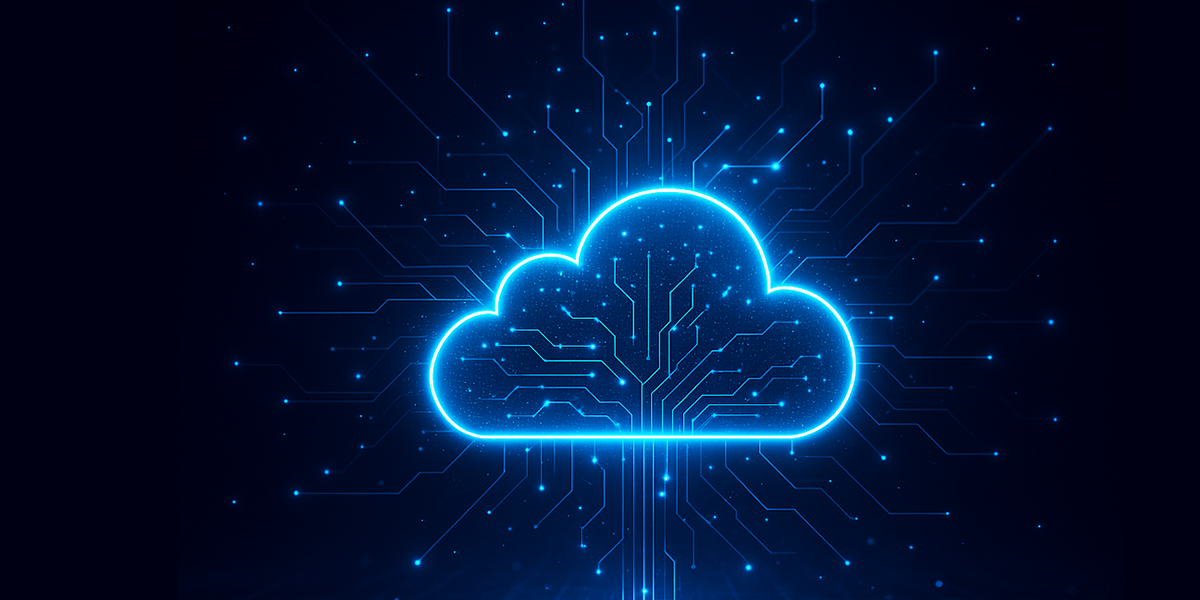
The early 2000s introduced a concept that solved the limitations of local networks: cloud computing. Instead of storing data on a physical server in your office, you could store it on remote servers accessed via the internet.
Companies like Amazon, Google, and Microsoft built massive data centers around the world. They offered computing power and storage as a service. You no longer needed to buy and maintain expensive hardware. You simply rented space in the cloud.
Cloud computing democratized technology. Small businesses gained access to the same powerful tools as massive corporations. It also set the stage for the Internet of Things (IoT). With the cloud handling the heavy lifting, engineers could put internet-connected sensors on virtually anything. Thermostats, vehicles, assembly lines, and medical devices could suddenly stream continuous data to remote servers.
The Era of Cloud-Based Monitoring
We have finally arrived at the current pinnacle of this technological journey. Cloud-based monitoring combines the instant transmission of the telegraph, the accessibility of the telephone, the digital power of the internet, and the infinite storage of cloud computing.
Real-Time Data at Your Fingertips
Modern cloud-based monitoring systems collect data from thousands of endpoints simultaneously. This data flows into cloud servers, where powerful software analyzes it in real time.
You do not need to be in a specific control room to see this information. A facility manager can monitor energy consumption across fifty retail stores using a tablet from their living room. A software engineer gets an instant alert on their phone if a critical database crashes. The cloud makes data visible anywhere, at any time.
Transforming Modern Industries
Cloud-based monitoring actively saves lives, money, and resources across countless sectors.
In healthcare, doctors use cloud systems to monitor patients’ vital signs remotely. If a patient’s heart rate drops dangerously low, the system alerts the medical staff instantly, even if the patient is recovering at home.
In agriculture, farmers place cloud-connected sensors in their fields. These sensors track soil moisture and weather patterns, automatically adjusting irrigation systems to save water and improve crop yields.
In the logistics industry, companies track the exact location and temperature of refrigerated trucks. If a truck carrying sensitive vaccines gets too warm, the monitoring system flags the issue before the cargo spoils.
Looking Forward: What Comes Next?
We have come a long way from tapping out Morse code on copper wires. Cloud-based monitoring gives us unprecedented visibility into our systems, environments, and businesses. But the journey is far from over.
The next frontier involves artificial intelligence and machine learning. Future monitoring systems will not just tell us when something breaks; they will predict failures before they happen. AI will analyze vast amounts of cloud data to identify subtle patterns, automatically fixing issues without human intervention.
In today’s competitive landscape, businesses must take a hard look at their existing systems to understand where they are now and what technologies will carry them into the future. These shifts are happening faster than many expect.
If your business is still relying on manual or outdated processes, you’re not alone—but there’s a better way forward. RMON helps SMBs adopt modern cloud‑based monitoring to simplify day‑to‑day operations, improve security, and prevent costly disruptions. The right technology is already here; we help you connect to it.
The post The Evolution of Remote Monitoring: From Telegraph Lines to Cloud-Based Monitoring appeared first on RMON Networks.
Share
What's Your Reaction?
 Like
0
Like
0
 Dislike
0
Dislike
0
 Love
0
Love
0
 Funny
0
Funny
0
 Angry
0
Angry
0
 Sad
0
Sad
0
 Wow
0
Wow
0