Quote of the day by Microsoft co-founder Bill Gates: 'If a robot comes in to do the same thing, you’d think that we’d tax the robot' — devising policy ideas to counter automation risks
Slowing down the robotics, AI, and automation build-out might give us time to understand how to structure our labor markets


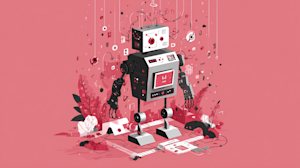
The rise of robotics has long threatened human employment, with machines in manufacturing settings especially seemingly performing the work that people used to do. Take this to its logical conclusion, and it's not outside the realm of possibility to have a massive unemployment problem on your hands. So how do we deal with it? Microsoft co-founder Bill Gates has a contentious idea.
Death, taxes and robots
There's an active (and ongoing) debate about how the rise of apparent job-stealing technology could be handled by policymakers.
This article is part of TechRadar Pro's QOTD project to provide an insight into the minds of the brightest and most recognized figures in the technology industry today and in years gone by. Read the full series here.
This is a challenge to which Gates offered a solution nearly a decade ago, suggesting in an interview with QZ that a robot that performs a human's job should be taxed like its fleshy counterpart.
This, Gates argued at the time, could slow down the rapid speed of automation and be used to instigate exploration into other kinds of employment.
This is, of course, not a policy that everyone (especially much of the business world) agrees with. The International Federation of Robotics (IFR), for instance, decried the move and instead suggested further tax on profits to offset the impact of automation.
Tax-paying robots
Despite that, there are supporters of similar measures, including Anthropic's CEO Dario Amodei, who called for an AI tax proposal to build a multi-million-dollar worker fund. Andrew Yang, too, has called for a tax on automation and AI instead of a tax on humans.
Since 2017, the conversation has certainly moved on – with much of the conversation around automation based on software and digital tools like large language models (LLMs) rather than physical embodied AI robotics systems. That said, the robotics industry is growing fast. While AI is a key focus among policymakers, the conversation may well shift back to machines that we can see and feel.
Share
What's Your Reaction?
 Like
0
Like
0
 Dislike
0
Dislike
0
 Love
0
Love
0
 Funny
0
Funny
0
 Angry
0
Angry
0
 Sad
0
Sad
0
 Wow
0
Wow
0