Not first nor cheap, but here’s why Samsung is still launching a tri-fold smartphone
The Samsung Galaxy Z TriFold will be released on Dec 19 in Singapore for S$3,988 If two folds weren’t enough, consumers can now expect smartphones with three. From flip-button phones to touchscreen devices, we’ve entered the era of foldables—and the latest milestone is Samsung’s Galaxy Z TriFold, set to launch on Dec 19 in only […]


The Samsung Galaxy Z TriFold will be released on Dec 19 in Singapore for S$3,988
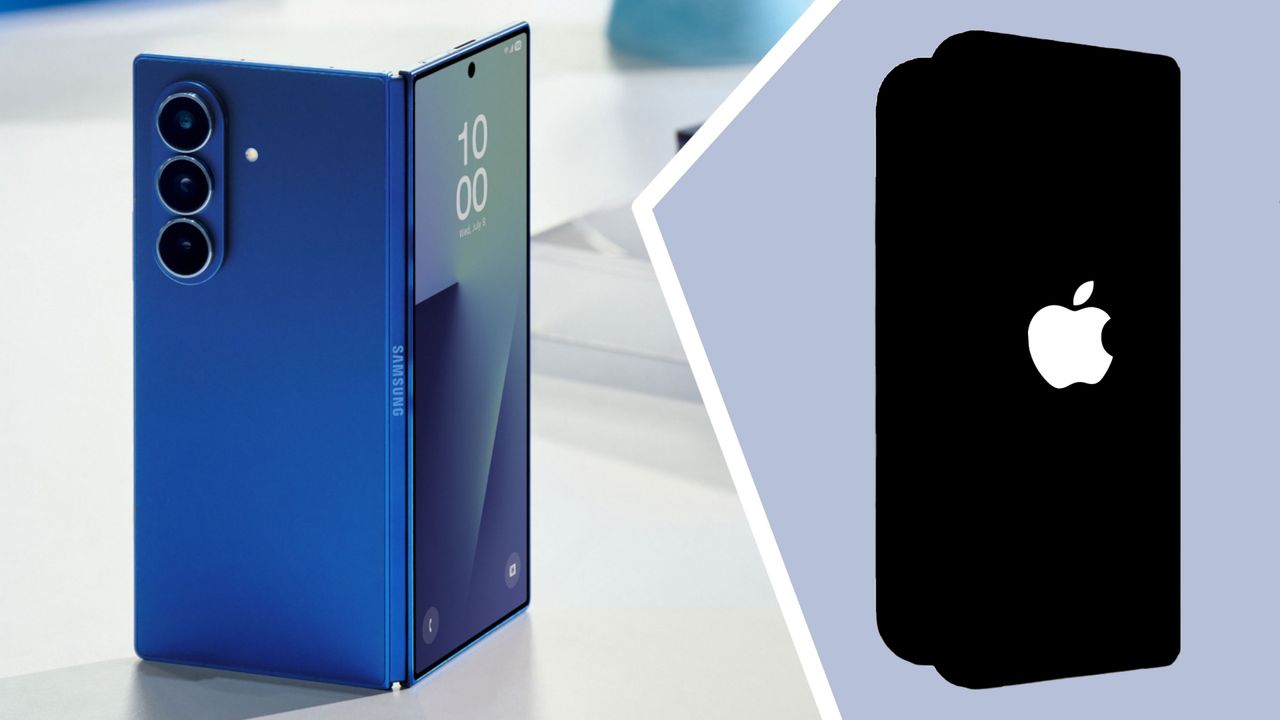
If two folds weren’t enough, consumers can now expect smartphones with three. From flip-button phones to touchscreen devices, we’ve entered the era of foldables—and the latest milestone is Samsung’s Galaxy Z TriFold, set to launch on Dec 19 in only six markets, including Singapore.
But at S$3,988 for the 512GB model, it’s considerably pricier than Samsung’s recent two-fold phones, the Galaxy Z Flip 7 and Fold 7. And it’s not even first to market: Huawei’s Mate XT hit stores last Sept in China and globally in Feb at a slightly cheaper at around S$3,498.
So naturally, you might wonder: why release a device months after competitors, and who would even consider it at that price? The answer isn’t immediately obvious—and that’s exactly what makes this launch worth paying attention to.
A deliberate strategy

Samsung’s work on its tri-fold smartphones has long been guided by a deliberate patent strategy.
As early as mid-2021, the company filed with the World Intellectual Property Organization (WIPO), and by Nov 2024, had secured U.S. protection for a tri-fold concept featuring a flexible display with three distinct screens, multiple folding zones, and a specialised barrier layer for improved durability. It established its technological footprint well ahead of the device’s market launch.
Why does this matter? Well, it’s so that competitors can’t catch up—particularly in China, the world’s largest foldable smartphone market. It accounted for half of global shipments in the second quarter of 2024, according to research firm Canalys.
Despite launching the world’s first commercial foldable phone in 2019 and capturing a global market share of 60–70%, Samsung’s influence in China has eroded sharply over the years. By Q4 2024, it no longer ranked among the top foldable phone brands in the market as copycats and other alternatives offered Chinese consumers plenty of options—a stark contrast to its former global dominance.
In its place, Chinese brands like Huawei have emerged as leaders in foldable smartphone innovation. Huawei held nearly 70% of China’s foldable smartphone market in the first three quarters of this year, according to research firm IDC.

Globally, other competitors are catching up as well. Another prominent brand in the foldable smartphone race is America’s Motorola.
Motorola has significantly expanded its presence in recent years, especially with its Razr series, popular in markets like the U.S. and Europe. The brand even surpassed Samsung to take the second spot in the global foldable smartphone market in Q2 2025, driven by strong sales of its latest Razr 60 series.
Hence, by patenting every key component of its foldable devices—from hinges to display mechanisms—Samsung is building a protective moat around its technology. As competitors begin to match its strength, the company is reshaping the playing field in its favour.
What does this mean for competitors?
A patent gives a company legal ownership of a technology, allowing it to enforce or license the innovation. This creates a barrier for competitors, while also boosting the company’s brand recognition and influence with consumers.
By patenting its tri-fold designs years ago, Samsung was able to slow down competitors. When Huawei developed its Mate XT, its engineers legally studied Samsung’s published patents and created alternative folding mechanisms that avoided infringement. The device uses an outward-fold “Z” structure, whereas Samsung’s design features an inward “G”-style fold.

Huawei also filed patents for its tri-fold phone in early 2024. This means that for other competitors, entering the space will be challenging, requiring higher engineering costs, slowing down product iteration, and risk inadvertently infringing on intellectual property.
Legal disputes over patent infringement are actually pretty common in the tech industry. Since 2011, Apple and Samsung have faced multiple lawsuits over design and utility patents, covering everything from smartphones and touch gestures to user interfaces.
Samsung and Huawei, too, were embroiled in extensive patent litigation from 2016 into 2019, including more than 40 lawsuits across China and other jurisdictions before a settlement was reached.
By securing patents early, Samsung gains a strategic edge: competitors are forced to take alternative, often riskier paths to innovate, giving Samsung greater control over how the foldable smartphone market evolves and preserving its technological leadership.
The company is already looking ahead—reports indicate that Samsung filed a patent for a quad-fold phone this Apr.
Samsung is securing multi-year headroom in the foldable phone market

Looking at the Samsung Galaxy Z TriFold’s specs, there are some notable advantages.
Reports indicate that the TriFold boasts a large extendable display exceeding 10 inches, offering tablet-like multitasking and room for three full-screen apps to be displayed simultaneously, which could help users increase productivity beyond the current dual-fold Galaxy Z Fold 7. The Samsung TriFold also features an improved battery, charging rate, and processor compared to the Fold 7.
Conversely, critics point to the TriFold’s bulkier form and its lack of S Pen support, which do not justify its high cost. There are also concerns that screen-quality problems—like the “green lines” that sometimes appear on Samsung foldable displays—may persist. These lines are faint green streaks that can show up on the screen over time or after repeated folding, affecting display quality and usability.
But launching the TriFold isn’t just about specs or sales. It’s a layered battle between market execution and intellectual property positioning—Samsung is securing multi-year headroom in a market expected to reach US$60 billion by 2030.
Huawei may have claimed the early commercial spotlight with the Mate XT, but Samsung’s years-long patent strategy will give it a long-term advantage in shaping the tri-fold market and controlling key technologies.
- Learn more about the Samsung Galaxy Z TriFold here.
Also Read: Many hyped-up products disappointed me, but this Shark fan changed my mind
Featured Image Credit: TechTalkTV
Share
What's Your Reaction?
 Like
0
Like
0
 Dislike
0
Dislike
0
 Love
0
Love
0
 Funny
0
Funny
0
 Angry
0
Angry
0
 Sad
0
Sad
0
 Wow
0
Wow
0