Microsoft Azure tops $100B in annual revenue as record AI spending cuts into cash flow
Microsoft's Azure cloud business grew 43% last quarter — well past its own forecast — and topped $100 billion in annual revenue for the first time. The cost: a record $41 billion in capital spending, with free cash flow down 23%. Shares rose after hours, reversing the recent pattern. Read More

Microsoft’s Azure cloud business grew 43% last quarter, blowing past the company’s own forecast and surpassing $100 billion in annual revenue for the first time, providing fresh evidence of the potential for artificial intelligence to fuel new growth for the tech giant.
The company’s results for its fiscal fourth quarter also showed the price of that growth: capital spending hit a record $41 billion, largely to support the company’s AI buildout, and free cash flow sank 23% even as operating profits jumped 18%.
And in a new twist, Microsoft shares rose more than 3% in initial after-hours trading, in contrast with the recent pattern in which the company’s strong results were met with selloffs that pushed its stock near a one-year low.
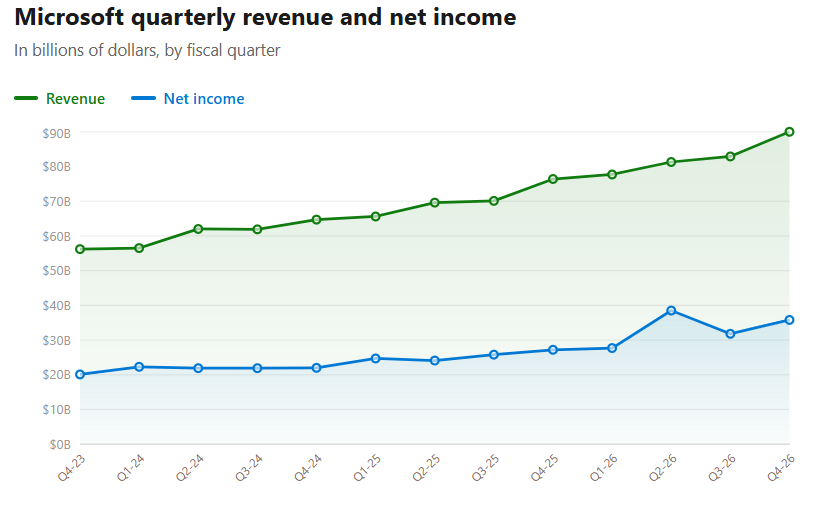
Companywide results: Overall, Microsoft reported revenue of $90 billion for the quarter, up 18% from a year ago, and net income of $35.8 billion, up 31%. Analysts had expected $87.7 billion in revenue, a figure that was already at the top of Microsoft’s own guidance range.
Earnings were $4.81 per share, topping the $4.24 that analysts expected. But that included a 27-cent benefit from one-time items, largely a $3.2 billion gain on Microsoft’s investment in Anthropic. Even excluding those items, the company said, it exceeded expectations across revenue, operating income and earnings per share.
Microsoft 365 Copilot surpassed 30 million paid seats, up from 20 million last quarter. That’s still less than 7% of the roughly 450 million commercial Microsoft 365 seats, a gap that has drawn investor skepticism all year.
Windows OEM and Devices revenue declined 7%, hurt by slower PC demand and a tough comparison with last year’s Windows 10 upgrade wave. The decline would have been steeper, but PC makers built more machines to get ahead of rising memory prices, and Microsoft collects its Windows fee when a PC is built rather than when it’s sold.
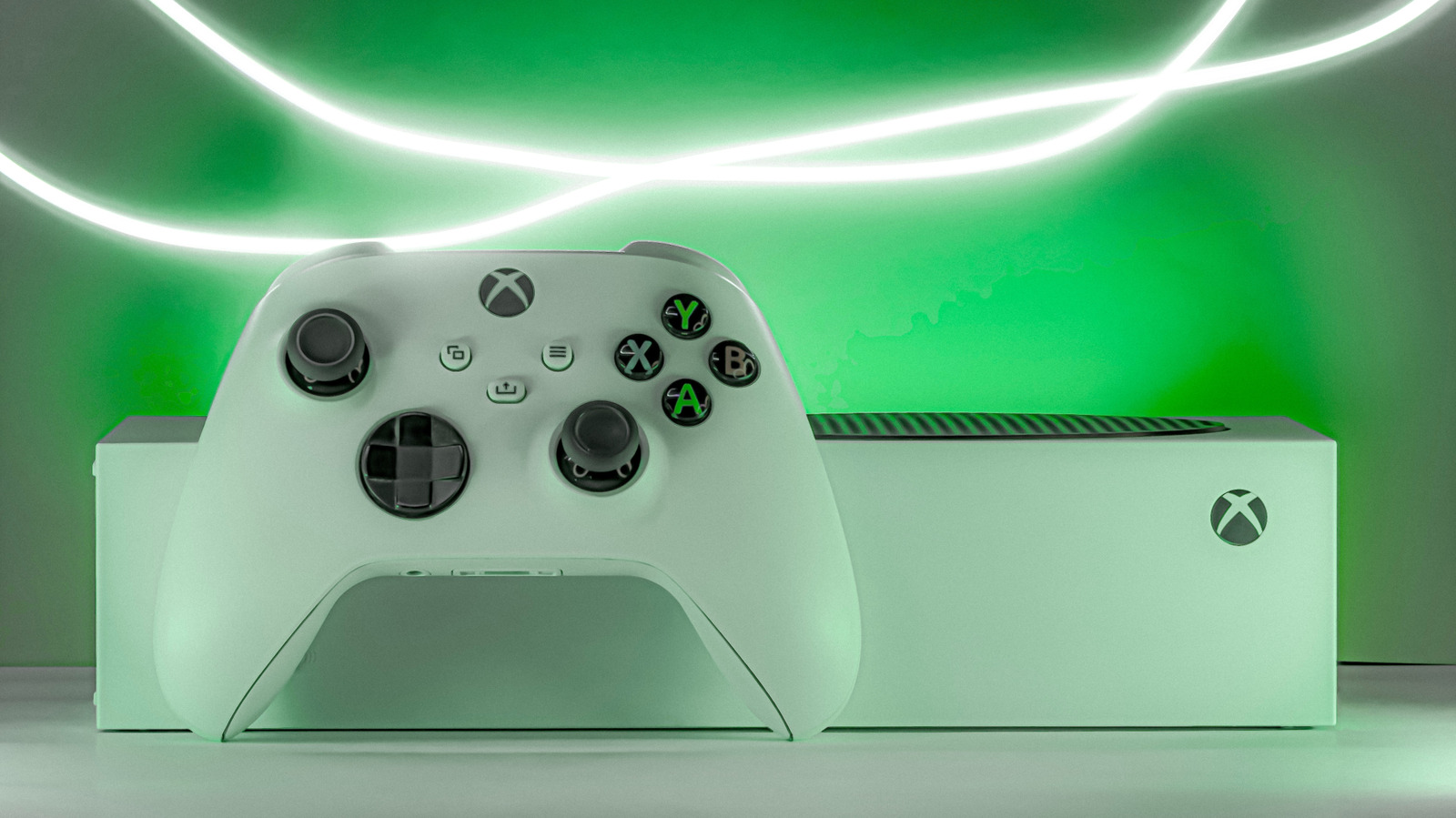
Xbox content and services revenue fell 10% and Xbox hardware fell 13%. Microsoft also wrote down the value of unspecified Xbox assets. The company grouped that charge with severance costs and savings from its retirement program — a net $500 million hit to operating income — and declined to say how much of it was Xbox or what was written down.
Share
What's Your Reaction?
 Like
0
Like
0
 Dislike
0
Dislike
0
 Love
0
Love
0
 Funny
0
Funny
0
 Angry
0
Angry
0
 Sad
0
Sad
0
 Wow
0
Wow
0