In a first, Blue Origin uses a recycled rocket to send a satellite into orbit — unfortunately, it’s the wrong orbit
After liftoff, New Glenn booster makes its second successful touchdown, but AST SpaceMobile says its satellite will have to be deorbited. Read More


Jeff Bezos’ Blue Origin space venture used a previously flown New Glenn rocket booster to send a satellite into space today, marking a first for the company.
It was also New Glenn’s first launch failure.
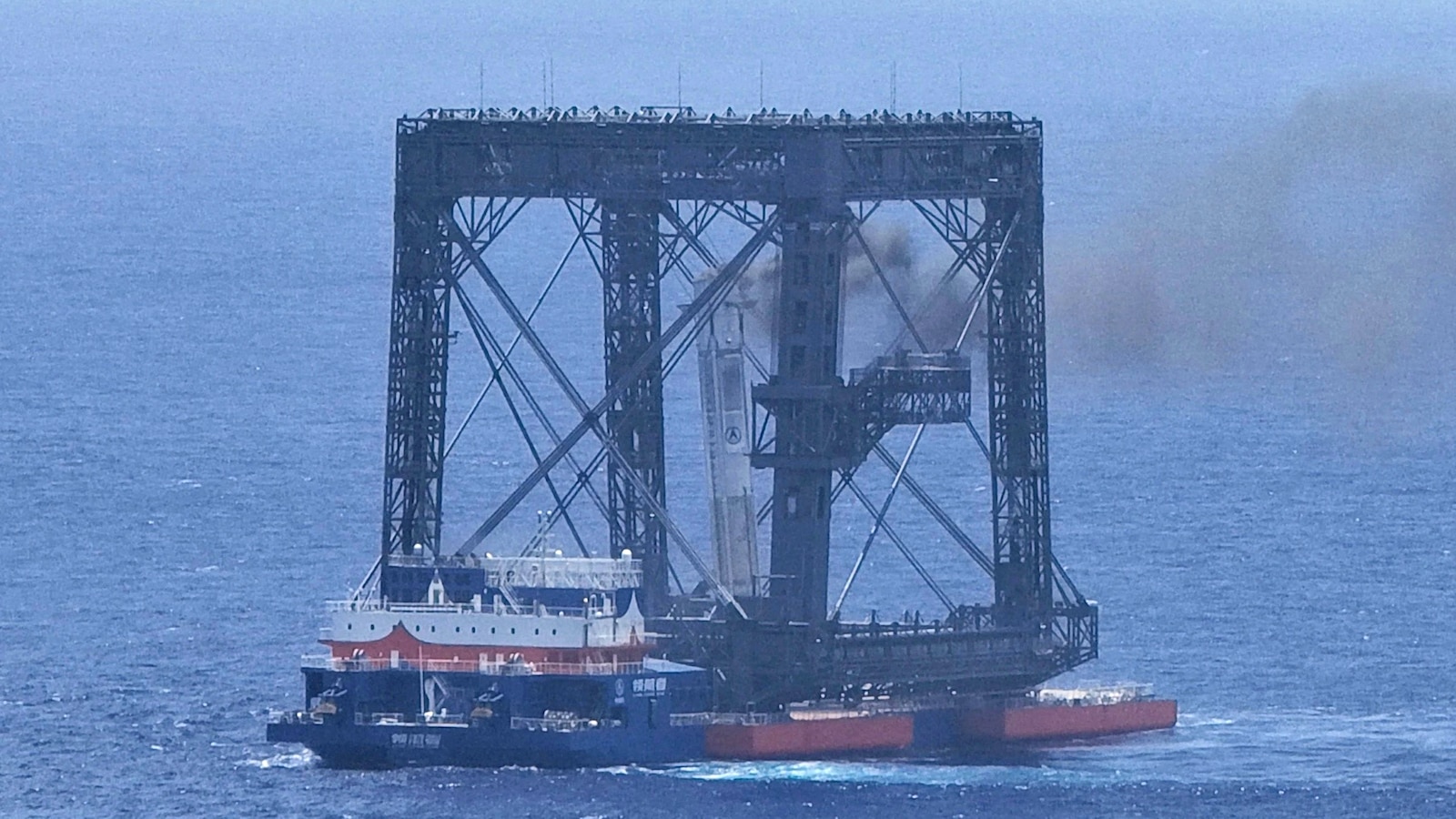
The first-stage booster — nicknamed “Never Tell Me the Odds” — made its second successful touchdown on a floating platform in the Atlantic Ocean, drawing cheers from the Blue Origin team. But hours later, AST SpaceMobile said that its BlueBird 7 satellite was not deployed into its intended orbit.
“BlueBird 7 was placed into a lower than planned orbit by the upper stage of the launch vehicle,” the Texas-based company said in a news release. “While the satellite separated from the launch vehicle and powered on, the altitude is too low to sustain operations with its onboard thruster technology and will [be] deorbited. The cost of the satellite is expected to be recovered under the company’s insurance policy.”
The rocket lifted off from Launch Complex 36 at Cape Canaveral Space Force Station in Florida at 7:25 a.m. ET (4:25 a.m. PT). The twice-used booster made its first flight last November when it launched NASA’s Escapade probes on a mission to Mars. Blue Origin’s Florida team recovered and refurbished the booster for today’s launch.
Blue Origin executed the same maneuver today. The webcast showed the booster settling down to a touchdown on the landing craft, which was christened Jacklyn as a tribute to Bezos’ mother. Team members could be heard cheering at Mission Control in Florida, at the company’s headquarters in Kent, Wash., and at other outposts in Texas and Alabama.
“Welcome back once again, Never Tell Me the Odds,” launch commentator Tabitha Lipkin said. “It’s good to say that twice.”
Bezos celebrated the achievement by posting a video clip of the landing on social media:
This was the third launch for Blue Origin’s orbital-class New Glenn rocket. The first liftoff in January 2025 sent a payload into orbit to test the communication and control systems for Blue Origin’s Blue Ring space mobility platform. Blue Origin tried to recover the booster that was used for that mission, nicknamed “So You’re Telling Me There’s a Chance,” but that first booster missed its chance.
After today’s successful booster touchdown, the focus shifted to the mission’s primary objective: deploying BlueBird 7 from the rocket’s second stage. That was due to take place an hour and 15 minutes after liftoff, but it took an hour longer for Blue Origin to issue an update.
“We have confirmed payload separation. AST SpaceMobile has confirmed the satellite has powered on. The payload was placed into an off-nominal orbit,” Blue Origin said in a status report posted to X.
AST followed up several hours later with its own statement acknowledging that the satellite would have to be deorbited.
BlueBird 7 was meant to join seven other satellites in AST’s constellation, including a prototype BlueWalker satellite. The BlueBird satellites are designed to deliver cellular broadband connectivity directly from space to standard smartphones.
AST SpaceMobile said it still plans to have about 45 satellites in its constellation by the end of 2026. It expects to conduct a launch every one or two months on average, supported by agreements with multiple launch providers.
Scott Wisniewski, AST’s president and chief strategy officer, told PCMag last month that the company could begin commercial service in its initial markets once 45 to 60 satellites are in orbit. AST SpaceMobile’s services would be provided through partnerships with AT&T, Verizon and other wireless networks.
Direct-to-device connectivity is shaping up as a fast-moving frontier for satellite broadband services. SpaceX was the first to enter the fray: It struck a D2D deal with T-Mobile in 2022 and is ramping up its Starlink satellite network to accommodate the needs of cellular subscribers.
Last week, Amazon announced that it will acquire Globalstar, a Louisiana-based satellite operator, and will partner with Apple to beef up D2D services. That deal is expected to give a boost to the Amazon Leo satellite broadband network, a Starlink competitor that’s due to begin commercial service this year.
Rocket reusability is another technological realm where SpaceX has long been a leader but is now facing heightened competition. The ability to recover and reuse rocket boosters plays a huge part in SpaceX’s strategy to drive down launch costs. Despite the unwelcome news about BlueBird 7, today’s launch demonstrated that Blue Origin is able to leverage rocket reusability as well.
This report has been updated with status reports from Blue Origin and AST SpaceMobile about BlueBird 7.
Share
What's Your Reaction?
 Like
0
Like
0
 Dislike
0
Dislike
0
 Love
0
Love
0
 Funny
0
Funny
0
 Angry
0
Angry
0
 Sad
0
Sad
0
 Wow
0
Wow
0