I tested the Insta360 Luna Ultra for a month — now I can’t go back to single-lens vlogging cameras
Look out DJI — the Insta360 Luna Ultra is an 8K compact vlogging camera with dual lenses and an innovative detachable OLED touchscreen and control module, plus a host of high-end video features.

Insta360 Luna Ultra: One-minute review
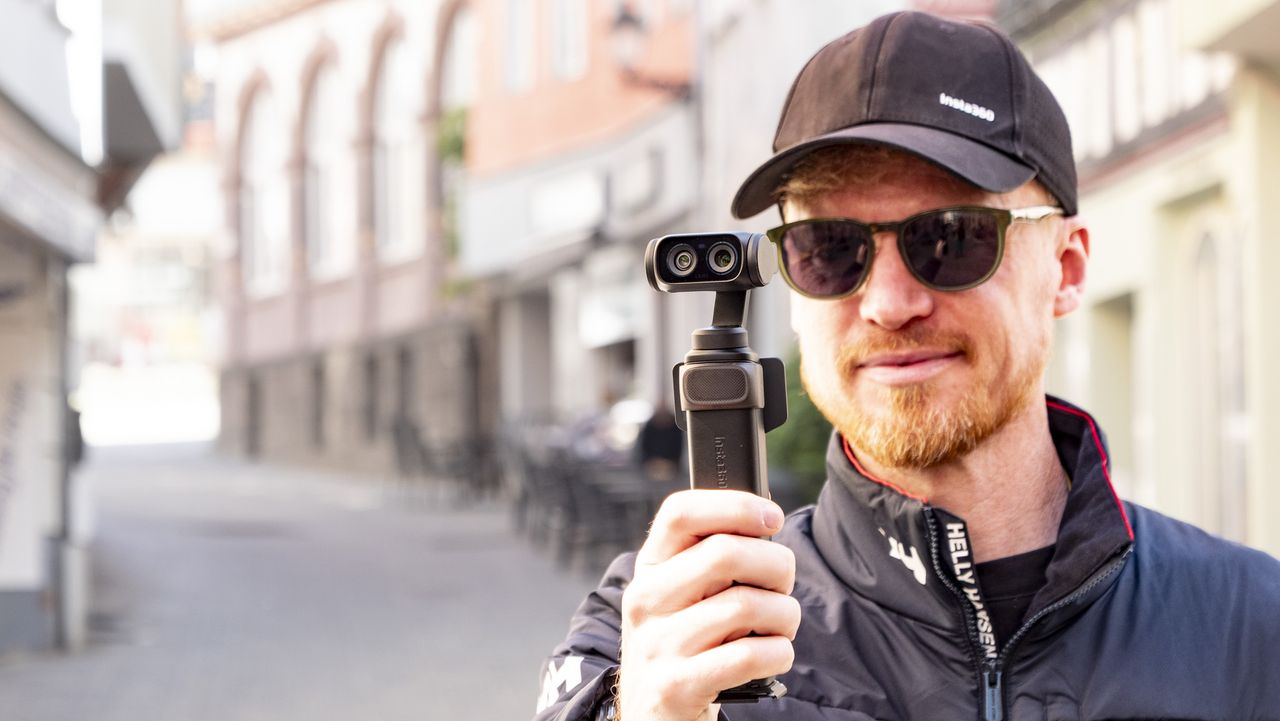
Despite being Insta360’s first vlogging camera with multiple Insta360 firsts, the Luna Ultra, overall, feels like a polished and bold product. Its triple chipset ably supports powerful features — especially the gimbal-stabilized 8K 30p video with 10-bit color depth and 4K 120p slow motion video recording, Log color profile, autonomous subject tracking autofocus and 32-bit float audio.
With dual 20mm f/1.8 and 60mm f/2.0 lenses, each with its own sensor, you truly are getting two cameras in one. And having enjoyed the Luna's ultra-wide and impressive 3x telephoto versatility for a month, it will be hard for me to go back to a single-lens compact vlogging camera.
The detachable remote module — which features the two-inch OLED touchscreen, main camera controls and built-in microphone — has, understandably, won many admirers. It's such a clever and well-implemented design feature that truly enhances the user experience, especially for solo vlogging.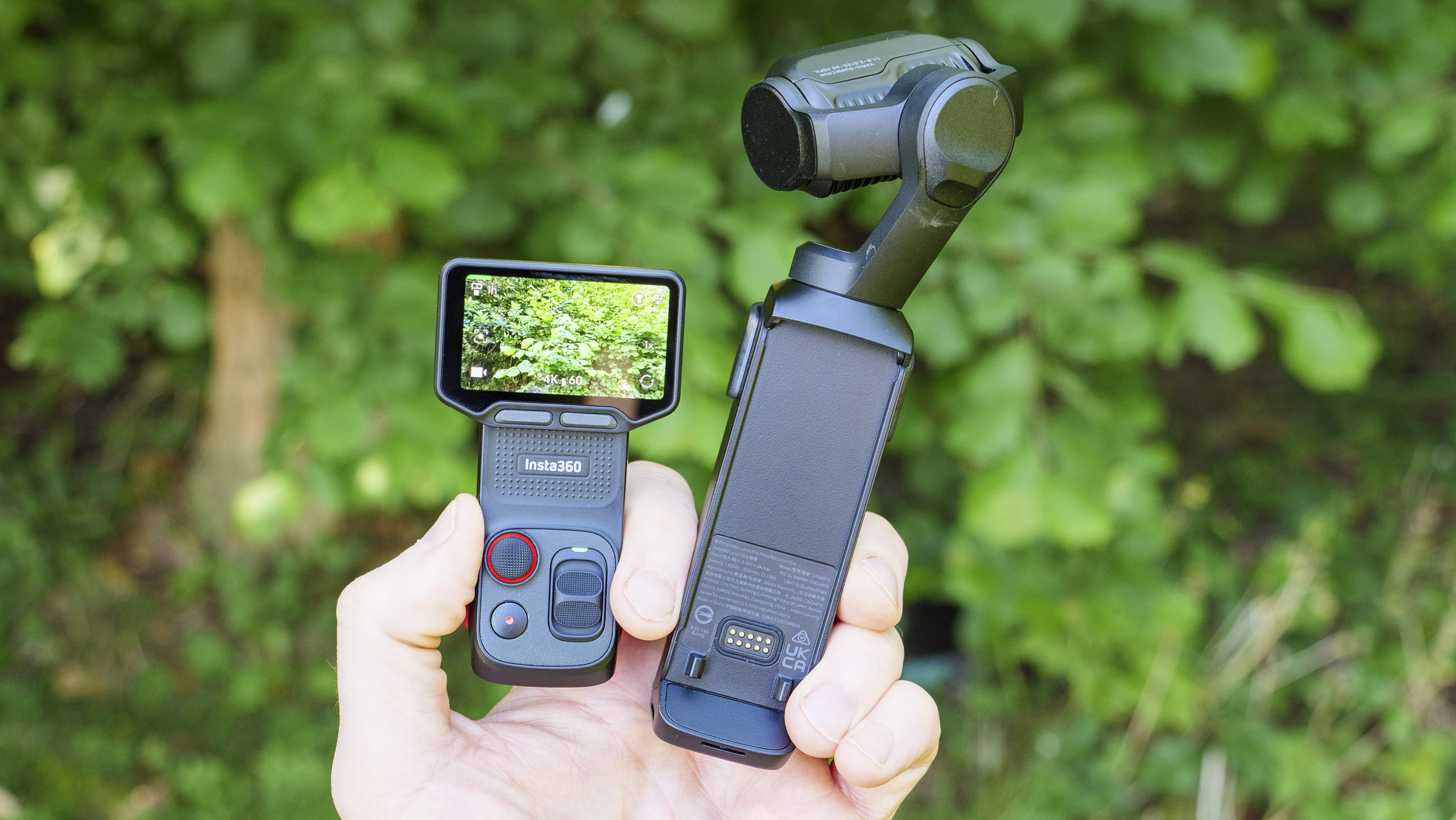
Initially I had a few minor niggles navigating various camera settings, and it certainly paid dividends to spend time customizing the Luna Ultra to the way I like to shoot. It's also notably bulkier than DJI's Pocket 4 vlogging cameras, and pricier than single-lens alternatives.
Despite its infancy in this space, Insta360 has to its credit already produced crucial supporting accessories — including tripod and battery grips, plus the Insta360 Mic Pro wireless mic for top quality audio — meaning you can stick within the Insta360 ecosystem and enjoying the best possible user experience and compatibility, including full Bluetooth support.
Yes, DJI has been in the compact vlogging camera space for much longer and has refined its Pocket series with every iteration, but the Luna Ultra enters with a bang and is an impressive alternative.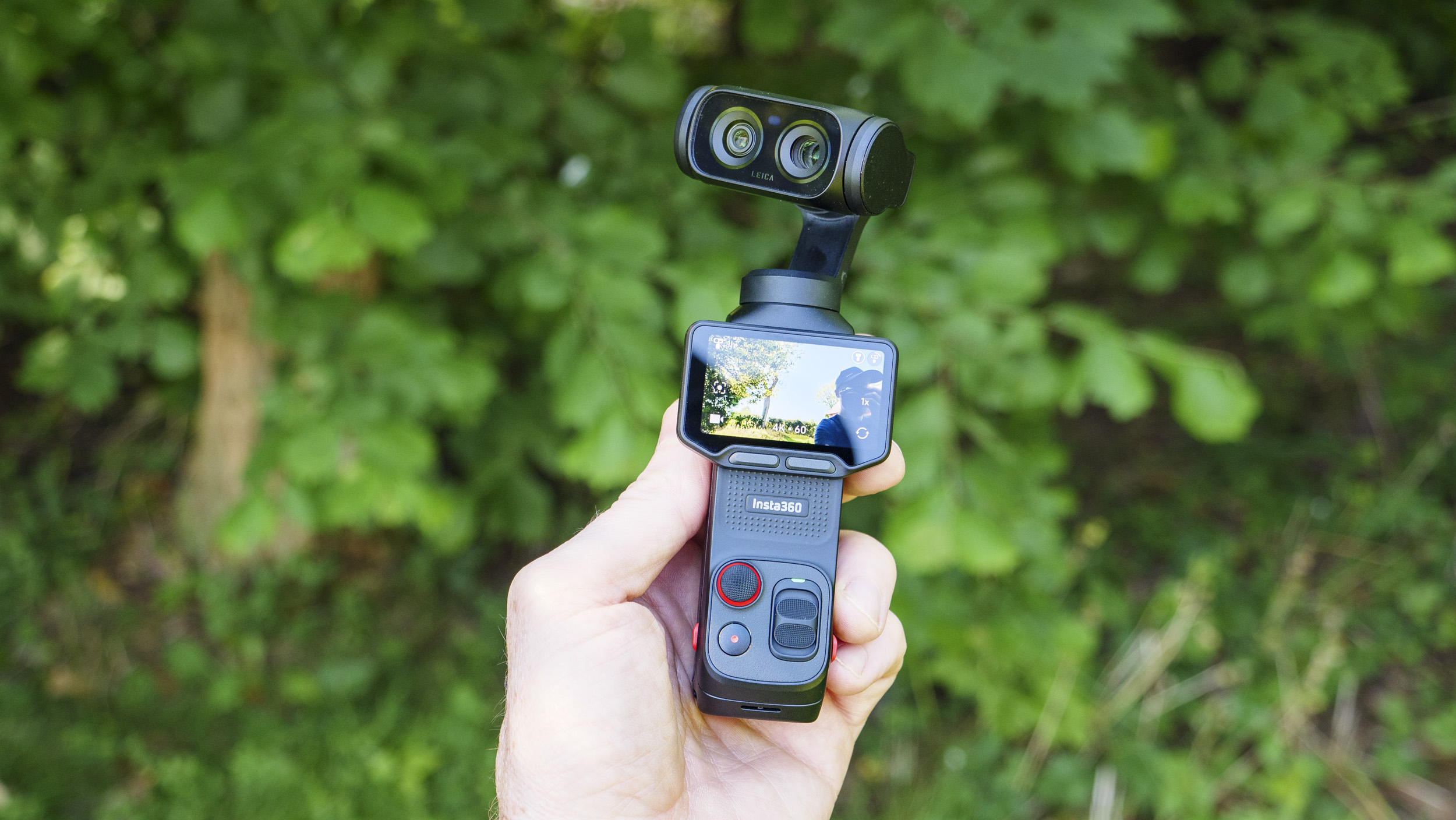
Insta360 Luna Ultra: price and release date
- Full release on June 12 2026
- Available in black or white with prices starting at $769.99 / £649 / AU$1,229.99
- Multiple bundles to choose from, including the Creator Bundle
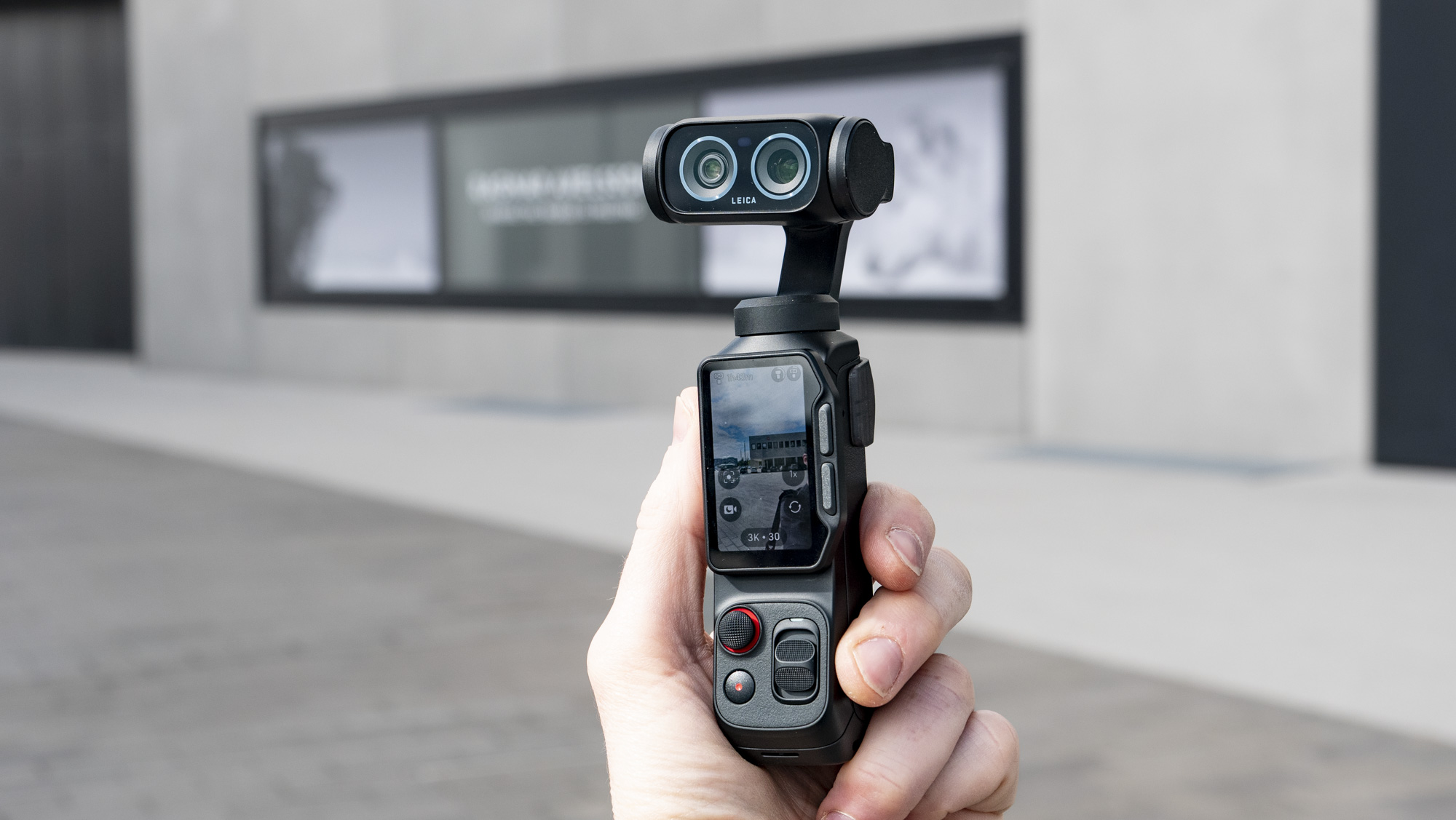
"We're not going to compete on price" is what Insta360's co-founder Max Richter told me at a pre-launch event for the Luna Ultra, the company's first vlogging camera and DJI Osmo Pocket series rival.
And the Luna Ultra is much pricier than previous Pocket cameras. However, those were single-lens models and, like DJI's most recent Pockets, the single-lens Pocket 4 and dual-lens Pocket 4P, the Luna comes in two varieties: the single-lens Pro and the dual-lens Ultra.
Prices for the Ultra start at $769.99 / £649 / AU$1,229.99. That’s a fair whack more than the latest single-lens models, but you are truly getting two cameras in one device.
Insta360 sent me the Creator Bundle to review, which includes multiple extras such as the Mic Pro transmitter and battery grip and costs $969.99 / £829 / AU$1,549.99. I expect the dual-lens Osmo Pocket 4P to cost less than the Luna Ultra, but it won't be available in the US because of the DJI ban.
Both Luna models are available in black or white versions, and in a further variety of bundles that cater for various use cases; Standard, Essential, Endurance, VLOG, POV and Creator.
- Price score: 4/5
Insta360 Luna Ultra specs
Type: | Compact video camera |
Lenses | 20mm f/1.8 and 60mm f/2.0 |
Sensors: | 1-inch and 1/1.3-inch |
Video: | 8K up to 30p / 4K up to 120p / FHD up to 240p |
Photo: | 9MP JPEG & RAW / 37MP UltraPhoto mode / panorama |
LCD: | 2-inch OLED, detachable |
Memory: | 47GB internal, 1x micro SD (up to 1TB) |
Battery | 1,550mAh, rated up to 4 hours of 1080p |
Dimensions | 2.1×6.7×1.5in / 52.4×169.9×38.5mm |
Weight: | 8.2 oz / 233g (black) |
Insta360 Luna Ultra: design
- First compact vlogging camera to land with dual lenses, ahead of the Pocket 4P
- Similar design cues to the DJI Pocket series (but a little larger), with stick-like form factor and camera supported by a three-axis gimbal
- Unique detachable controller which includes a two-inch OLED screen and built-in mic
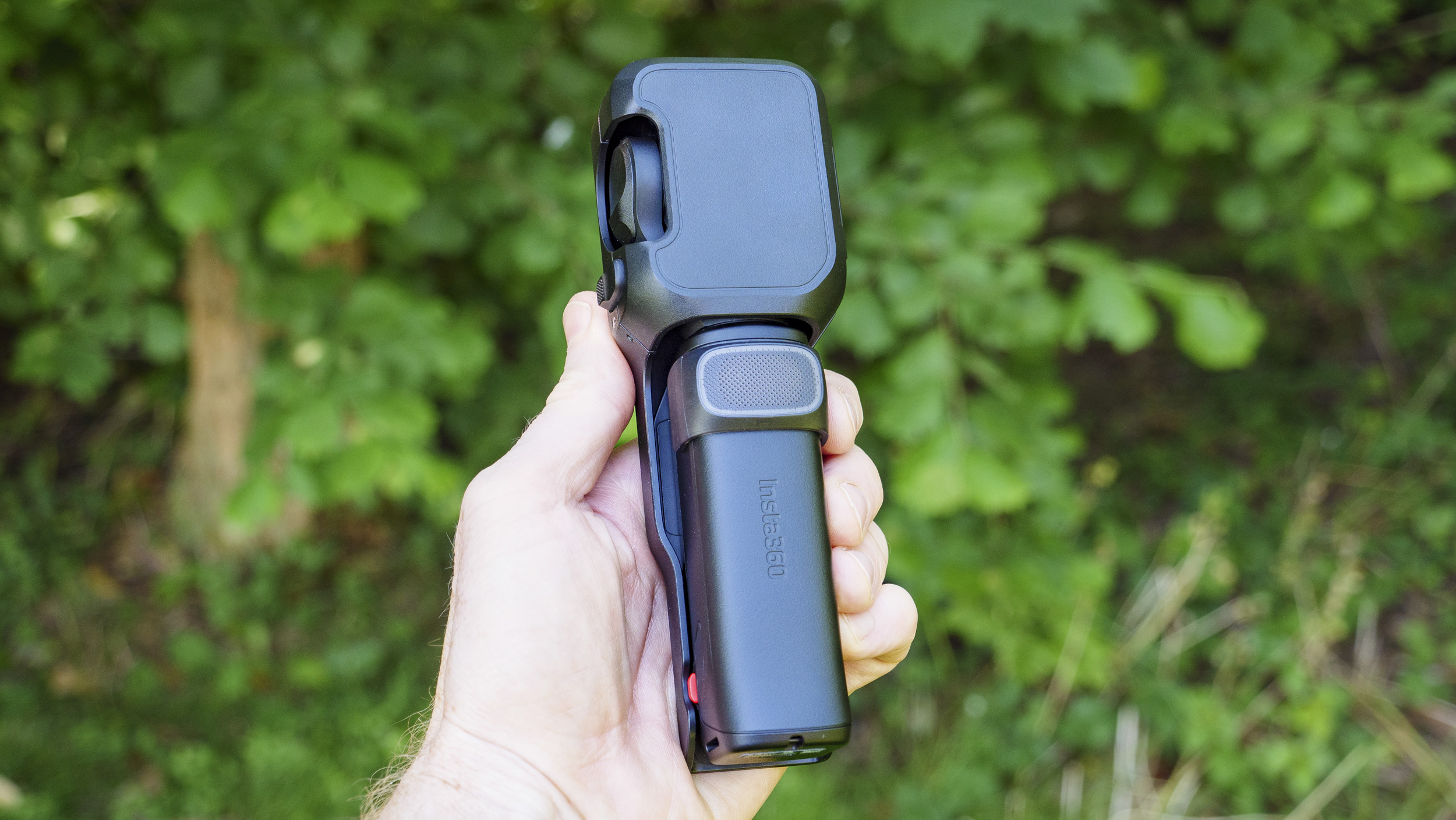
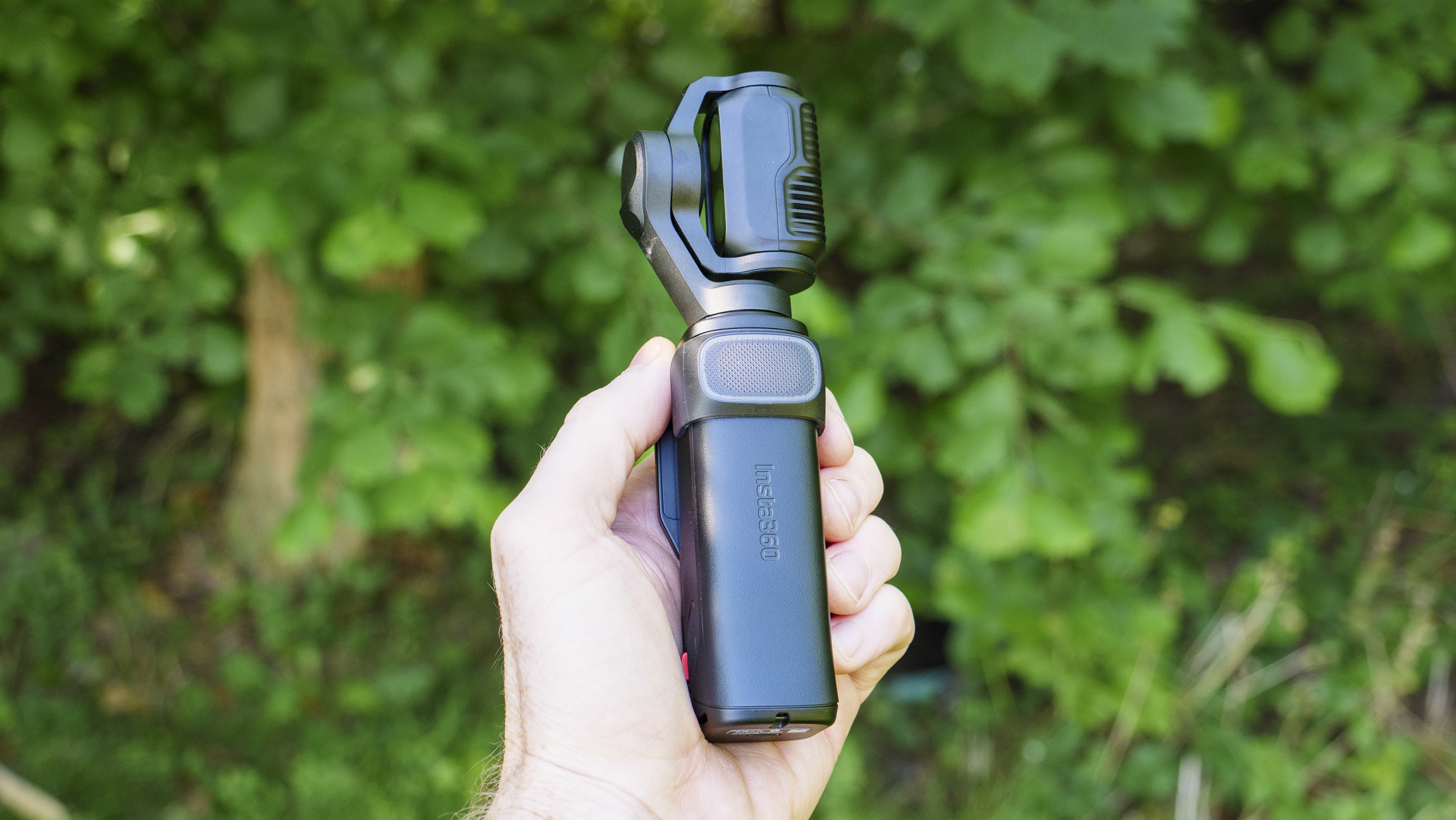
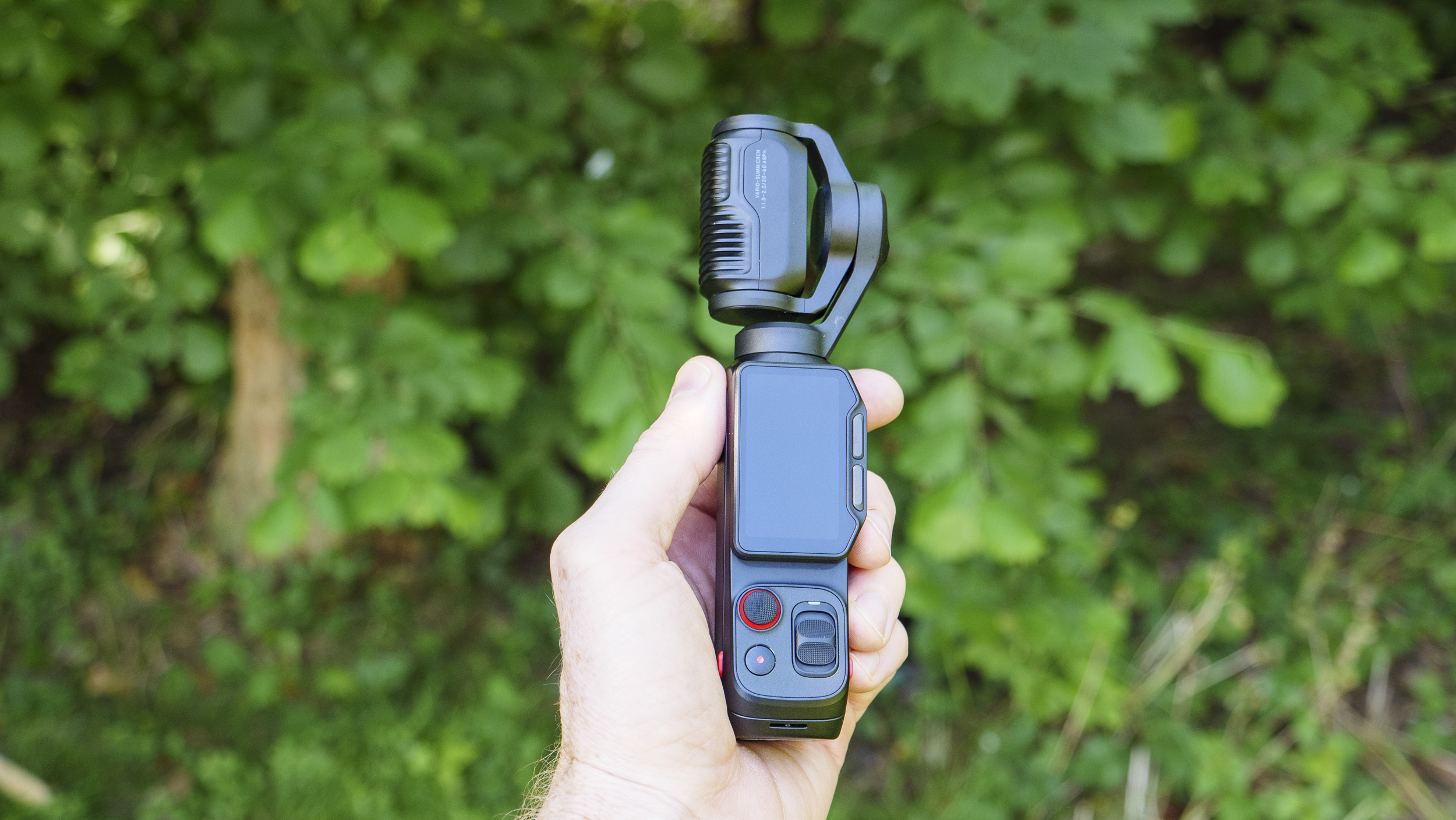
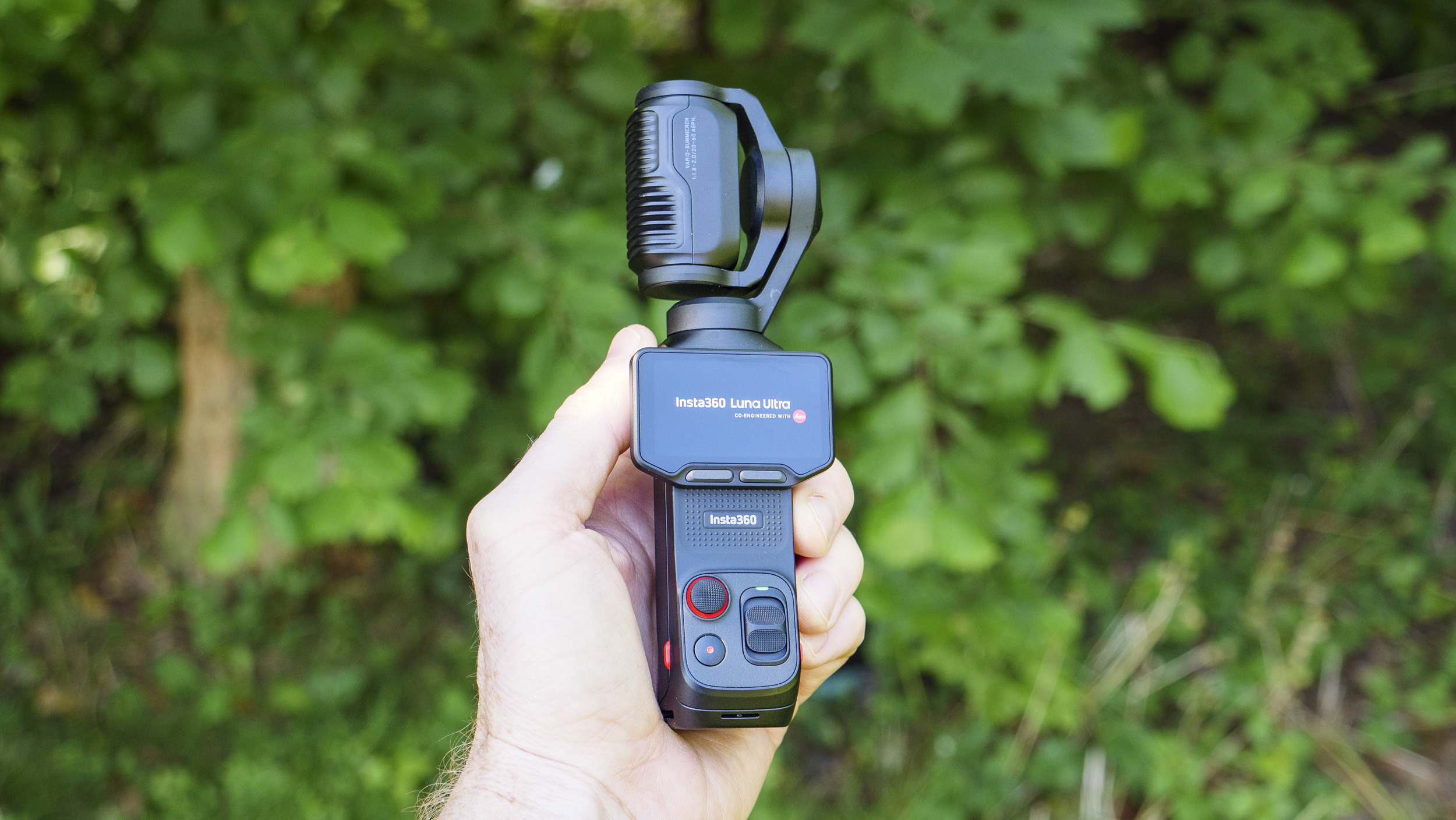
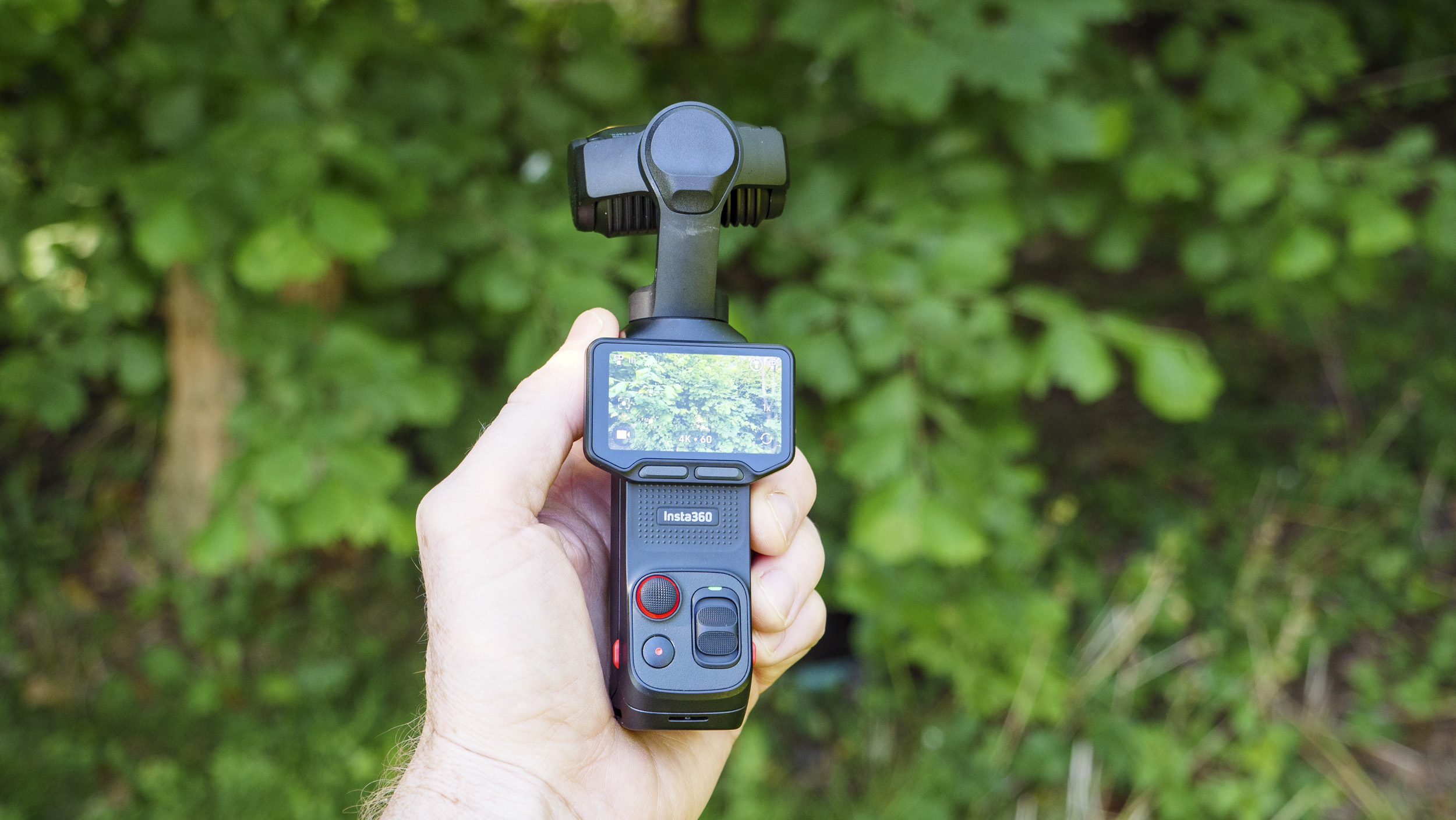
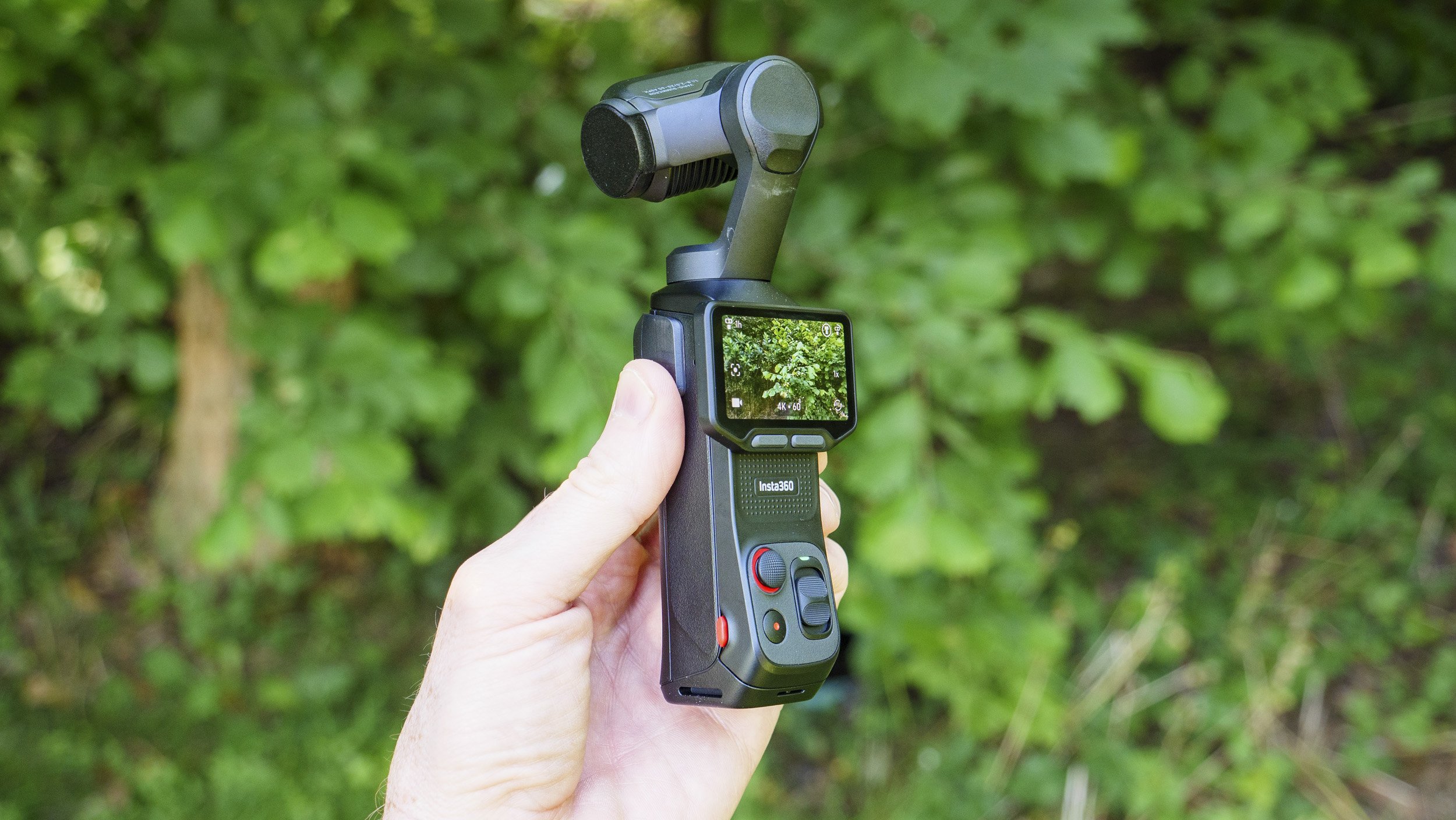
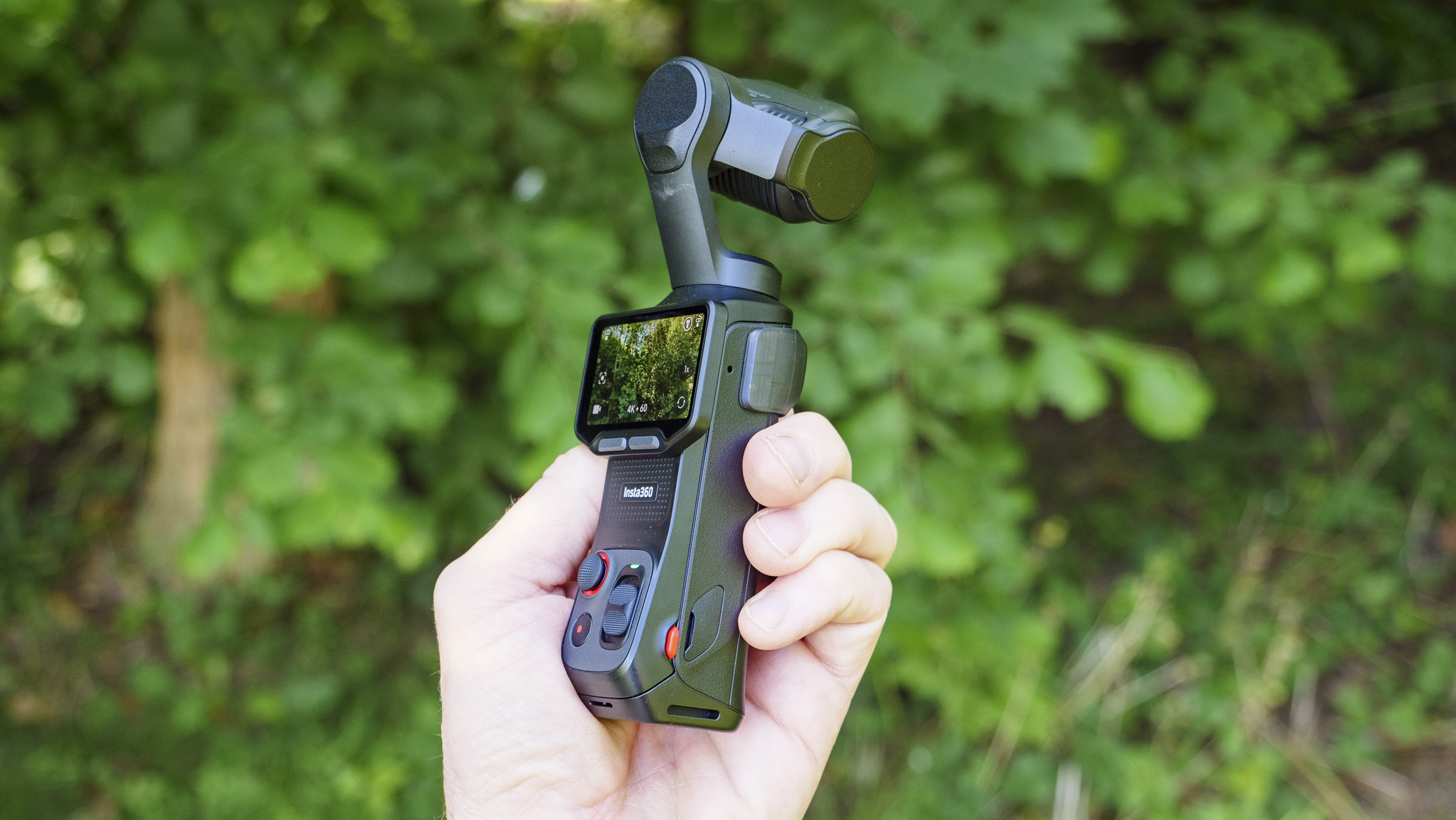
The Luna Ultra’s form factor is familiar — it's a bit like the compact, stick-like design of DJI’s Pocket series. DJI isn’t happy about it, by the way; it has filed a lawsuit accusing Insta360 of patent violations (which Insta360 has responded to with a countersuit).
However, there are some key design differences. Lunas are slightly larger than Pocket models. Not majorly so, but the difference is clear when you hold them side by side as I did (albeit the dual-lens Ultra alongside the single-lens Pocket 4).
In practice, I didn’t really feel that the Luna’s extra weight and size negatively affected its handling — it’s easy in the hand for on-the-go vlogging. If you want the absolute smallest option, however, DJI is your best best. Even the dual-lens Pocket 4P is smaller.
There’s a good reason why the Luna cameras are bigger, and that’s for a super clever and unique feature: a detachable remote control, which is a module that packs the camera's main controls and rotatable two-inch OLED screen. Simply squeeze the red buttons on either side of the Luna, and the module pulls away from the body.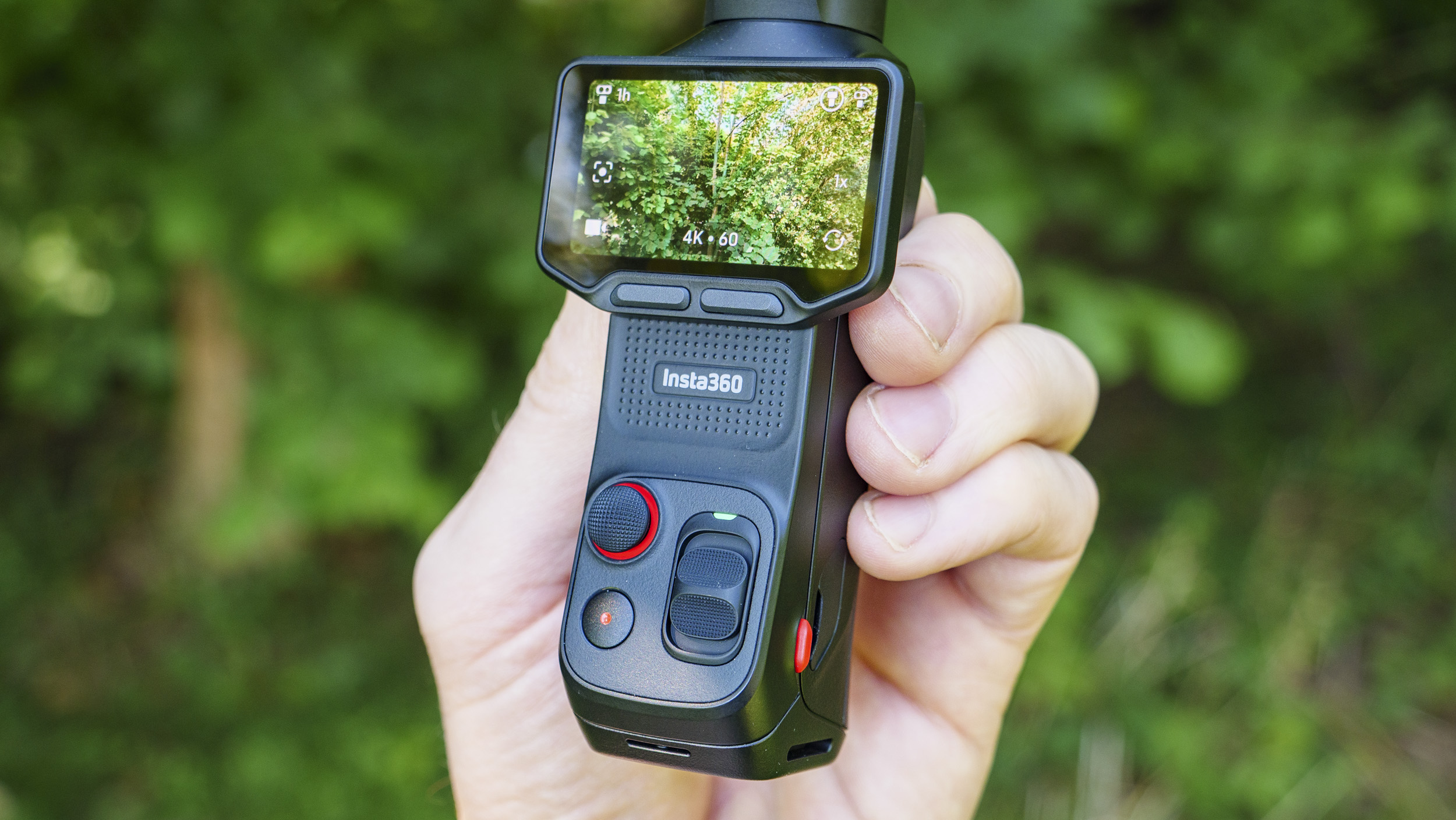
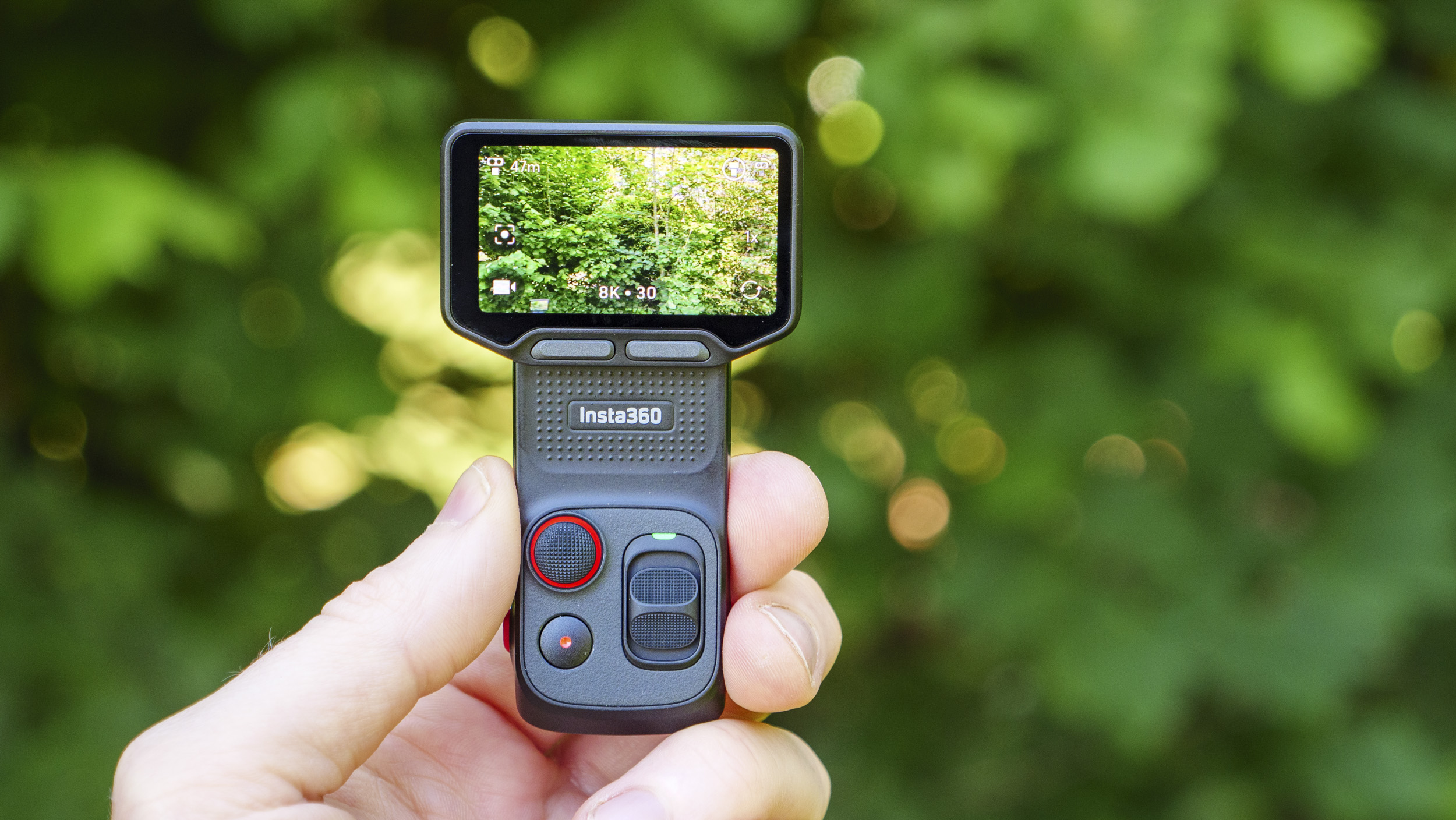
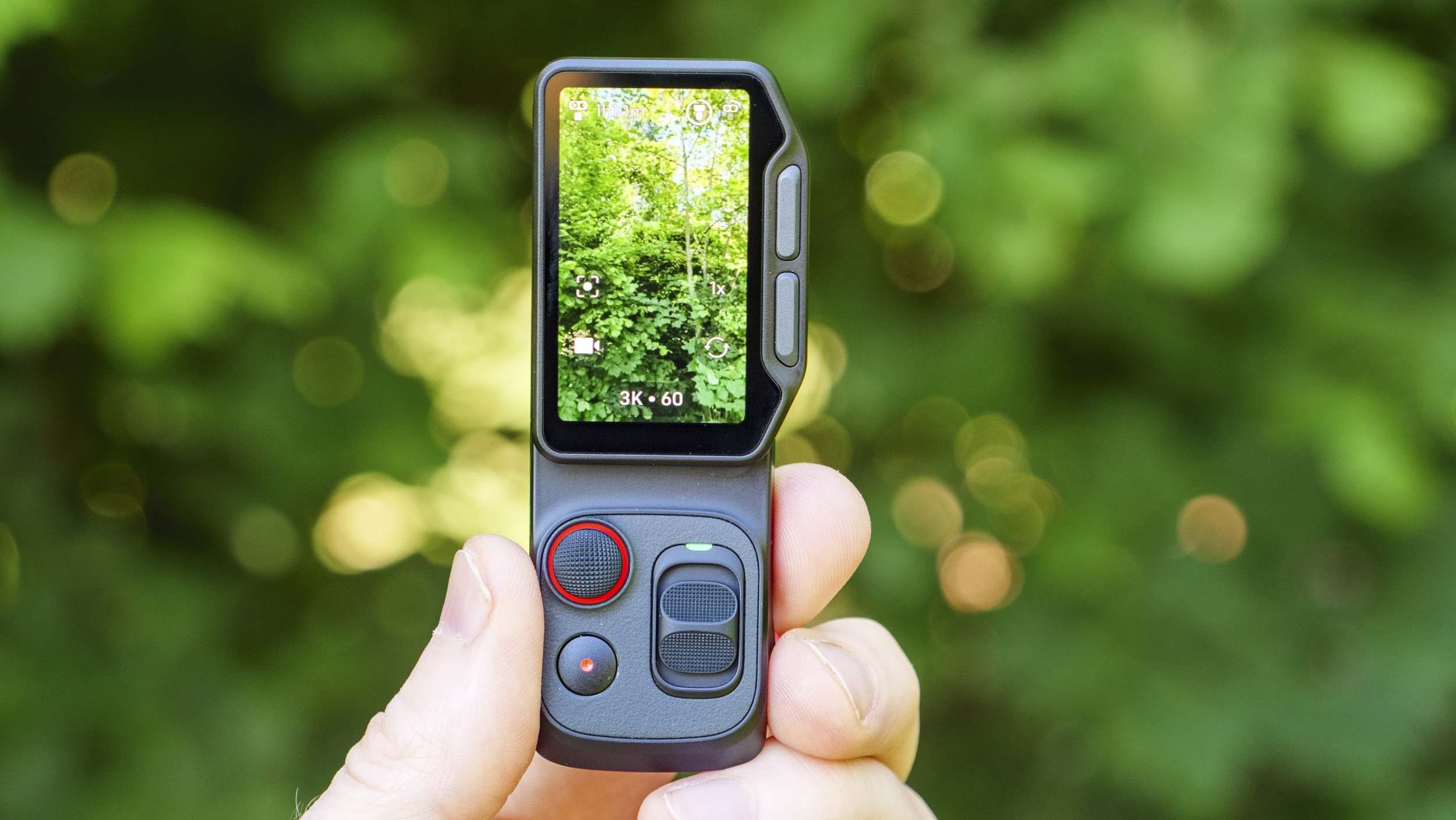
The module has a 20m transmission range and operates exactly the same way as if it’s on the camera, with the touch display offering a remote view, and the main camera controls on hand, including gimbal, zoom and record. Transmission range is impacted by the surroundings — I found the feed froze inside 15 meters when other people passed in front of me in a busy urban space — but I could see it happening on the screen in my hand and could rectify the situation.
What’s really neat is that the module has a built-in microphone, so you can easily check your frame and present to the camera. It’s certainly better than using the on-camera mic, though a wireless mic such as Insta360’s own Mic Pro with its customizable E Ink display is an even better pick for audiophiles. The camera has direct Bluetooth support for this mic and Insta360’s Mic Air. The video below gives an idea of what the module is like to use remotely.
I really appreciated how much easier it was to frame my shots with the controller module in hand. There’s also smart subject tracking and autofocus (more on this in the performance section), meaning the camera can track you as you move around, within the gimbal’s range, keeping you or your subject centered in the frame. Controlling the Luna using the module and tracking is like having your own cameraperson filming you, provided you can find a secure surface to rest the camera on or a support to fix it to.
On that note, the Luna Ultra can stand freely on flat surfaces, while the battery grip, which extends battery life plus the physical height of the camera, features tiny flip-out tripod feet for extra stability.
The battery grip is larger than the regular tripod grip and extends the battery life of the camera, which was already impressive being rated at up to four hours of 1080p filming. Not bad for a 1,550mAh unit that can be recharged to 80% in just 23 minutes.
At first I had a few niggles with the handling of the Luna Ultra from how it comes straight from the box. Beyond finding it physically clunkier than the Pocket 4, I needed to change various settings to taste, such as its behavior when rotating the two-inch touchscreen.
Overall, however, I can't find much fault with the Luna Ultra's design, which is seriously impressive for a first generation product.
- Design score: 4.5/5
Insta360 Luna Ultra: Performance
- Triple chipset, with 4nm and AI chips ensures smooth operation
- Smart subject tracking and autofocus, but it's not perfect
- Can get a little warm when using the most powerful features
The Luna Ultra is equipped with a triple chipset, comprising powerful 4nm and AI chips. As such, I never really experienced any performance issues, even shooting a lot of 8K video (though never for more than 10 minutes at a time).
The camera does get a little warm when using power-hungry features such as 8K video, and I did see a lag when switching from the 12x zoom back to 1x using the stepped zoom control on the touchscreen. However, those were my only issues.
In addition to regular 8K video, the Luna Ultra has a range of shooting modes, including; Slow Motion up to 240fps (in Full HD), Timelapse, TimeShift and Barrel Roll. I've included some slow motion clips in a sample video below.
Both Luna cameras accept a micro SD card up to 1TB, and include 47GB internal storage — less than DJI’s Osmo Pocket 4 / 4P, which have more than double the capacity. I shot plenty of video clips and photos directly onto the internal memory, and still had plenty of space left over — the maximum 120Mbps bitrates of video files are fairly low and don't take up too much memory.
And there’s plenty more for audiophiles, namely a decent wind guard for the camera’s internal four-mic array, plus 32-bit float audio. This pro-level setting avoids clipping, and is ideal for unpredictable and noisy environments, but for simpler audio edits, the 24-bit setting is probably your best bet.
The quality of the detachable module's built-in mic impressed me, though for the clearest pickup it's pretty fussy about how close you hold it and the angle it's pointed in.
Subject tracking is impressively sticky, though I did find that it switches to a new subject a little more easily than the DJI Pocket 4. In one situation, I was walking with the camera tracking me when other people came between me and the camera and tracking stopped.
In another scenario as I held a product up to the camera for it to focus on, the camera focused back on my face in the background all too keenly when I came back into view. In such a scenario, I think DJI's tracking performs better.
- Performance score: 4.5/5
Insta360 Luna Ultra: Image and video quality
- Dual 20mm f/1.8 (1-inch sensor) and 60mm f/2.0 (1/1.3-inch sensor) cameras are effectively like having a decent zoom
- 8K 30p and 4K 120p video with color grading-friendly I-Log profile — a first for Insta360
- 9MP photos are decent enough, especially in RAW format, and can be upped to 37MP in UltraPhoto mode
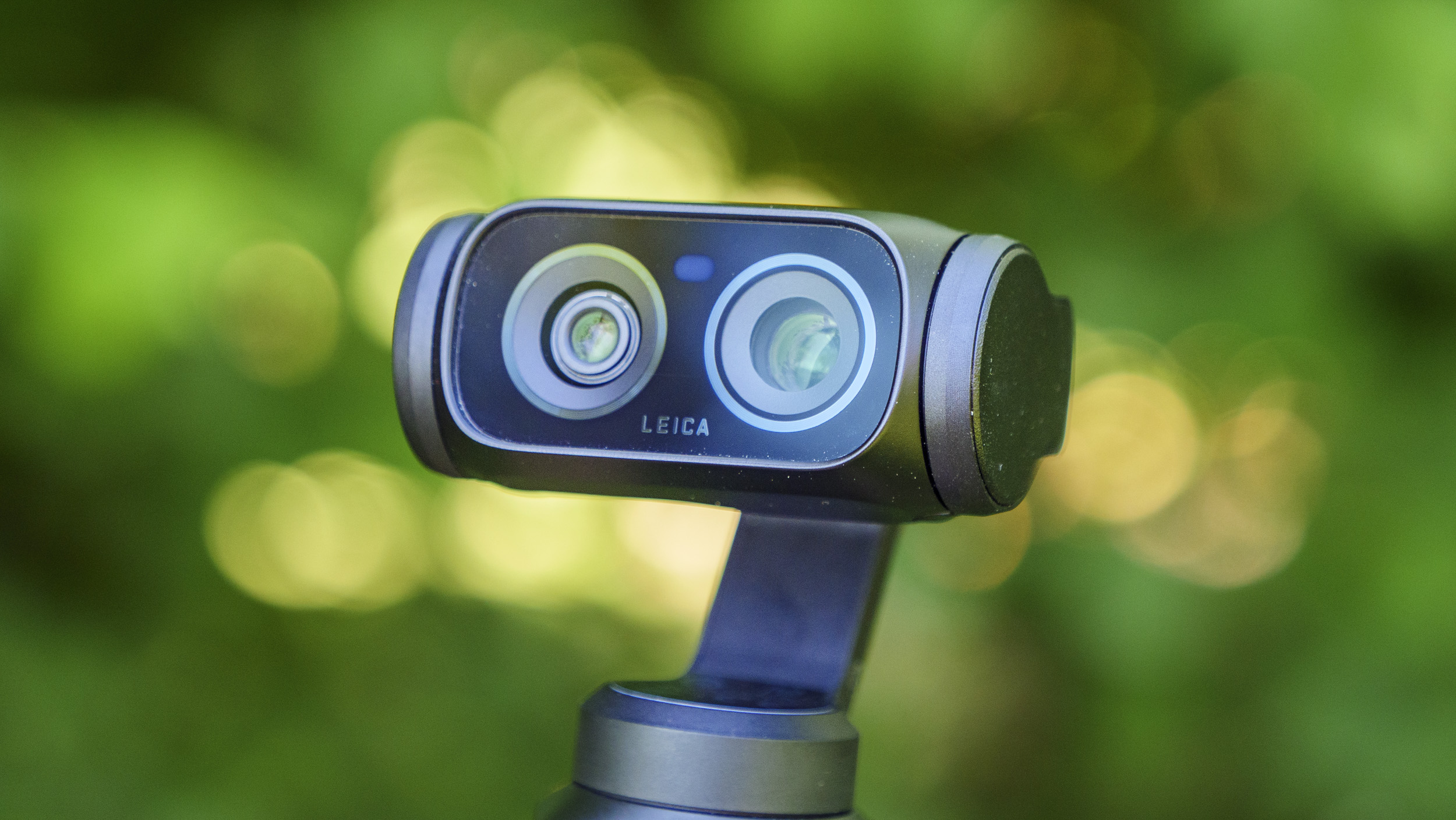
The Luna Ultra ups the ante in this camera category with 8K video — double the resolution of the Osmo Pocket 4, which shoots in 4K. It’ll shoot 8K up to 30fps, complete with Dolby Vision (aka HDR) and I-Log color profile.
This is the first Insta360 camera with Log, a flat color profile that pros like to use to maximize the color grading potential and for the most dynamic range possible from their camera, which in this case is up to 14 stops.
DJI has billed the Pocket 4P as having 17 stops dynamic range with its new D-Log2 profile — I look forward to comparing the footage of both cameras to see which is better once I have my hands on the Pocket. 4P.
Insta360 thinks its night mode is superior to DJI, with its PureVideo mode boosting dynamic range in 4K 60p videos. That’s another comparison test I’m looking forward to conducting. From the shots I've taken at night in this mode, detail looks impressively sharp, though of course no match for the quality of daytime footage.
Insta360’s Leica partnership goes beyond the Luna’s Leica-branded lenses and into various Leica color profiles. If you like the simplicity of attractive color profiles with no need for color correction, then the Luna has some great alternatives to Log.
I was impressed with the 3x telephoto camera — provided the subject isn't too far away, it's possible to throw depth of field for punchy portraits. I'm talking upper body shots with notable shallow depth of field.
The zoom of that lens can be further extended with a 6x 'lossless' zoom, a term that suggests you shouldn't notice a drop in image quality — I certainly didn't. I can't say the same for the 12x digital zoom setting, which looks a little more pixelated on close inspection. Still, that 12x zoom is a handy addition should you really need to zoom closer.
Honestly, having enjoyed the variety of two lenses in such a small camera, and how impressive the quality of the telephoto camera is (the sensor is bigger than the main sensor in most smartphones), I know I'll struggle if I have to go back to a single-lens compact vlogging camera.
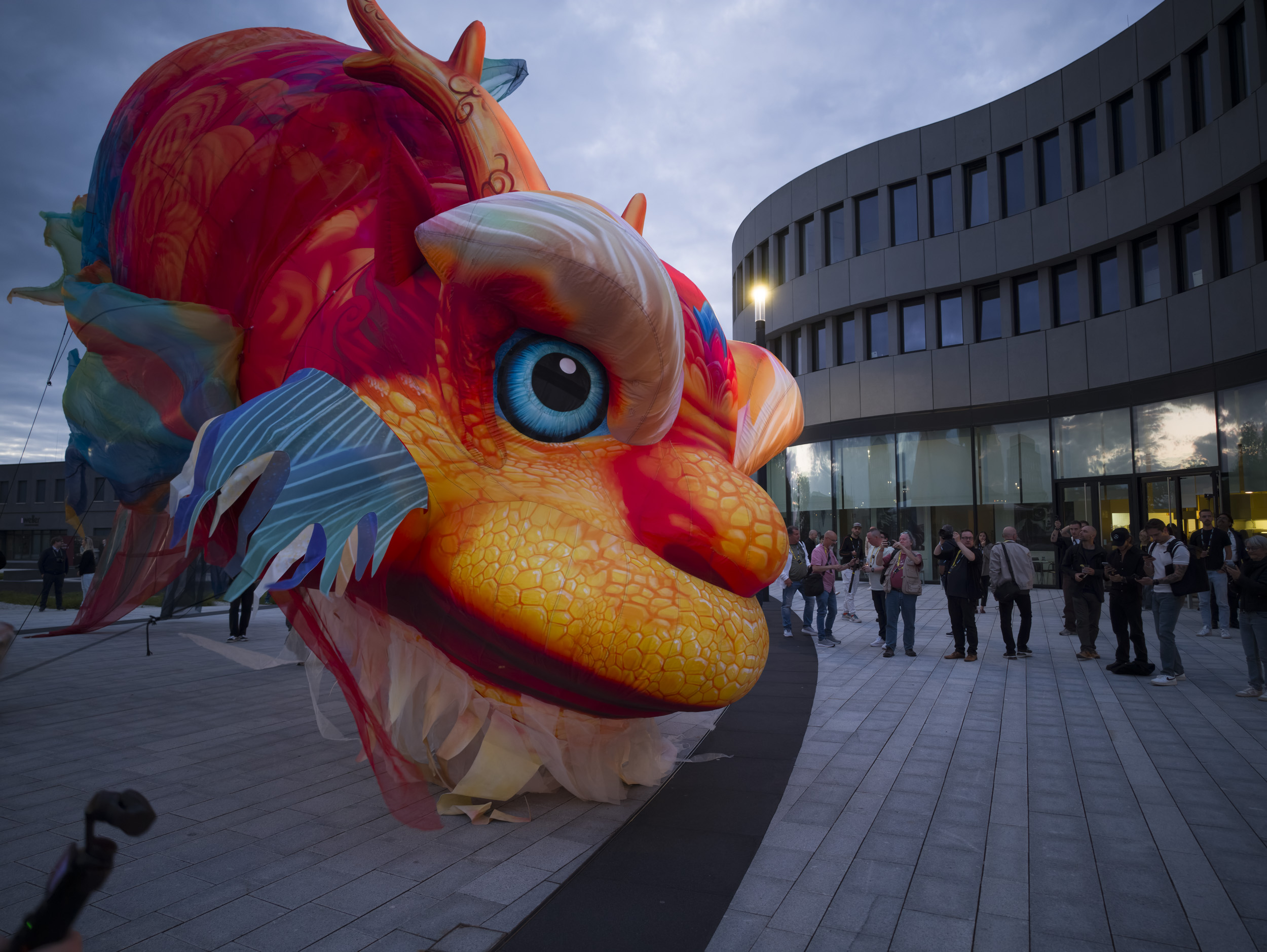
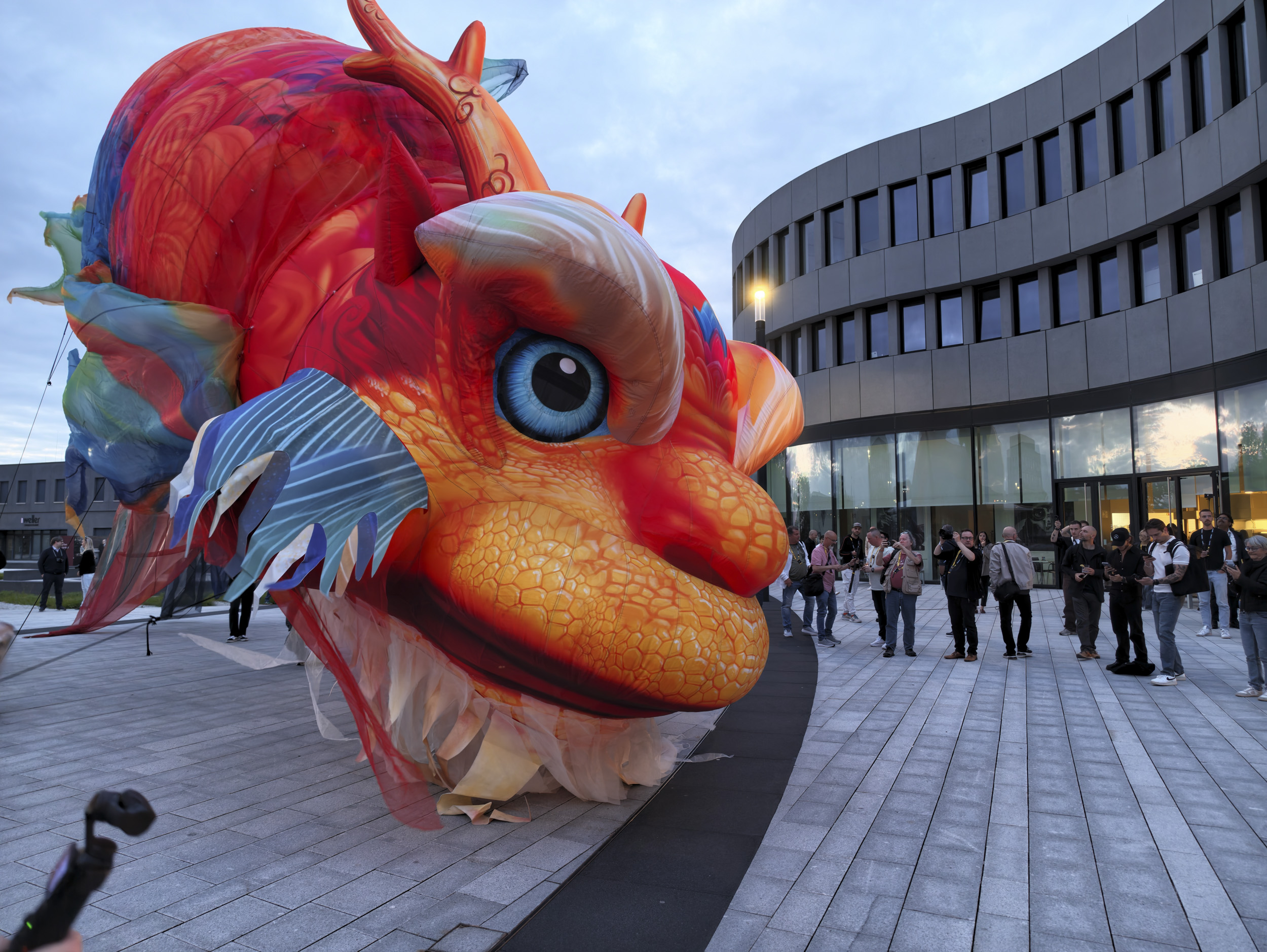
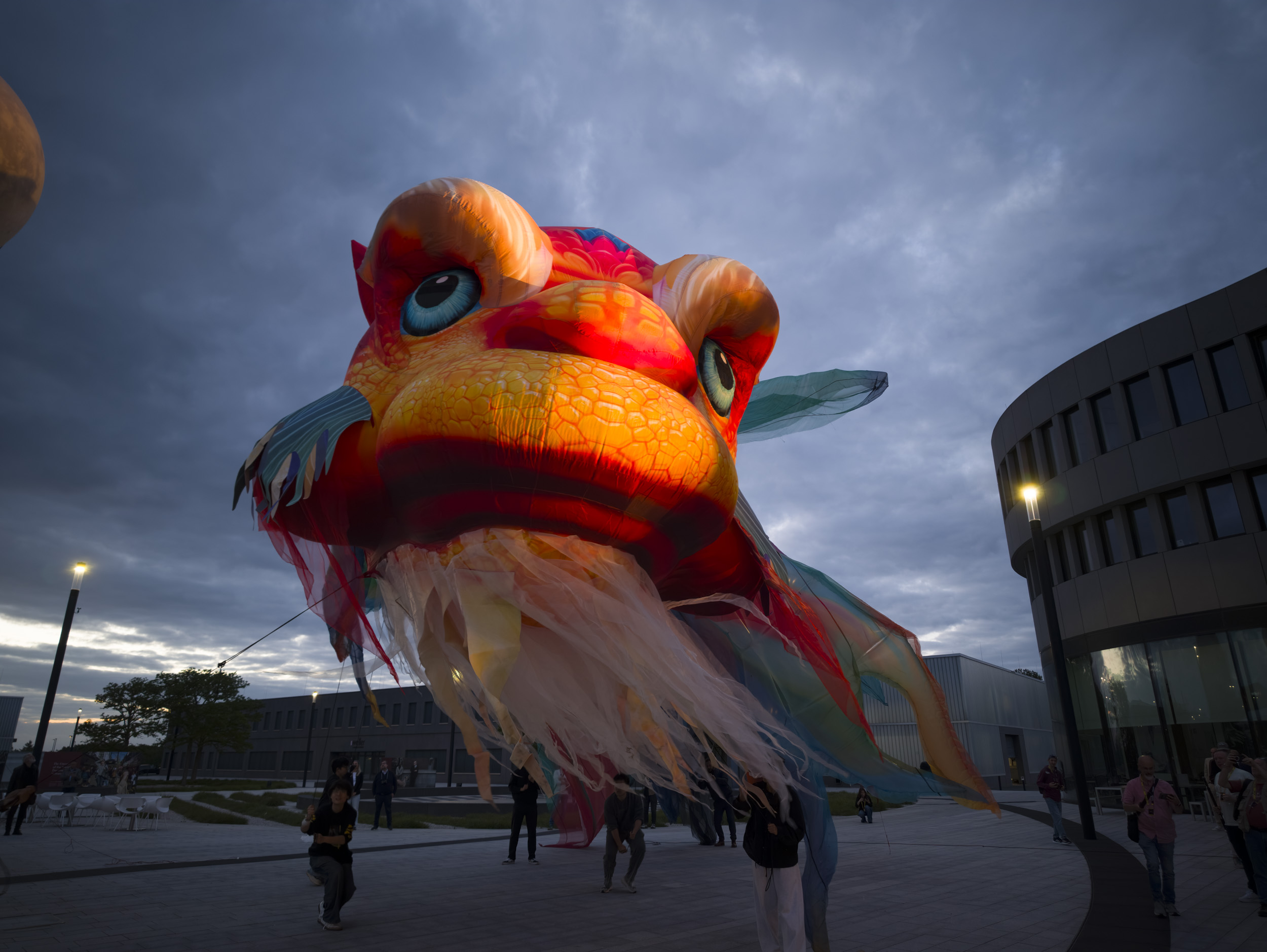
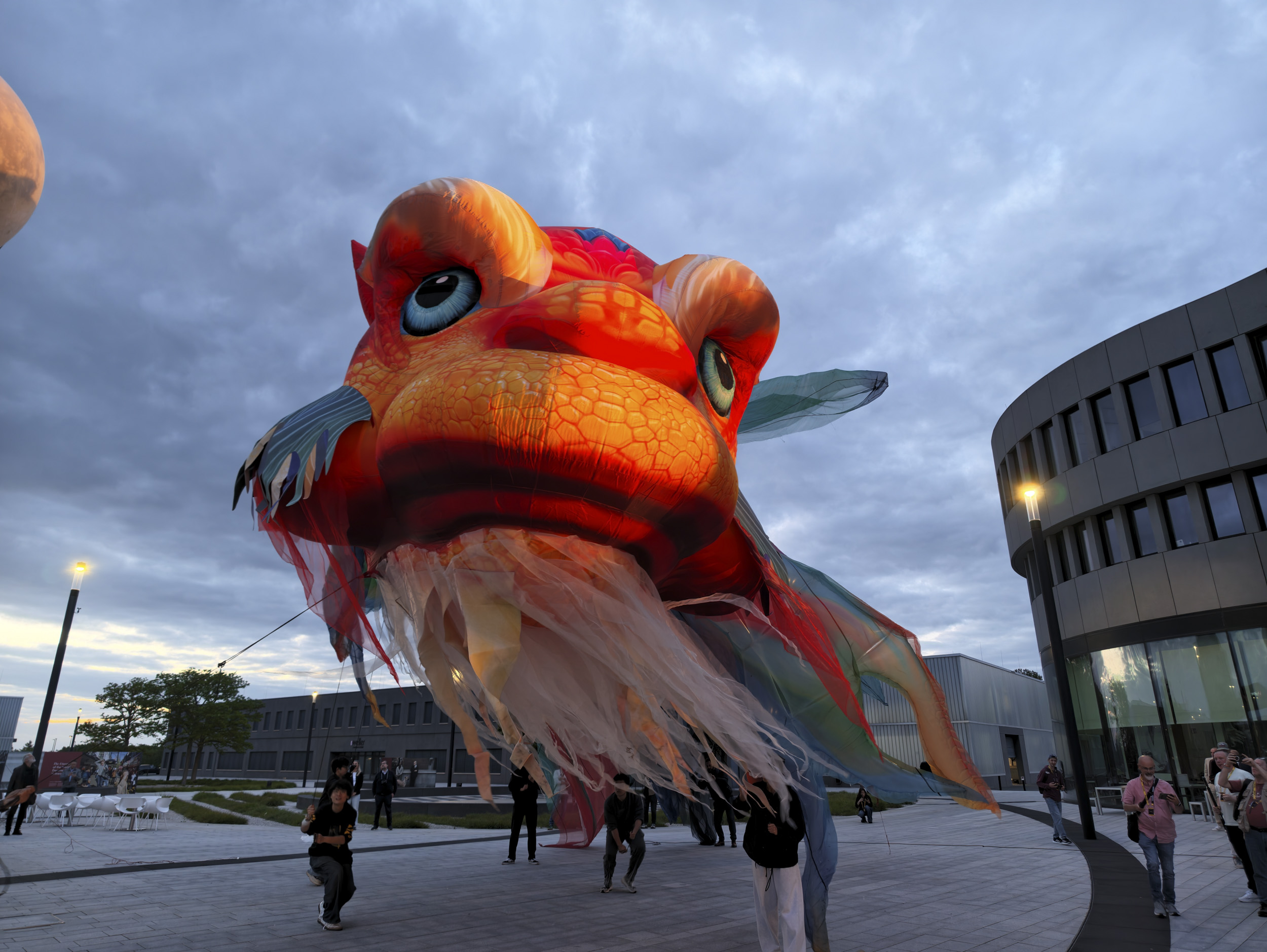
Video is, of course, the primary use for the Luna Ultra, but it shoots decent-quality 9MP photos too, in JPEG and RAW format, albeit with just eight-bit color depth. I've included a couple of scenarios below, taking JPEG and RAW (DNG format) photos simultaneously at night and in daylight, with the 1x and 3x lenses.
I haven't edited the RAWs so you can see the kind of processing that takes place for JPEGs. All the photos are 9MP, but there is also an UltraPhoto mode which quadruples resolution to 37MP.
Insta360 Luna Ultra photo gallery
- Image and video quality score: 5/5
Insta360 Luna Ultra: testing scorecard
Attributes | Notes | Rating |
|---|---|---|
Price | Considering you get two cameras in one, a detachable touchscreen module and high-end video features, the Luna Ultra is decent value, but it does cost a lot more than single-lens alternatives and DJI almost always costs less | 4/5 |
Design | Slightly clunkier than the rival Osmo Pocket 4 / 4P, but the detachable control is well implemented and seriously useful | 4.5/5 |
Performance | Triple chipset ably supports high-end features, subject tracking works well and gimbal performance is decent | 4.5/5 |
Image and video quality | Twin camera versatility for different shots, sharp 8K footage, I Log and Leica color profiles. You'll struggle to find better image quality in this camera format, though I haven't directly compared footage with the Osmo Pocket 4P yet | 5/5 |
Should I buy the Insta360 Luna Ultra?
Buy it if...
You want a versatile compact vlogging camera
Dual lenses are a revelation for this camera format. You're no longer restricted to ultra-wide shots, but dynamic portraiture and b-roll details are entirely possible.
You're a solo vlogger
The detachable remote with two-inch touchscreen, camera controls and built-in mic aid solo vlogging, in terms of the range of shots you can easily get, especially with subject tracking on board.
Don't buy it if...
You want the smallest possible vlogging camera
The Luna Ultra is clunkier than the DJI Osmo Pocket 4 / 4P. Not hugely so, but DJI's cameras are even more pocketable.
You don't need two lenses
For me, having used the Luna Ultra, it's now hard to go back to a single-lens compact vlogging camera, but if you don't need that second telephoto camera, the single-lens Pocket 4 / Luna Pro alternatives cost much less.
Insta360 Luna Ultra: also consider
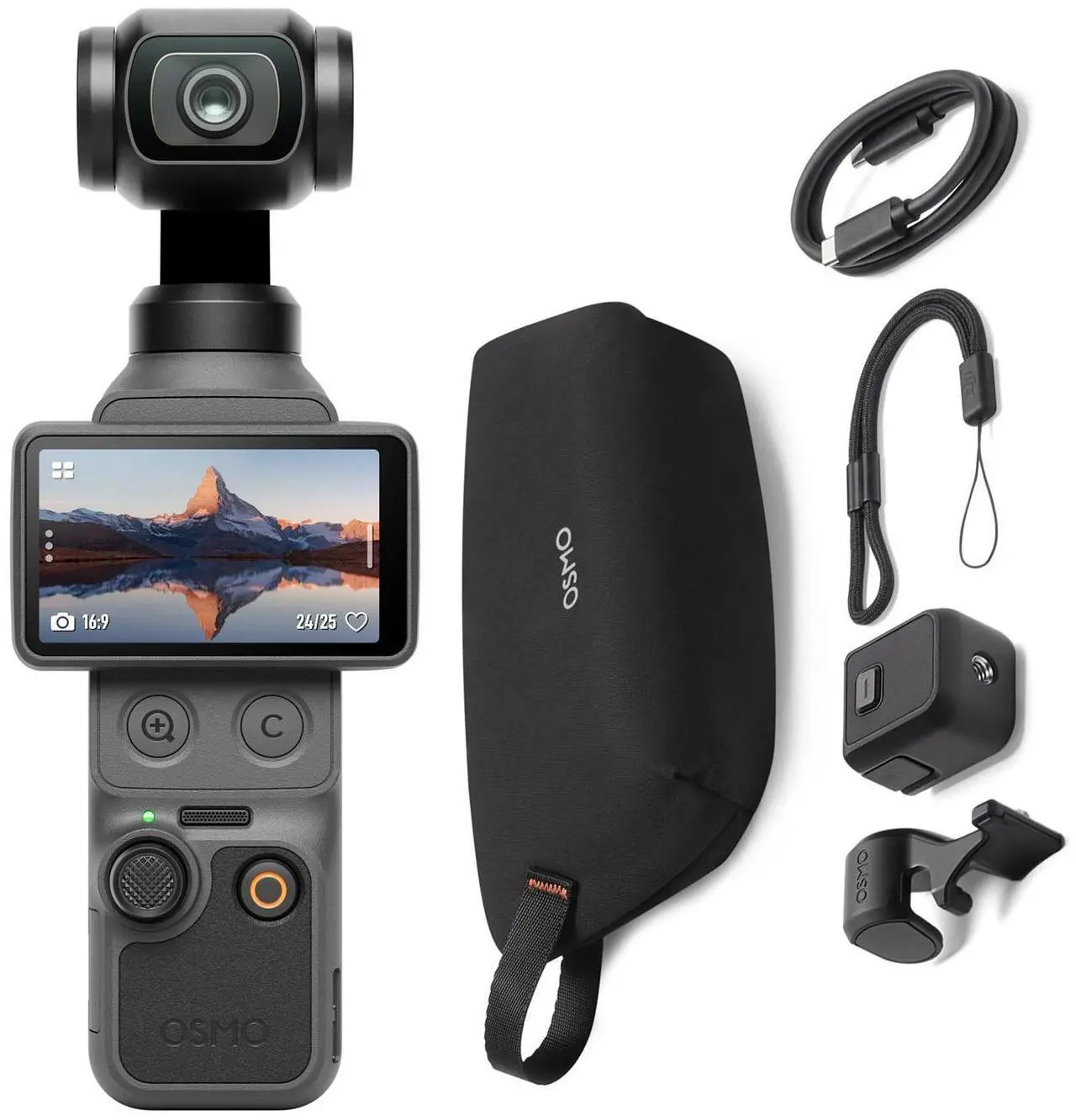
DJI Osmo Pocket 4 / 4P
At the time of writing, I've only reviewed the single-lens DJI Osmo Pocket 4 which isn't a fair comparison especially with the dual-lens Pocket 4P on the horizon and the direct rival to the Luna Ultra. However, if you'd like to know how the cameras compare, check out my Luna Ultra vs Pocket 4 article.
Read our in-depth DJI Osmo Pocket 4 review
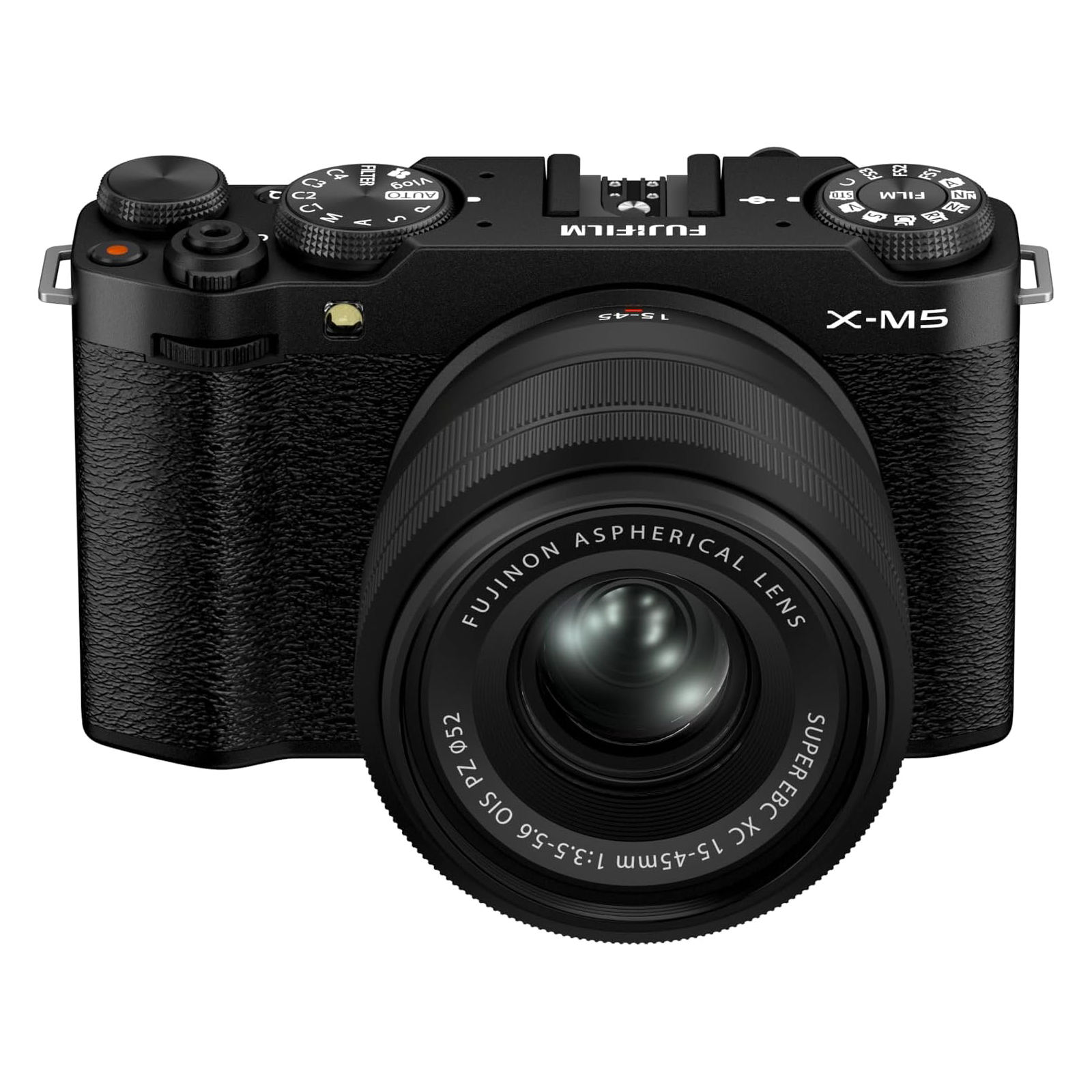
Fujifilm X-M5
If we're going on price, there beginner mirrorless cameras enter the picture, and for me the Fujifilm X-M5 is the best-equipped hybrid for the money. It has a bigger APS-C sensor, shoots 6K video recording (with Full HD vertical vlogging mode) and 26MP photos and it's a stunning camera. The drawback is that there's no in-body stabilization, so you'll probably want an additional gimbal to smooth out on-the-go clips.
Read our in-depth Fujifilm X-M5 review
How I tested the Insta360 Luna Ultra
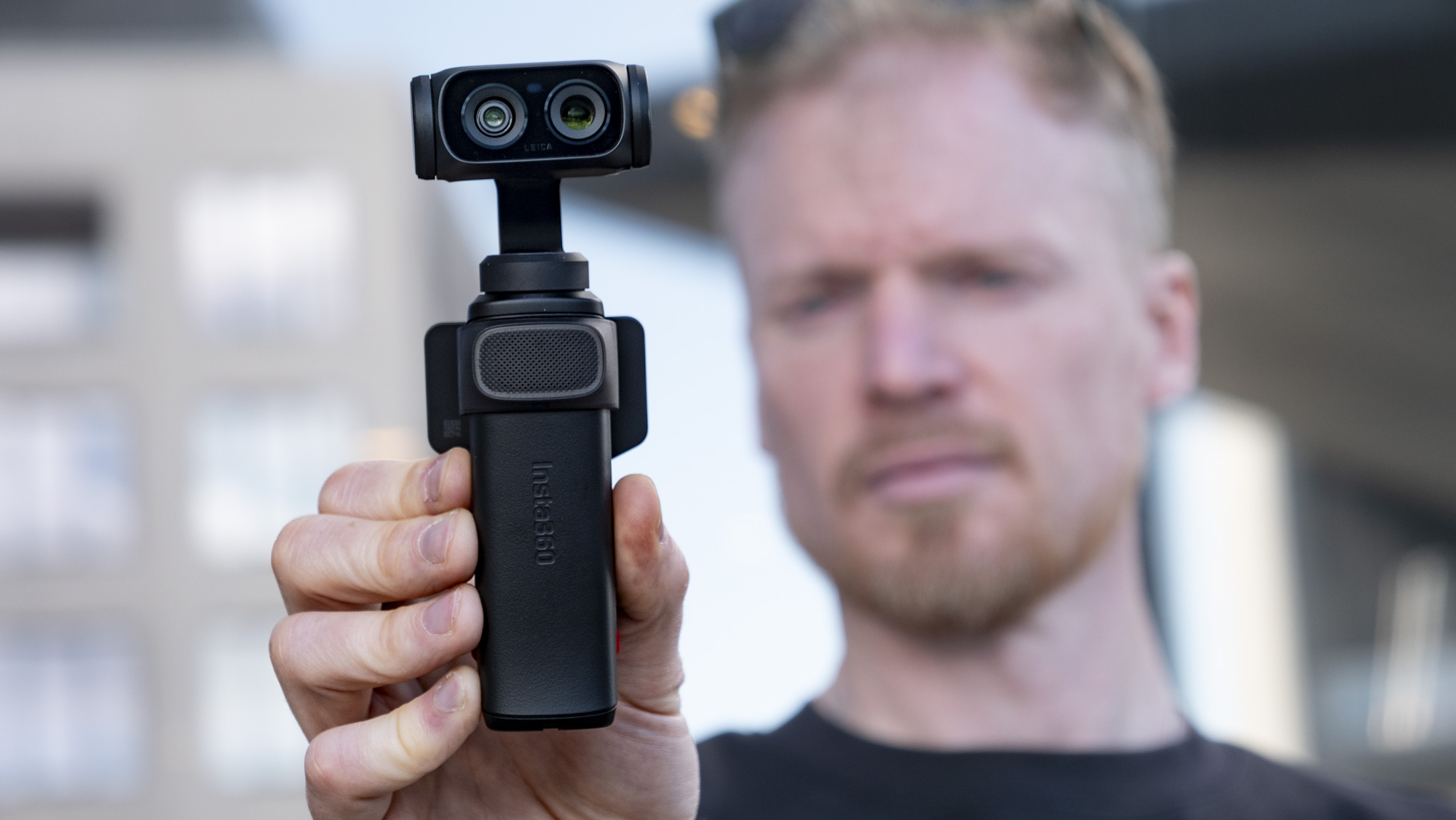
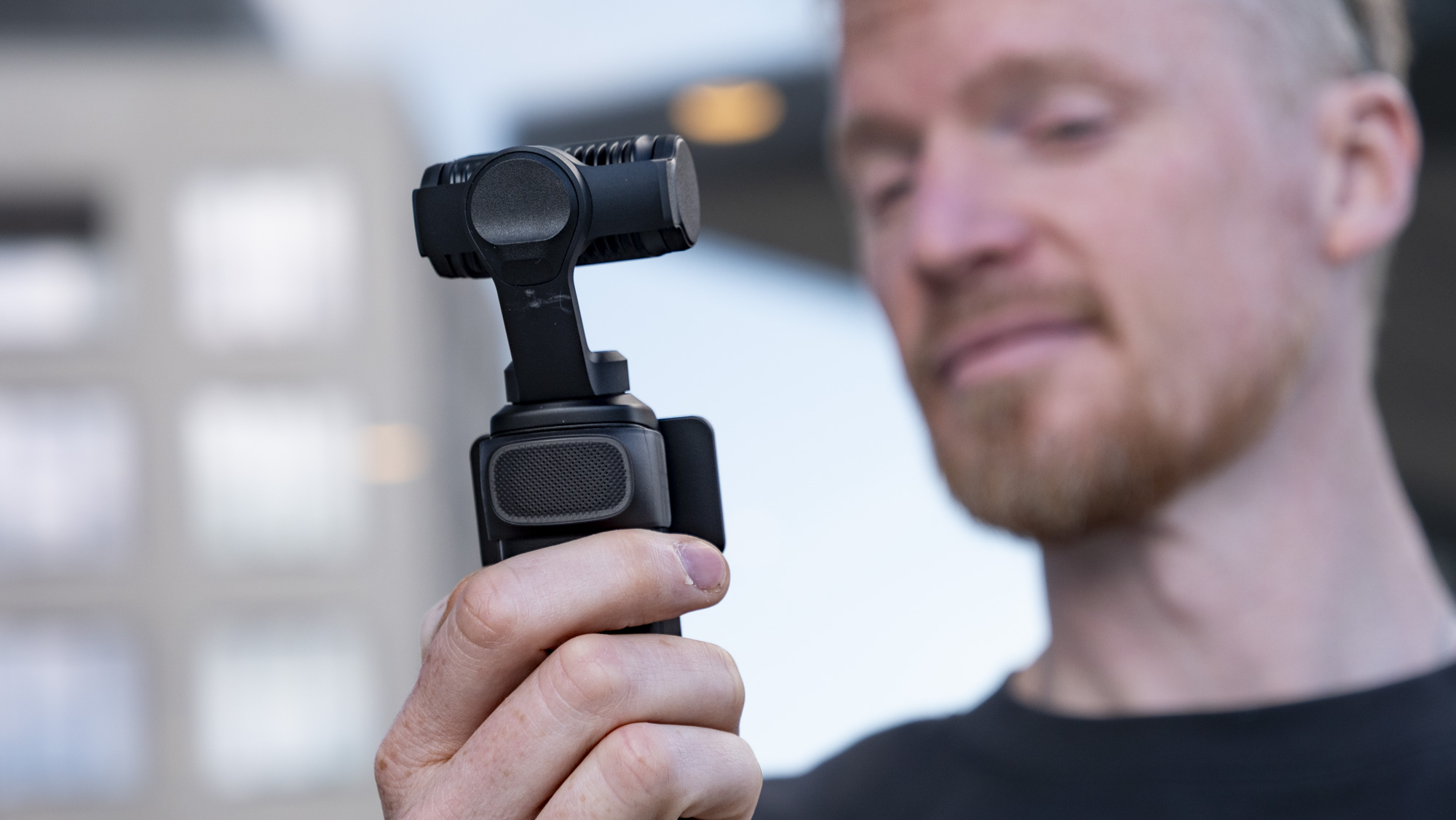
- Insta360 supplied me with the Luna Ultra Creator Bundle, which includes 2x grips, Mic Pro transmitter, soft carry case and more
- I tested the camera regularly for a month shooting day and night, mainly focusing on video content. I've tried the monitor in various configurations
- I was testing the DJI Osmo Pocket 4 simultaneously, and could draw comparisons
I had early access to the Luna Ultra Creator Bundle ahead of its launch, and tested the kit out over the following weeks before writing this review. During this review period, I also had the single-lens DJI Osmo Pocket 4, meaning I was able to make comparisons.
The camera shoots decent still photos with RAW format editing flexibility, but my main focus video performance. I've shot horizontal and vertical vlogging-style videos in the various resolutions and frame rates available in each format, and experimented with various color profiles.
I've made sure to try out all of the accessories supplied to me and the various configurations of the detachable monitor. I've checked the camera and detachable monitor's audio quality, and how easily and reliable it pairs with an Insta360 Mic Pro wireless mic.
- First reviewed: June 2026
- Read more about how we test
Share
What's Your Reaction?
 Like
0
Like
0
 Dislike
0
Dislike
0
 Love
0
Love
0
 Funny
0
Funny
0
 Angry
0
Angry
0
 Sad
0
Sad
0
 Wow
0
Wow
0