
GM redesigned its engineering workflows around AI agents — and tripled its merged pull requests
Software engineers at General Motors' (GM's) autonomous driving division spend only 15% of their time writing code, according to Rashed Haq, GM's VP of autonomous vehicles, in a recent onstage interview at VB Transform 2026.GM is now using AI agents to accelerate much of the other 85%—including analyzing vehicle data, triaging problems, running experiments and testing potential fixes.The result, Haq said, is roughly three times as many merged pull requests across GM’s autonomous vehicle engineering organization, faster releases and fewer defects escaping into later stages of development.Haq said GM achieved those gains by redesigning complete engineering workflows around agents — not merely adding an AI coding assistant.“If you give somebody just a chatbot which can do coding, there’s still a lot of inefficiency built into that process,” Haq said during a main-stage fireside chat at the luxurious Hotel Nia in Menlo Park, California.Engineers spent most of their time outside the code ed

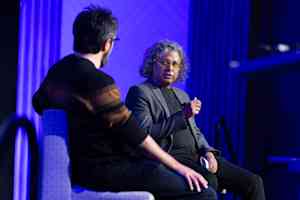
Software engineers at General Motors' (GM's) autonomous driving division spend only 15% of their time writing code, according to Rashed Haq, GM's VP of autonomous vehicles, in a recent onstage interview at VB Transform 2026.
GM is now using AI agents to accelerate much of the other 85%—including analyzing vehicle data, triaging problems, running experiments and testing potential fixes.
The result, Haq said, is roughly three times as many merged pull requests across GM’s autonomous vehicle engineering organization, faster releases and fewer defects escaping into later stages of development.
Haq said GM achieved those gains by redesigning complete engineering workflows around agents — not merely adding an AI coding assistant.
“If you give somebody just a chatbot which can do coding, there’s still a lot of inefficiency built into that process,” Haq said during a main-stage fireside chat at the luxurious Hotel Nia in Menlo Park, California.
Engineers spent most of their time outside the code editor before agentic AI
GM’s 15% figure may sound strikingly low, but research conducted before the rise of generative and agentic AI reached a similar conclusion.
A 2019 Microsoft study based on responses from 5,971 professional developers found that they spent an average of 96 minutes writing code on good workdays and 66 minutes on bad ones. That equals roughly 20% and 14% of an eight-hour day, respectively. A 2018 Stripe survey found that the average developer spent more than 17 hours each week on maintenance work such as debugging and refactoring.
There is no single industry benchmark: the Microsoft researchers noted that earlier studies placed coding anywhere from 9% to 61% of developers’ time, depending on how researchers defined and measured the work. But the findings reinforce Haq’s central argument. Long before agents arrived, writing code represented only one part of software engineering. Accelerating that step alone leaves much of the development process untouched.
“Doing it by loop became really important,” Haq said.
GM divided its autonomous vehicle work into several loops: developing and testing software in simulation, testing vehicles on public roads and monitoring vehicles after they reach customers. It then looked for the longest bottleneck in each loop, automated it and repeated the process.
GM gave agents access to internal tools and data
GM connected agents to internal tools and petabytes of company data through customized Model Context Protocol (MCP) servers. It also created version-controlled “skills,” or instruction documents that tell agents how to perform specific tasks.
One high-value application involves telemetry collected from vehicles on public roads. Agents can analyze that data, conduct an initial triage and create issues for engineers to investigate. Through MCP connections, they can also call the underlying tools used by WebViz, GM’s system for visualizing vehicle telemetry, rather than relying on the same graphical interface a person sees.
The findings still need to make sense to engineers. “The output has to be human readable,” Haq said. An agent might identify a potential problem, locate the affected component, search historical data for similar incidents and provide examples supporting its conclusion.
GM bases an agent’s permissions on those of the engineer using it.
“If an engineer was going to do this task and they need access to these things, then their agent needs access to those things,” Haq said. “The engineer still is accountable for the output of the agent.”
The company also uses background agents to run machine-learning experiments in parallel. An engineer defines an experiment and its parameters, then agents execute tests and collect the results.
Three times the pull requests — with fewer escaped defects
GM treated its internal agent platform as a product and assigned four deployed engineers to work directly with engineering teams. They helped employees identify useful workflows, spread successful practices and adopt the tools.
Haq said the resulting increase in merged pull requests represents more than higher code volume. “The velocity at which we’re releasing new features” increased, he said, while releases produced “fewer test escapes, bug escapes” and other problems.
People remain responsible at critical control points. Haq said GM established structured and unstructured tests and performance measurements before accelerating the wider workflow. Engineers review those measurements and determine whether each test still captures its intended goal before work advances toward production.
Haq said GM initially expected a more modest productivity gain. “I think our only surprise was how much we could do,” he said.
GM's approach didn't start with handing every developer a code generator. It started with mapping the full path from problem discovery to a verified fix in each loop — simulation, road testing, post-deployment monitoring — then giving agents controlled access to the tools and data needed to shorten the longest bottleneck at each stage.
Share
What's Your Reaction?
 Like
0
Like
0
 Dislike
0
Dislike
0
 Love
0
Love
0
 Funny
0
Funny
0
 Angry
0
Angry
0
 Sad
0
Sad
0
 Wow
0
Wow
0