Etzioni on AI: Does AI bolster or undercut democracy?
As America marks its 250th year, the debate over AI's impact on self-government hinges on a crucial tension: while pessimists fear the concentration of its power, optimists champion the democratization of its access. Read More


America just turned 250. The founders designed self-government for a world of pamphlets and town meetings, and we now run their political architecture on AI.
The birthday question is whether AI bolsters democracy or undercuts it. Serious thinkers have lined up on both sides with substantial arguments.
Here is my scorecard, distilled from five books and seven articles, and then the question neither side asks: which is growing faster, power over AI or access to it?

Start with surveillance.
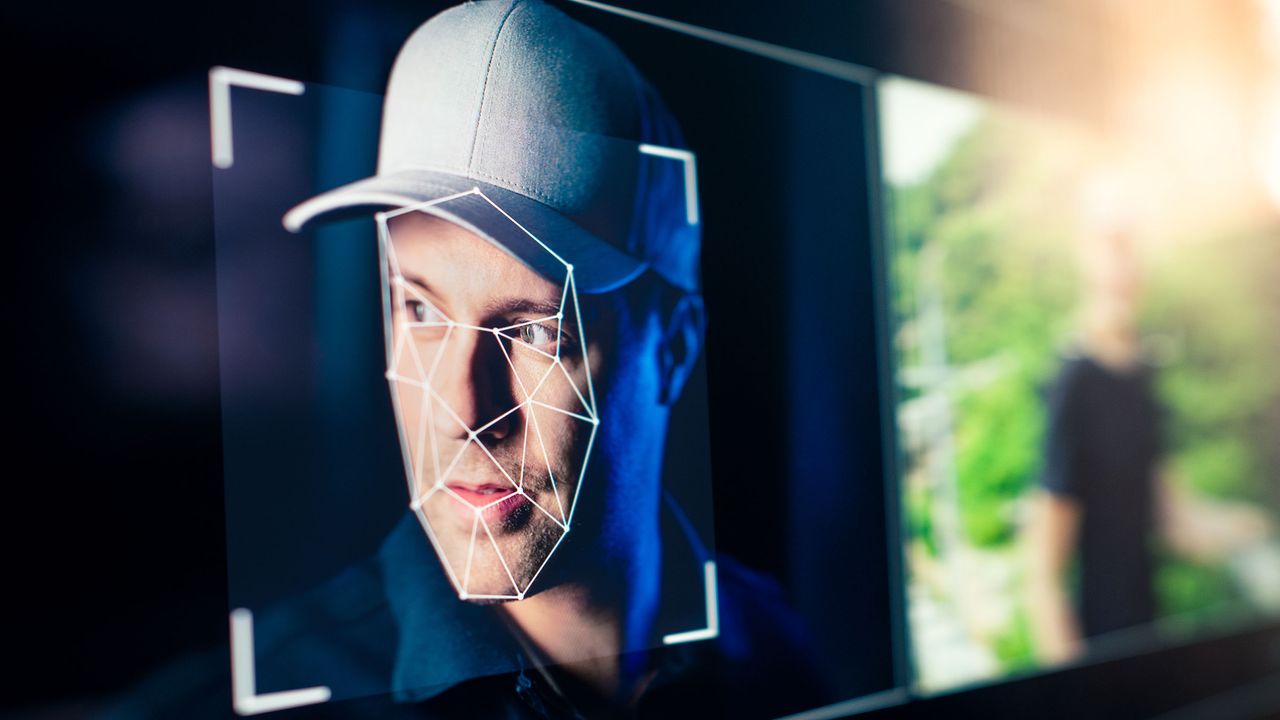
Yuval Noah Harari argues in Nexus that a democracy is a distributed information network with self-correcting mechanisms: a free press, opposition parties, and courts that catch mistakes and fix them. A dictatorship is a centralized network that suppresses correction. For two centuries, centralization carried a built-in cost, because total surveillance required armies of human informants, and armies are expensive. AI removes the cost. It watches everyone, all the time, for pennies. The evidence is no longer hypothetical. A study in the Quarterly Journal of Economics documented the feedback loop in China: local unrest leads to government purchases of facial-recognition AI, and those purchases suppress subsequent unrest. The authors titled their paper “AI-tocracy.”
The second argument is economic.
Past technologies replaced particular workers, the switchboard operator, the toll collector, while creating jobs for the people who ran the new machines. AI’s ambition targets the entire workforce. Daron Acemoglu and Simon Johnson devoted a book, Power and Progress, to this worry, writing that “the current path of AI is neither good for the economy nor for democracy.” Acemoglu, a 2024 Nobel laureate, sharpened the point in Fortune this February, warning that on the current path of job destruction and rising inequality, “U.S. democracy is not going to survive.”
The third argument targets the machinery of self-government itself.
I sounded this alarm in Harvard Business Review back in 2019, warning that AI was poised to make high-fidelity forgery of video, audio, and documents cheap and automated, with potentially disastrous consequences for democracy. Forgery is ancient. AI industrializes it. Security technologist Bruce Schneier predicts that AI will optimize lobbying and draft “micro-legislation,” tiny provisions that quietly benefit one group, and he observes that the technology mostly makes the powerful more powerful. He and Nathan Sanders began worrying in earnest when an AI-written letter opposing AI regulation ran in the New York Times. Marietje Schaake supplies the institutional capstone in The Tech Coup: unelected companies now perform functions that once belonged to governments.
The prosecution rests. Now comes the defense.
On July 4, computer scientist Daphne Koller marked the country’s 250th birthday, and her own 37th anniversary as an immigrant, with a visit to Shasta Dam. In a reflection posted that day, she argued that America’s signature achievement is taking what was scarce and making it abundant: water into power at Shasta, electricity into a grid anyone could plug into, computation into a pocket. She has done it herself; Coursera, which she co-founded, put an elite education in front of more than 150 million learners. AI, she wrote, is the next chapter, “making abundant one of the world’s scarcest resources: powerful reasoning.” The judgment once reserved for credentialed specialists now belongs to anyone who can frame the right question. Lawyers and doctors bill by the hour. AI answers by the second.
The economic counter comes from Acemoglu’s MIT colleague David Autor, who argues in Noema that AI can extend expertise to workers without elite credentials and thereby rebuild the hollowed-out middle of the labor market. Early evidence points his way. When a Fortune 500 firm gave its customer-support agents an AI assistant, productivity rose 15% on average, and the gains went overwhelmingly to the newest and least skilled workers, who improved in both speed and quality. The study, published in the Quarterly Journal of Economics, found that the most experienced agents gained little. If the pattern holds, AI could compress the very gaps Acemoglu fears it will widen.
Reid Hoffman and Greg Beato’s Superagency states the optimistic case in general form: AI amplifies individual agency so broadly that the real danger lies in democracies ceding its development to less benevolent actors. In Plurality, Taiwan’s first digital minister Audrey Tang and economist Glen Weyl describe a decade of digital tools that found consensus across a polarized public on live legislation, from ride-sharing rules to pandemic policy. A controlled experiment backs them up. Google DeepMind researchers built an AI mediator, tested it on 5,734 Britons deliberating questions like Brexit and immigration, and reported in Science that participants preferred the AI’s group statements to a human mediator’s, rating them clearer and less biased. The groups also ended up less divided. A town hall has never fit a million people. It might now.
I set the two columns side by side and noticed something odd: they never meet. The pessimists are arguing about who controls AI. The optimists are arguing about who gets to use it. Power and access are different questions, and both camps can be right at the same time.
Koller’s dam makes the point physically. Generation is concentrated, a handful of turbines owned by a few. The grid is distributed, and anyone can plug in. One machine does both at once. AI shares that anatomy: anyone can plug into a frontier model for $20 a month, while the frontier weights and the data centers that train them belong to a half-dozen companies.
Gutenberg adds the time dimension. The press broke Rome’s monopoly on scripture, and four centuries later it built Hearst’s empire; access and power traded places on the same machine. Both forces are real. The open question is which one moves faster, and the current fights over open weights, chip exports, and model ownership are fights that will help settle this question.
The founders faced a similar question about concentrated power and answered it by distributing the vote, narrowly at first, and later to nearly everyone. Koller ended her post with an obligation that fits the country’s 250th year: anyone given more than their share owes the work of making sure the next scarce thing does not stay scarce for long. Intelligence is the next scarce thing. Koller’s dam is already built, along with the frontier models and the data centers that train them. The choice in front of us is whether we also build the grid, providing broad, cheap access to AI for all Americans.
Share
What's Your Reaction?
 Like
0
Like
0
 Dislike
0
Dislike
0
 Love
0
Love
0
 Funny
0
Funny
0
 Angry
0
Angry
0
 Sad
0
Sad
0
 Wow
0
Wow
0