Data centers, power and how to be a winner in the AI Boom
The data center industry has found itself in unchartered waters recently. The boom in demand for AI products and services has led to a 17% increase in electricity consumption.

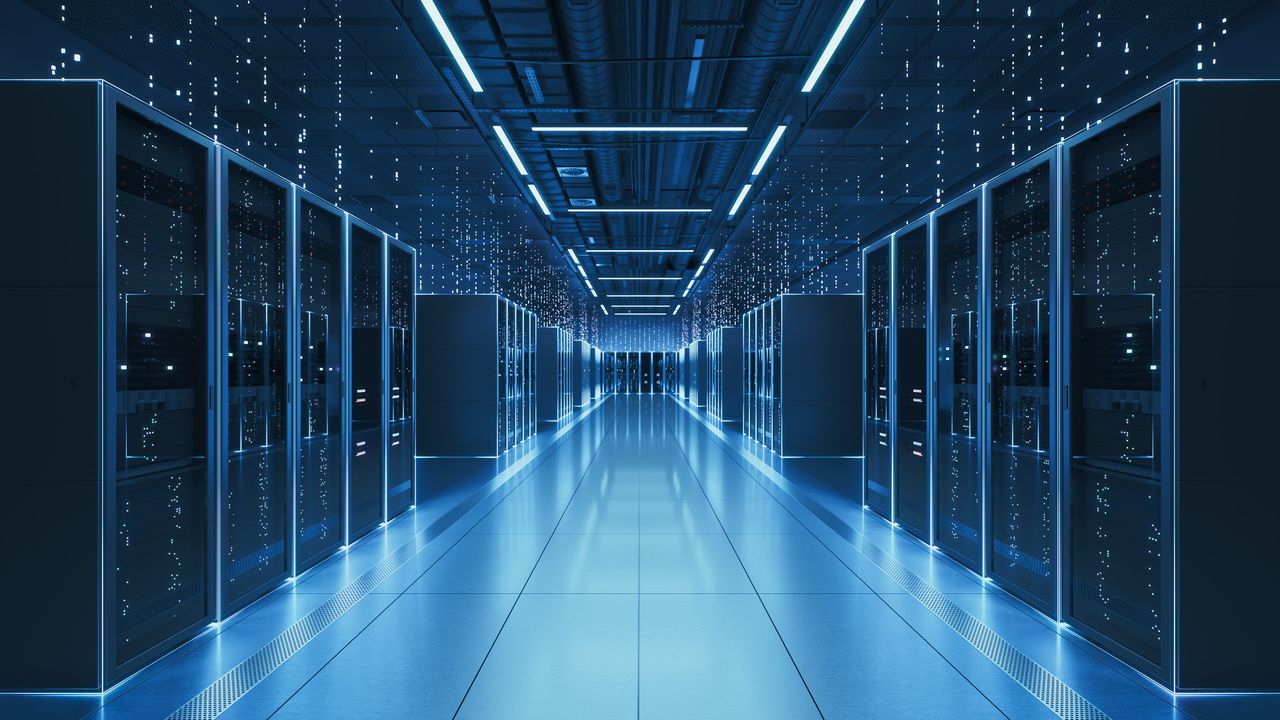
The data center industry has found itself in unchartered waters recently. The boom in demand for AI tools and services has led to a 17% increase in electricity consumption. And despite a rapid decline in power consumption per AI task, energy consumption is set to triple for AI-focused facilities.
Recent industry research also reveals the average cost of unplanned downtime has climbed to $9,000 per minute, or $540,000 per hour. For large enterprises, major outages can exceed $5 million per hour when all factors are considered.
Even more sobering: 60% of small and medium businesses that experience catastrophic data loss close within six months.
For data centers, power is non-negotiable, and it’s clear that for those who can take control of their power supply, success in this AI boom can be achieved.
But the challenges are also clear. Europe’s existing, and ageing, grid infrastructure is becoming unreliable under the demand of data centers, renewables, and electric vehicles.
Data centers will not always be the priority, but the need for consistent operations cannot falter. Not if businesses want to stay competitive in a crowd that is growing.
The ripples of change
The AI boom is redefining success and failure within the energy sector. And the standout feature of the winners is the access to a reliable power supply. Bloom Energy’s 2026 power report, which looks at developments in the US data center market, indicates a clear trend from areas where the grid is strained to those with ample supply.
Traditional leaders are making way for the new, with data showing that areas like California, Oregon, Iowa, and Nebraska are set to lose up to 50% of their market share due to tighter power availability. Meanwhile Texas’ data center load is set to more than double by 2028. A reliable power supply is not only an advantage, but is king, when considering the construction of new facilities.
For nearly 20 years, I’ve worked in the sector, on a variety of projects and continents. One I’ve learnt is that the age-old idiom "when America sneezes, the world catches a cold” is true. The lessons of this dramatic shift in the US market should be understood and acted on by leaders in Europe sooner rather than later.
And the question for European data center operators is obvious – how can you stay take control of your own power availability and stay afloat?
From dependence to independence
The answer for many has been independence away from grid energy. Rooted in the need to avoid grid capacity challenges and delays due to waiting lists, Bloom’s report indicates that up to a third of US data centers are expected to be fully off-grid by 2030. And this data on decentralization is growing. The IEA has observed a sharp increase in orders for gas turbines, with the intention to power data centers directly, circumventing a grid connection.
But this specific solution isn’t without its drawbacks. For example, gas turbines alone struggle to support the large swings in demand that are induced by AI training and modelling.
Increasingly, businesses are finding Battery Energy Storage Systems (BESS) are key to overcoming these sudden waves of demand. BESS can act as a buffer for the load swings AI produces when implemented as a supplementary power source. And the IEA forecasts that up to 25GW of battery storage could be installed in data centers globally by 2030.
At Aggreko, we’re already deploying this option for a number of our partners across Europe, ranging from 10MW all the way up to loads in excess of 100MW. For example, when a major colocation provider in Dublin found that they would not be able to connect their data center to the grid until several months after the site came online, we were called upon to bridge the gap in the meantime.
We supplied 12 next-generation gas (NGG) generators totaling 14MWe, including 10kV of switchgears, transformers, and auxiliary equipment that allowed the site to operate entirely independent of the grid. This was supported by a 1MW BESS, providing resilience against energy swings with the added benefits of improved power quality, emission reduction, and fuel savings. As a result, the site was online right away, compared to the estimated two-year delay for a grid connection.
Staying ahead of the curve
The pace of development has been faster than anticipated for most operators, which has led to dramatic shifts in the way they approach power and cooling.
So, secure your energy supply, start decentralizing, and stay on top of new technologies, such as BESS, and you might just find your company winning the AI boom.
We've reviewed, rated, and ranked the best web hosting services.
This article was produced as part of TechRadar Pro Perspectives, our channel to feature the best and brightest minds in the technology industry today.
The views expressed here are those of the author and are not necessarily those of TechRadarPro or Future plc. If you are interested in contributing find out more here: https://www.techradar.com/pro/perspectives-how-to-submit
Share
What's Your Reaction?
 Like
0
Like
0
 Dislike
0
Dislike
0
 Love
0
Love
0
 Funny
0
Funny
0
 Angry
0
Angry
0
 Sad
0
Sad
0
 Wow
0
Wow
0