Canva wants you to have full control over the design – Code 2.0 just does the heavy lifting for you
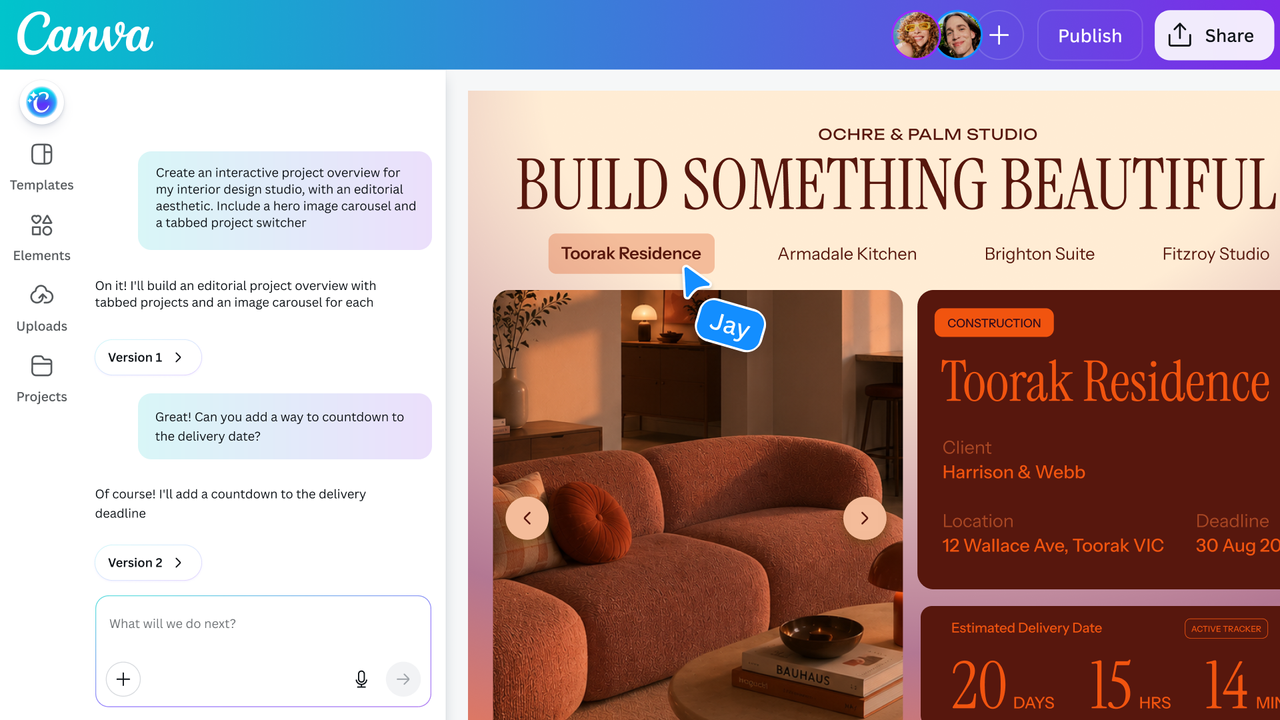
AI chatbots are rubbish at making edits to your designs – Canva Code 2.0 automatically creates elements for you to amend yourself.

- Canva Code 2.0 is now free for everyone following a successful public preview
- It can generate editable designs from simple prompts and existing creations
- Users can create websites, apps and games – not just flyers and ads
Initially teased at Canva’s annual Create conference earlier this year and available only to the first million users who cracked an easter egg, the Australian software vendor has officially made Canva Code 2.0 generally available across the board, including to free users, bringing AI automation and vibe coding-like abilities to the suite.
In short, Canva Code 2.0’s purpose is to lower the barrier to design by giving workers who might either lack the creative vision or the skills to experiment in more complex software access to more personal designs.
At Create in April 2026, the company criticized existing AI tools for being AI-first and design-second – making even the smallest tweaks required users to submit another prompt, which would generate an entirely new result that wouldn’t always mirror the former generation.
Canva Code 2.0 does the heavy lifting so the human can do all the fun designing
Canva Code 2.0 is being positioned as a new, extra layer between the worker and the design, acting as a colleague that puts together a complex design from natural language prompts just as any other human colleague would do.
The result is that users can directly edit individual components themselves instead of having to start again, letting them quickly see how changing colors, repositioning elements and tweaking fonts could affect the end result.
“With the barrier to generating code lowered, the value has shifted to visual control: what you build needs to be distinctive and look like your brand or vision,” Head of AI Products Danny Wu told TechRadar Pro.
According to Canva, it’s not all about flyers and social media graphics. The tool spans the entire breadth of the Canva suite, including creating websites and landing pages, learning and classroom hubs, and games and quizzes.
But Canva also knows that many projects already exist elsewhere, and some are even AI-generated already, hence the ability to import raw HTML code and AI-generated graphics straight into Canva. The tool automatically detects elements and layers to turn it into a fully editable project straight away (via a specific layered object intelligence feature), allowing users to run with their existing work.
Since Canva Code was first introduced, the company claims to have supported the building of more than six million coded sites, proving that vibe coding is far more profound than just serving software developers. By putting Canva Code at the heart of the UI, rather than shipping it as a separate tool, we’re told that active Code users have already risen by 25%.
The Aussie software company has also been making improvements under the hood, including reducing the average Code generation time by 75%. “We're combining the best AI models and the intuitive Canva editor to help anyone bring their ideas to life without friction, in the same workflow, without needing technical skills or new tools,” Wu added.
Share
What's Your Reaction?
 Like
0
Like
0
 Dislike
0
Dislike
0
 Love
0
Love
0
 Funny
0
Funny
0
 Angry
0
Angry
0
 Sad
0
Sad
0
 Wow
0
Wow
0


.jpg)