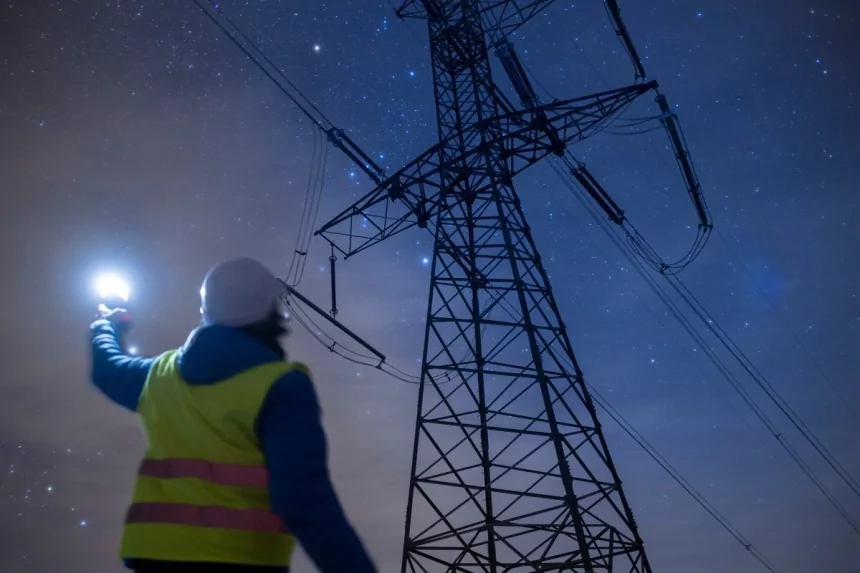
Are we going to let data centers take all the power, water, and clean air?
Thoughtful policy on Data Centers now will ensure a livable future, whatever happens with AI.

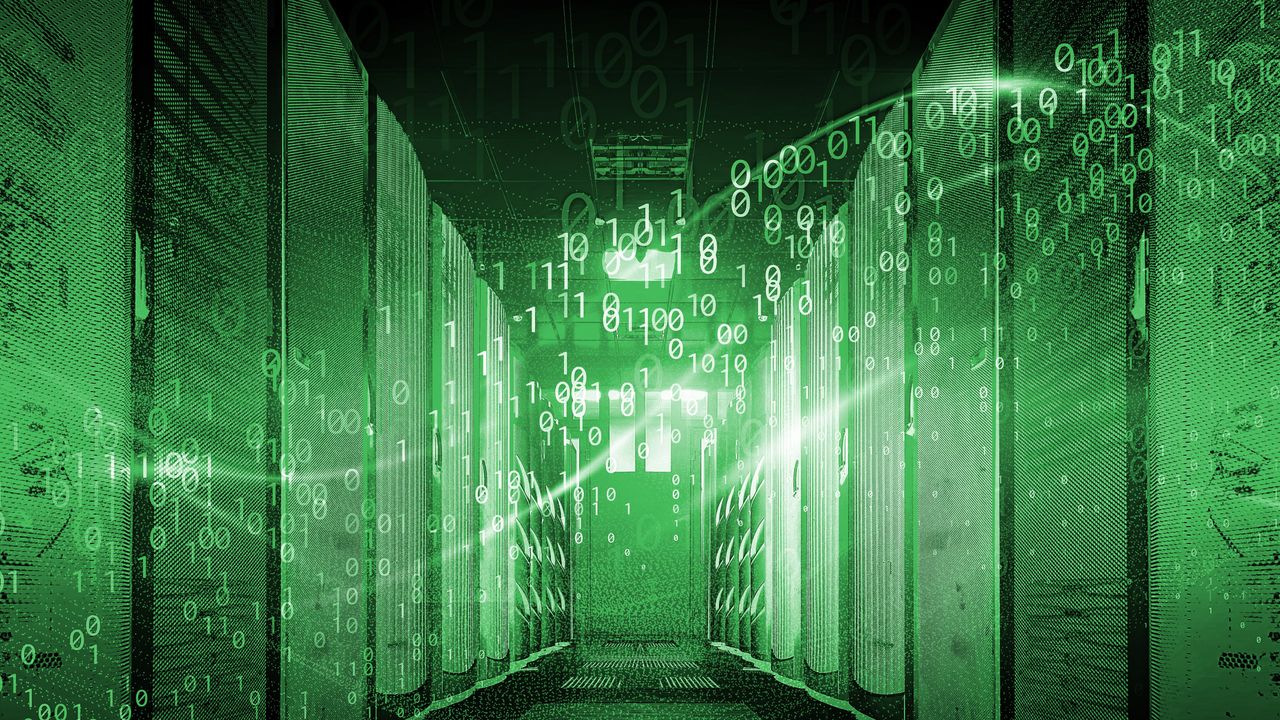
It’s clearly the wild, wild west when it comes to the race to build bigger and faster Artificial Intelligence systems.
The current backbone is built on Nvidia’s GPU architecture, allowing researchers and labs to build more and more sophisticated models that seem to leapfrog each other weekly.
The underlying technology required to achieve this is hundreds of thousands of these GPU cards sprawled across data centers throughout the US, drawing ever-increasing power and natural resources to push this frontier of human imagination.
In our rush towards our promise of a better future, are we laying the groundwork for this generation’s environmental calamity, much like previous generations had asbestos, microplastics, and lead?
Look no further than the SpaceX IPO, marketed as the largest IPO in history with a stunning $1.75 trillion initial valuation!
Buried deep inside, however, lies xAI – the AI company behind Grok. Grok runs from two massive data centers named Colossus 1 and 2.
What isn’t being discussed is that the NAACP is suing xAI for illegally installing air-polluting gas turbines in Mississippi that emit carcinogens into the air that residents breathe.
The question is not whether the power was needed, but what costs we are willing to accept, especially when, in this case, the demand releases toxic fumes into the air so people can interact with a chatbot.
An ominous situation
What makes the situation most ominous is that we are running a four-legged stool and waiting to see which breaks first. The first leg, of course, is computing power.
GPUs, while becoming more efficient, are at the same time getting denser and requiring more power. A traditional server rack used to draw about 5 kilowatts (kW) of power. GPUs upended that, with power draw climbing to 50 kW, 80 kW and now 140 kW per rack.
Indeed, Nvidia itself has proclaimed that its Kyber systems will draw an unheard-of 600 kW per rack by 2027. Whether this is true or not, the reality is that the power draw and density to run increasingly sophisticated hardware is going up; we just don’t know the timeframe of how we get there.
The second leg is what AI aficionados refer to as Jevon’s paradox. This is an economic principle that, as technology becomes cheaper to use and deploy, the use cases increase, so net consumption actually goes up even though the cost to run it keeps getting cheaper.
The third leg is that virtually all the free cash flow of megatech is going into deploying this IT infrastructure at an increasingly rapid rate. The projection for this year is $700 billion in capital expenditures, ballooning to over $1 trillion next year, and who knows after that.
At the same time, no one knows what limits Wall Street’s checkbook will be to fund additional expenditures for other companies. All this equipment must go into data centers somewhere.
Finally, we have a total lack of public policy on how to deploy these in sustainable ways, partially because there is a rush to get this equipment online, partly because no one really knows what the negative externalities could be, because no one has built up this much infrastructure at this scale and speed before.
The problem, of course, is if the part of the stool that deals with negative feedback to the environment and communities we live in is the first to break. It may not be easy to turn back once Pandora’s box has opened.
The need for policy sooner than later
Of course, we don’t have to wait for this all to happen. Thoughtful policy by the industry can get ahead of what could be a calamity by considering the “what ifs” before they happen.
Plus, by investing thoughtfully now, it stays ahead of what could be burdensome, time-consuming legislative efforts that lead to more regulation and compliance. In addition, consideration of things like total load (versus individual load) and the variance it might cause to the environment would be another consideration.
For example, a single independent data center building with a closed-loop water system may not draw that much water (other than initial fill, makeup needs, or during maintenance). However, if you start looking at the compound effects of how many additional buildings are going onto the campus, and how many campuses will be built in the next 10 years, then the impact could be considered before things go awry.
In the fast-moving race that is the AI space, the trickle-down effects on communities and the environment are something we should be looking at today.
Rather than letting companies run roughshod over people and cities, the data centers that they portend to inhabit can be good corporate citizens, which is important because these facilities typically have a useful life measured in decades.
The plan is for the data centers to be around for a long time, and so should everything else around them in a sustainable way.
We've listed the best business cloud storage.
This article was produced as part of TechRadar Pro Perspectives, our channel to feature the best and brightest minds in the technology industry today.
The views expressed here are those of the author and are not necessarily those of TechRadarPro or Future plc. If you are interested in contributing find out more here: https://www.techradar.com/pro/perspectives-how-to-submit
Share
What's Your Reaction?
 Like
0
Like
0
 Dislike
0
Dislike
0
 Love
0
Love
0
 Funny
0
Funny
0
 Angry
0
Angry
0
 Sad
0
Sad
0
 Wow
0
Wow
0