2025 was the year Xbox died
Want to see a dead body? I present to you the Xbox. After a subdued launch at the height of the COVID pandemic in 2020, the Xbox Series X quickly lost the fight against the PlayStation 5. Microsoft simply couldn't deliver enough compelling games, despite some huge acquisitions, while Sony leaned on its goodwill from the PS4 era and a handful of desirable exclusives. As prices rose due to supply chain issues and the Trump administration's volatile tariff scheme, there was even less of a reason to get an Xbox (even the cheaper Series S). When I re-reviewed the Series X last year, it was clear that it never lived up to its potential. Anyone in their right mind would be better off buying a PlayStation 5.Xbox didn't enter 2025 in a great state, and it's leaving the year grasping for help, like an Arc Raider player desperate for a revival after being knocked out. Microsoft cancelled the Perfect Dark reboot and Everwild, two of the most interesting games in its weak upcoming slate. The compan


Want to see a dead body? I present to you the Xbox. After a subdued launch at the height of the COVID pandemic in 2020, the Xbox Series X quickly lost the fight against the PlayStation 5. Microsoft simply couldn't deliver enough compelling games, despite some huge acquisitions, while Sony leaned on its goodwill from the PS4 era and a handful of desirable exclusives. As prices rose due to supply chain issues and the Trump administration's volatile tariff scheme, there was even less of a reason to get an Xbox (even the cheaper Series S). When I re-reviewed the Series X last year, it was clear that it never lived up to its potential. Anyone in their right mind would be better off buying a PlayStation 5.
Xbox didn't enter 2025 in a great state, and it's leaving the year grasping for help, like an Arc Raider player desperate for a revival after being knocked out. Microsoft cancelled the Perfect Dark reboot and Everwild, two of the most interesting games in its weak upcoming slate. The company brought titles like Forza Horizon 5 over to the PlayStation 5, which prompted Engadget Deputy Editor Nathan Ingraham to declare he no longer needed an Xbox.
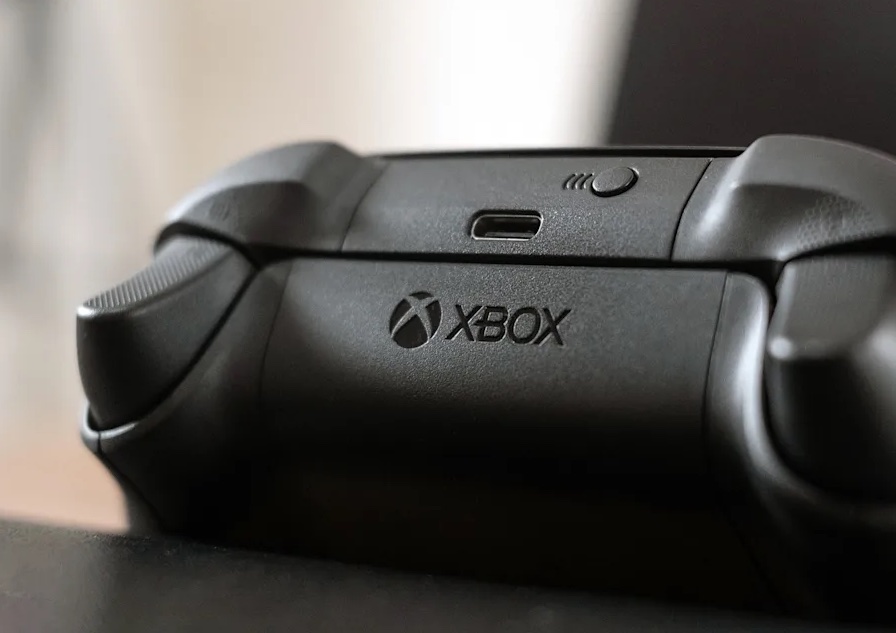
Making things worse this year, Microsoft raised prices across the board, with the Xbox Series S starting at $400 and the cheapest Series X going for a whopping $600. And slow sales prompted Costco to stop selling Xbox consoles entirely. Microsoft didn't even try to push systems during Black Friday — why go through the trouble of having sales if nobody is buying the hardware in the first place?
Even Game Pass, which was once renowned as one of the best deals in gaming, almost doubled in price over the last year, reaching up to $30 a month (or $360 a year) for the Ultimate tier. Sure, Microsoft tried to add more value to its cheaper Game Pass tiers, and finally upgraded its cloud streaming platform, but the lack of consistent must-play exclusive titles has devalued the service (and Xbox as a whole). Avowed and South of Midnight were among the few exclusive highlights, but the latter will hit PS5 and Switch 2 next year. There's no word on Avowed reaching other consoles yet, but given Microsoft's current trajectory (and the fact that it's a genuinely great game), I wouldn't be surprised if it becomes available elsewhere.
There was a chance for Microsoft to reinvigorate the Xbox brand with the ASUS ROG Xbox Ally and Ally X gaming handhelds, but the $600 and $1,000 launch prices placed them out of reach for most gamers. It also doesn't help that Windows still isn't well-optimized for portable devices with touchscreens, and those systems also aren't compatible with older Xbox titles like the consoles. At the very least, Microsoft now has a handheld foothold. But a future portable Xbox console would need to be significantly cheaper to compete with the likes of the Steam Deck, which starts at $400 (and is often on sale for much less).
And speaking of Valve, the company's recently announced Steam Machine has also stolen a lot of potential thunder from Xbox. The Steam Machine is basically a tiny gaming desktop for your TV, running the Steam Deck's SteamOS. That platform is a Linux distribution optimized for emulating Windows titles. But unlike an Xbox console, it's not closed off in any way. You're free to install whatever you'd like on a Steam Machine — even Windows!
While we still haven't seen the Steam Machine in action, the Steam Deck's excellent performance and game compatibility makes me think its desktop sibling could be genuinely compelling to console players looking for something new. And it will likely directly compete with the next Xbox, which is rumored to arrive in 2027 as a PC in a TV-friendly case (according to Windows Central's Jez Corden). Microsoft's recent partnership deal with AMD also hints at a more PC-like experience — Xbox President Sarah Bond noted that the Xbox team is "working closely with the Windows team to ensure that Windows is the number one platform for gaming."
It's worth remembering that only a single generation of the Xbox — the Xbox 360 — was successful enough to truly compete with Sony's PlayStation. The original Xbox reportedly cost Microsoft $4 billion over the course of four years, leading the company to quickly jump ship and move to its successor. The Xbox 360 was genuinely innovative, thanks to Xbox Live and smarter online integration, and it had a healthy amount of third-party support. In comparison, Sony's PlayStation 3 was $100 to $200 more expensive than the Xbox 360 at launch, it had far worse online support and developers found it hard to program for.
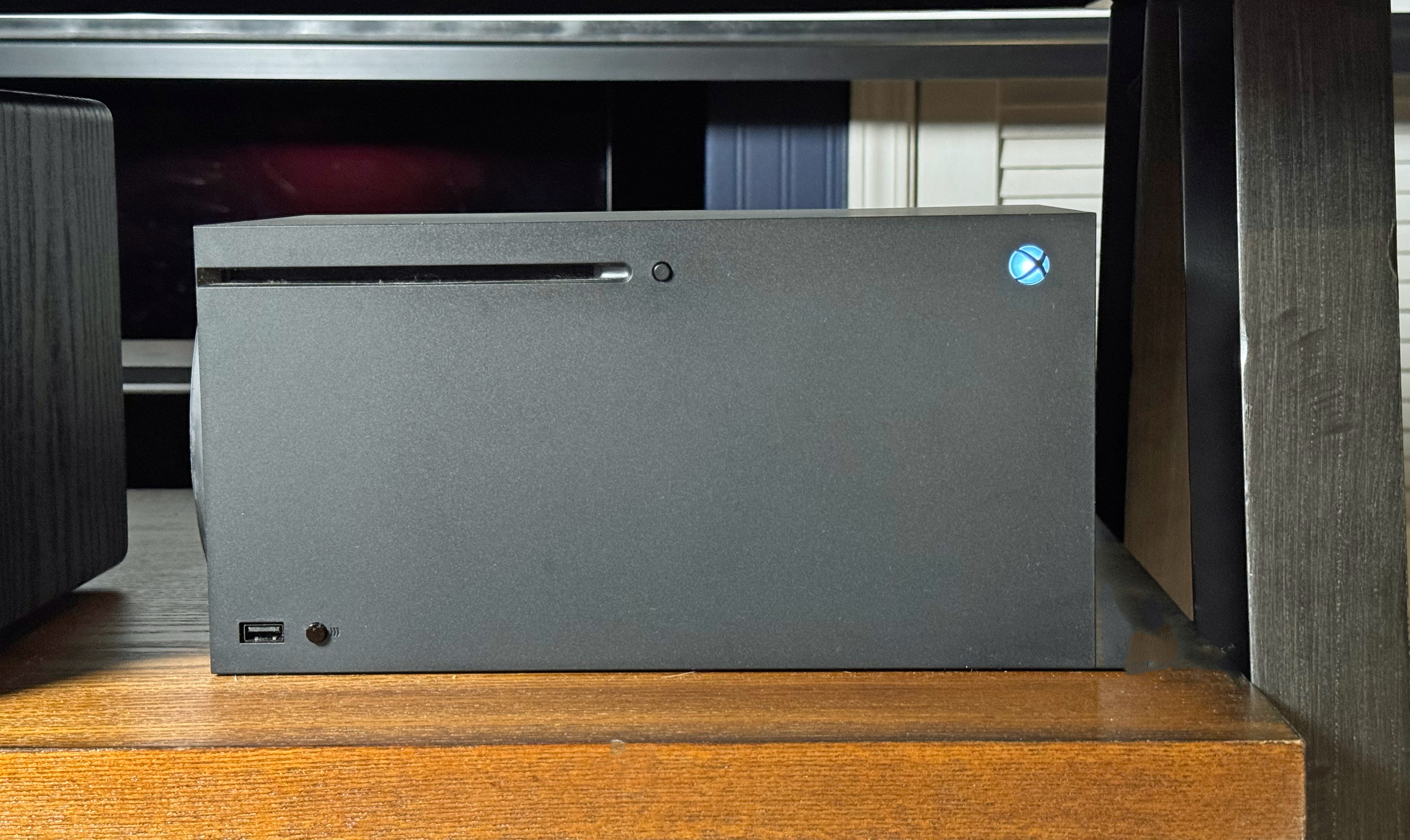
Unfortunately, Microsoft squandered most of its good will with the Xbox One. That console was first announced as an "always online" device with restrictive DRM features that limited how you could share and sell games; it was bundled with a Kinect camera that could potentially surveil you; and at $499, it was $100 more than the PlayStation 4. Microsoft quickly reversed many of its DRM-heavy plans for the Xbox One, but by that point the damage was done. Sony ultimately sold more than twice as many PS4 units as the entirety of the Xbox One family (which included the cheaper One S and more powerful One X), according to data from Ampere Research.
Things are looking worse this generation: The Xbox Series S and X reportedly only sold around 33 million units as of July, according to Statista estimates, while Sony confirmed it sold 84.2 million PS5s as of November. If this trend continues (and it doesn’t appear as if Xbox sales will be increasing any time soon), Sony could end up selling three times as many consoles this generation, compared to Microsoft. Xbox sales have been so slow that the family-focused Nex Playground managed to outsell it in November, according to data from Circana.
Given Xbox's inability to compete with the PlayStation 5, it's no wonder Microsoft could be changing things up entirely for its next system. Its partnership with AMD could easily lead to new handhelds, and it also gives Microsoft a leg up in producing a compact and powerful Xbox PC. After all, why should the company keep trying to go toe-to-toe with Sony's closed PlayStation platform? Why shouldn't Microsoft embrace its PC roots to give us a gaming desktop under our TVs? The company has already committed to bringing new Xbox games to PCs immediately, so the line between the two is already blurring.
It may be a risk, but evolving into a PC proves there’s still life in the Xbox brand. And crucially, it’s also something Sony can’t easily replicate.
This article originally appeared on Engadget at https://www.engadget.com/gaming/xbox/2025-was-the-year-xbox-died-130000467.html?src=rss
Share
What's Your Reaction?
 Like
0
Like
0
 Dislike
0
Dislike
0
 Love
0
Love
0
 Funny
0
Funny
0
 Angry
0
Angry
0
 Sad
0
Sad
0
 Wow
0
Wow
0